
Research Symposium
26th annual Undergraduate Research Symposium, April 1, 2026
Alberto Alonso Poster Session 2: 10:45 am - 11:45 am / Poster #231
BIO
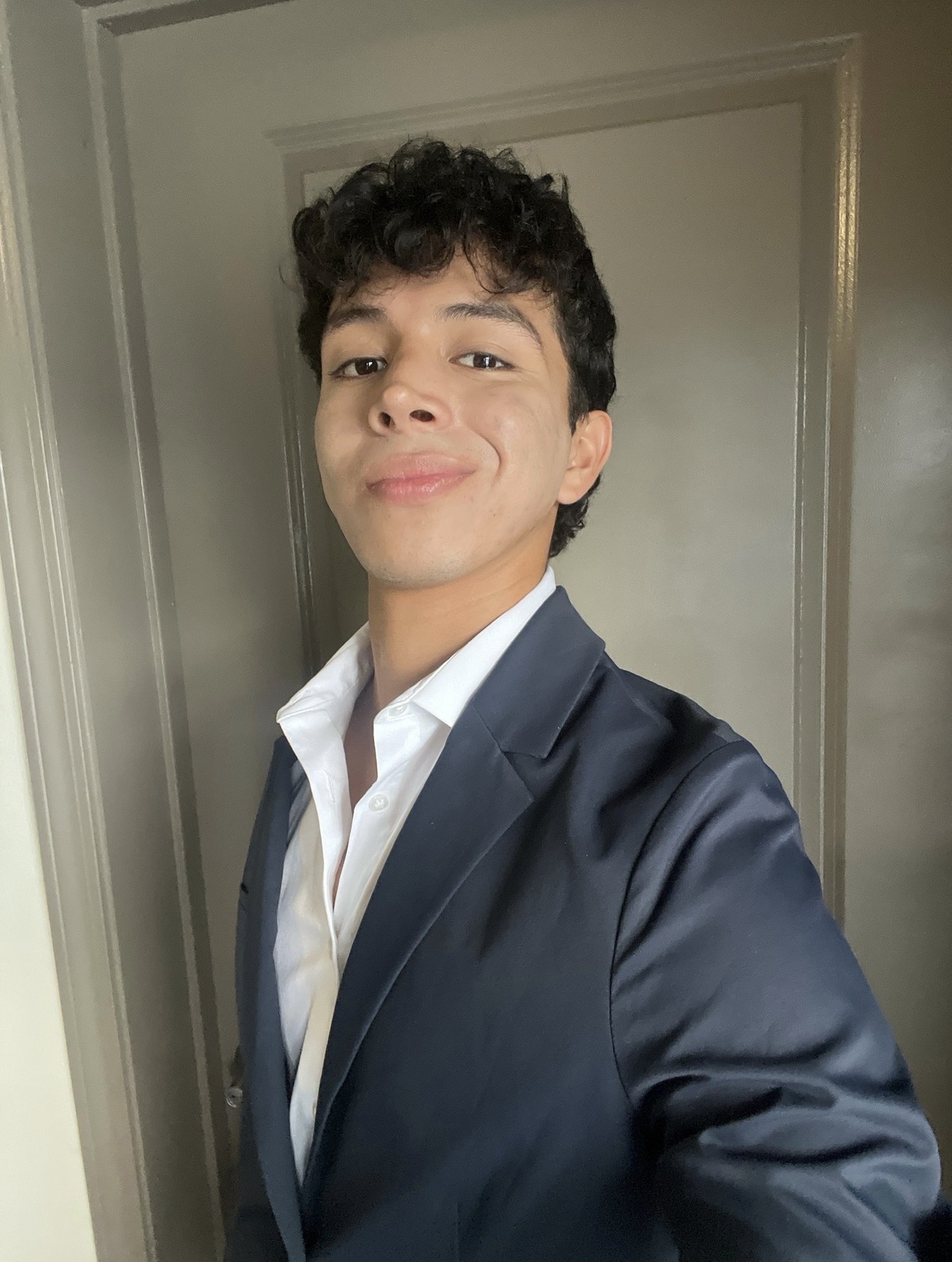
My name is Alberto Alonso. I am a sophomore at Florida State University pursuing a dual degree in Molecular Neuroscience and Exercise Physiology on the pre-med track. I am originally from Weston, Florida, and I am passionate about understanding how biological systems influence human health and performance.
My academic interests focus on neuroscience, physiology, and molecular biology, especially how the brain and body interact to influence behavior, health, and disease. Through my studies, I aim to develop a strong scientific foundation that will help me understand complex biological systems and apply that knowledge to medicine.
My long-term goal is to attend medical school and become a physician who combines scientific knowledge with compassionate patient care. I am particularly interested in areas related to the brain and human physiology, and I hope to contribute to improving patient outcomes through both medical practice and continued learning.
Outside of academics, I enjoy staying active and challenging myself both intellectually and personally as I work toward my goal of becoming a physician.
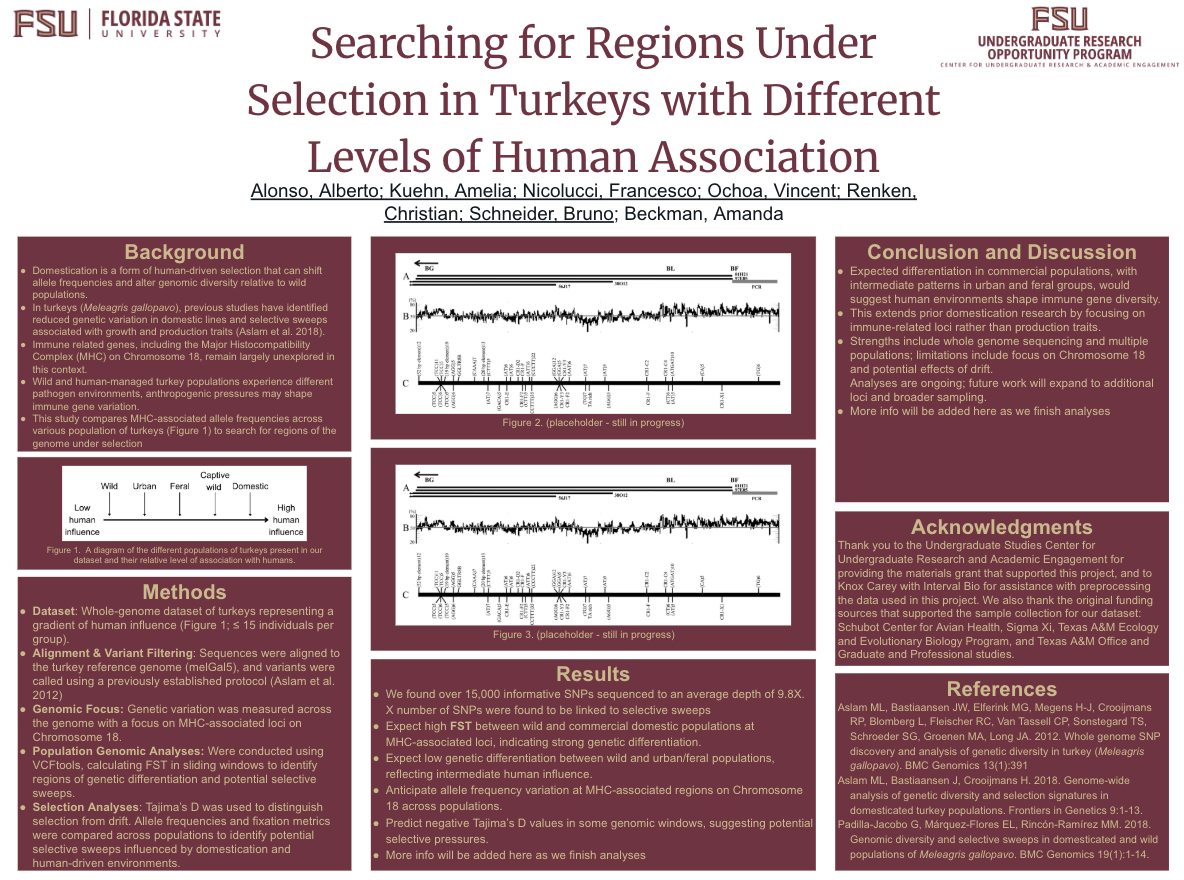
Searching for Regions Under Selection in Turkeys with Different Levels of Human Association
Authors: Alberto Alonso, Amanda BeckmanStudent Major: Exercise Physiology / Cella and Molecular Neuroscience
Mentor: Amanda Beckman
Mentor's Department: Biological Sciences Mentor's College: College of Arts and Sciences Co-Presenters: Francesco
Abstract
Domestication exposes animals to a variety of novel environments, including differences in the diseases they encounter. Studying the evolutionary processes involved in domestication is important as many modern wild animals are experiencing some degree of pressure to adapt to human-dominated landscapes. Major histocompatibility complex (MHC) genes must rapidly evolve as they play an important role in immune responses and are shaped by pathogen exposure. This project investigated selection in wild versus domesticated turkeys (Meleagris gallopavo) and whether the amount of human interaction influences allele frequencies. We used a Whole Genome Sequencing (WGS) dataset of turkeys that experienced different levels of human association (wild, urban, feral, backyard domestic, and commercial domestic populations). After identifying genetic variants, we used VCFtools to analyze allele frequencies on Chromosome 18. We used FST, a measure of population differentiation, to identify regions with the greatest divergence. We expect differences in MHC-related allele frequencies between domesticated and wild turkeys, suggesting human environments influence immune-related genetic variation. Identifying these regions may highlight genomic regions shaped by selection. Overall, this project helps explain how domestication affects immune gene diversity. Future research could analyze additional turkey populations from different environments and examine allele frequencies on other chromosomes. Further work could also explore genomic differences in other domesticated avian species to better understand the impact of domestication on immune responses.
Keywords: Biology, Genetics, Genomics