
Research Symposium
26th annual Undergraduate Research Symposium, April 1, 2026
Chinazyia’ Keys Poster Session 4: 3:00 pm - 4:00 pm / Poster #68

BIO
Chinazyia’ Keys is a second-year senior majoring in Nursing. She is originally from Two Egg, Florida, a small rural community that inspired her passion for serving underserved populations and improving access to healthcare. As a first-generation college student, Chinazyia’ is committed to academic excellence and community leadership.
Her academic interests include maternal health, health disparities, and improving patient outcomes through evidence-based nursing practice. Chinazyia’ has participated in undergraduate research focused on mental health outcomes and social factors affecting health within diverse populations.
In addition to her academic work, she is actively involved in campus leadership and service organizations. Through these experiences, she has developed strong skills in collaboration, advocacy, and mentorship. After graduating, Chinazyia’ plans to pursue a career as a registered nurse and continue advancing her education to further address health inequities and improve patient care in underserved communities.
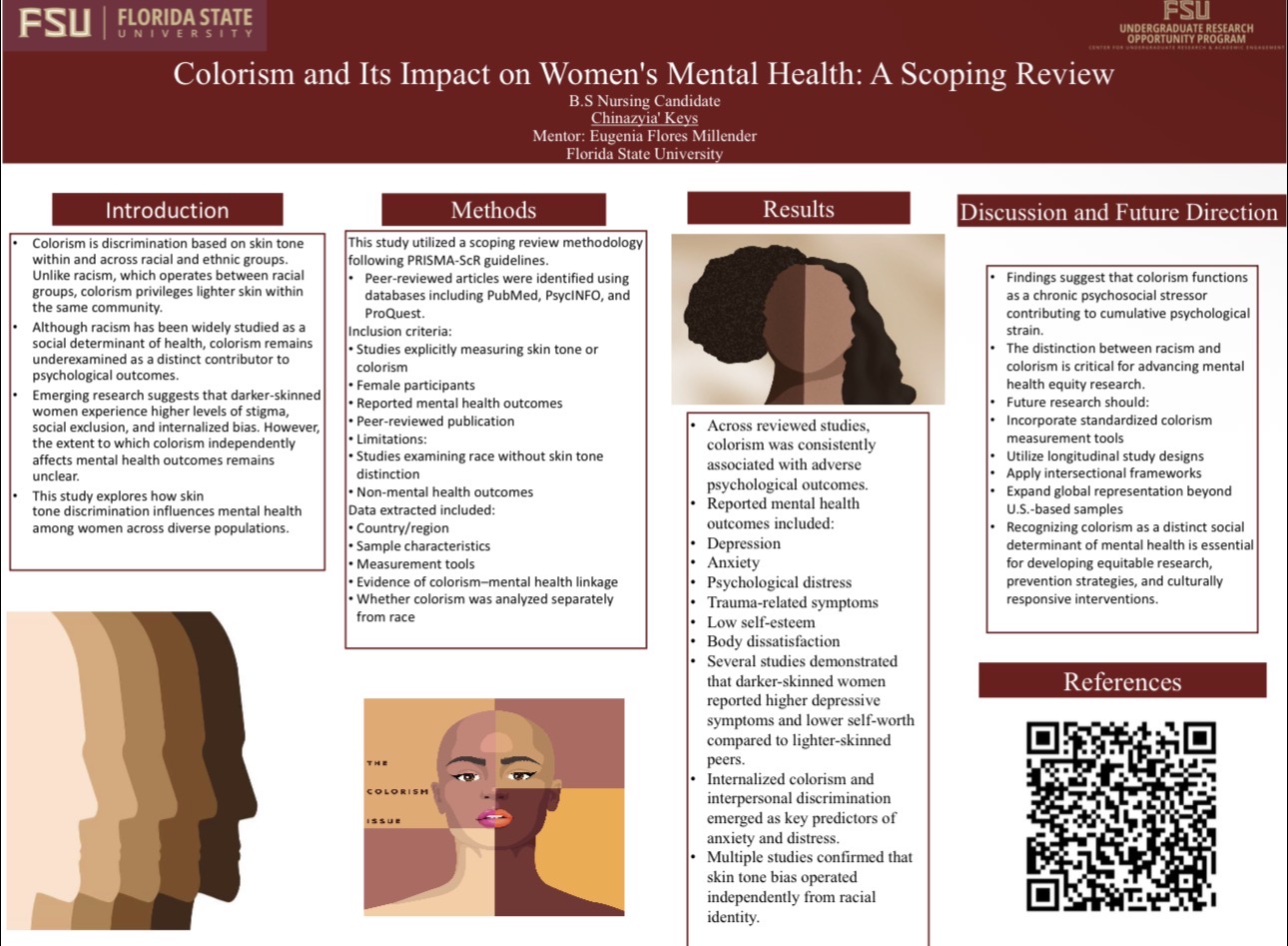
Colorism and Its Impact on Women’s Mental Health: A Scoping Review
Authors: Chinazyia’ Keys, Eugenia Flores MillenderStudent Major: Nursing
Mentor: Eugenia Flores Millender
Mentor's Department: Nursing Mentor's College: College of Nursing Co-Presenters:
Abstract
Colorism, or discrimination based on skin tone within and across racial groups, is an emerging social determinant of health. This scoping review examines the relationship between colorism and women’s mental health outcomes. Using PRISMA-ScR guidelines, peer-reviewed studies were identified through databases including PubMed, PsycINFO, and ProQuest. Across the literature, colorism was consistently associated with adverse psychological outcomes, including depression, anxiety, psychological distress, and body dissatisfaction. Findings also suggest that darker-skinned women experience higher levels of stigma and internalized colorism, contributing to poorer mental health outcomes. These results highlight the importance of recognizing colorism as a significant factor in mental health disparities among women.
Keywords: Colorism, Women’s Mental Health, Skin Tone Bias, Psychological Outcomes, Health Disparities