
Research Symposium
26th annual Undergraduate Research Symposium, April 1, 2026
Taylor Horner Poster Session 2: 10:45 am - 11:45 am / Poster #98

BIO
Taylor Horner is a first-year Cellular and Molecular Neuroscience student pursuing a minor in Italian. Taylor is a member of the University Honors Program and participates in the Undergraduate Research Opportunity Program (UROP), where they are beginning to develop research experience and engage with faculty mentors.
Taylor’s academic interests focus on understanding the underlying psychological processes related to suicide and mental health. Through coursework and research opportunities, she hopes to explore how biological and psychological factors interact in influencing human behavior and mental well-being.
In the future, Taylor plans to pursue a Master's degree in Clinical Psychology and eventually attend medical school to earn a Doctor of Medicine (M.D.)
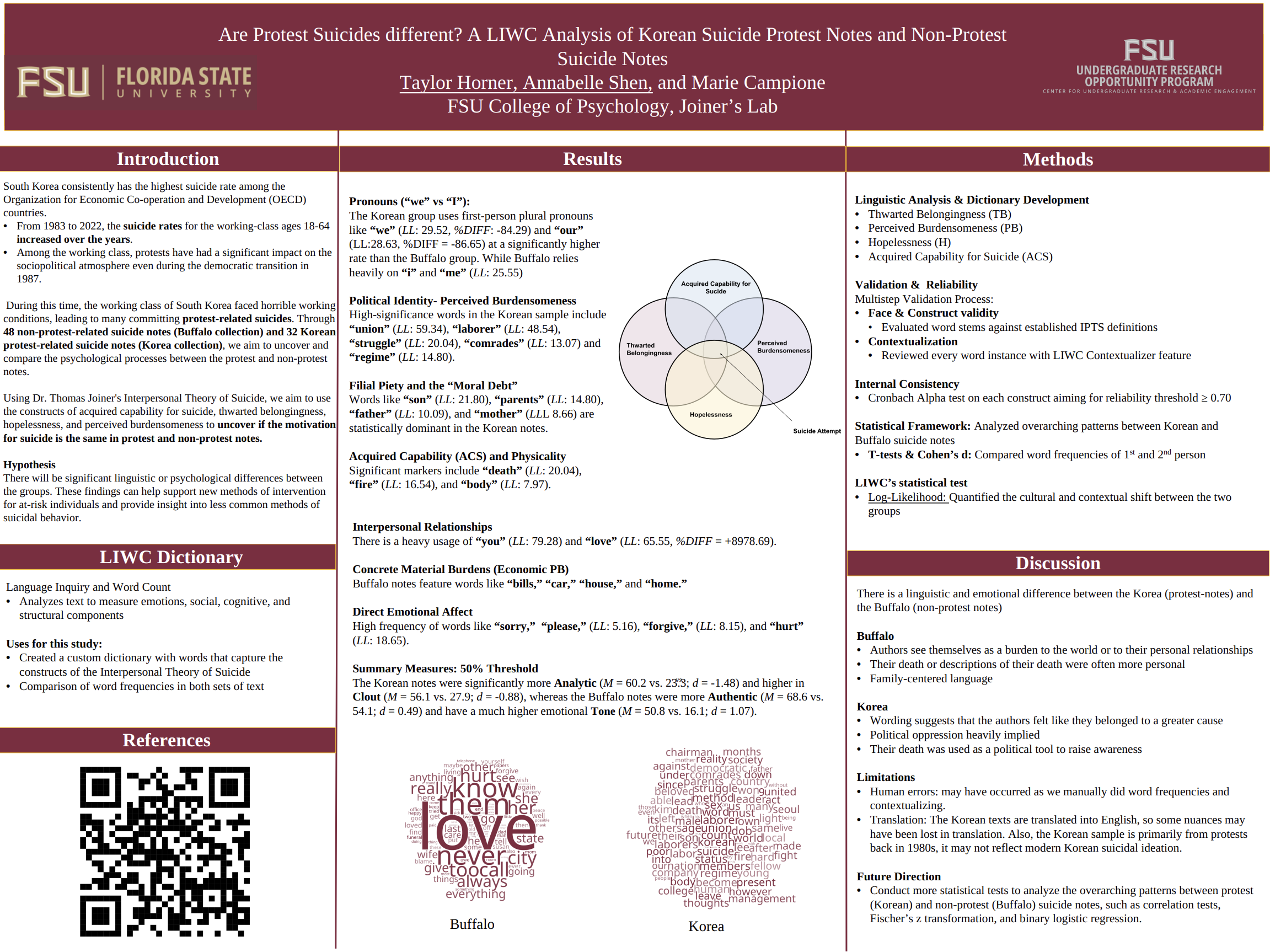
Are Protest Suicides different? A LIWC Analysis of Korean Suicide Protest Notes and Non-Protest Suicide Notes
Authors: Taylor Horner, Marie CampioneStudent Major: Cellular and Molecular Neuroscience
Mentor: Marie Campione
Mentor's Department: Department of Psychology Mentor's College: College of Arts and Sciences Co-Presenters:
Abstract
Suicide protest is a form of suicide in which an individual dies by suicide, due to a desire for social or political change. Research is limited on whether protest suicides share the same core psychological characteristics as non-protest suicides, leaving it unclear if they reflect true suicidal intent or are primarily acts of martyrdom. This study uses linguistic analysis of suicide notes to compare the psychological processes between protest and non-protest contexts. We hypothesize that, despite the political motivation, protest notes will not differ significantly, suggesting that the same core psychological processes are at play in both protest and non-protest notes.
We developed a LIWC dictionary to categorize words into the four constructs of the Interpersonal Theory of Suicide (IPTS) to conduct a linguistic analysis: Thwarted Belongingness (TB), Perceived Burdensomeness (PB), Hopelessness (H), and Acquired Capability for Suicide (ACS).
The dictionary was validated for face, statistical, and construct validity using a multistep validation process. T-tests, Cronbach's alpha, and the log-likelihood of the dictionary and data sets were performed to validate and produce word frequency trends.
Our research revealed a difference in the linguistic and psychological core processes between the protest and non-protest notes. The protest notes showed a higher frequency of words that alluded to a collective cause and sociopolitical movements. The non-protest notes alluded more towards personal affairs like familial relationships and economic burdens. These findings provide insight into less common avenues of suicidal behavior and can help inform intervention efforts for at-risk individuals.
Keywords: LIWC, protest, suicide