
Research Symposium
26th annual Undergraduate Research Symposium, April 1, 2026
Lex Gilmore Poster Session 1: 9:30 am - 10:30 am / Poster #57

BIO
Lex is from Tallahassee, Florida. They are completing their Bachelor of Science in psychology this semester and are passionate to cultivate inclusive spaces in their field. Lex has been a part of Dr. Chris Martin’s memory lab working closely with Danielle Jones to integrate clinical and cognitive psychology for almost two years. They have found a passion for studying what one attends to and how that influences memory. They are intrigued by the way one’s experiences can create new perspectives and direct attention. They desire to pursue a PhD in cognitive psychology to further study such fascinating topics. Upon completion of a graduate program, they aspire to work as a faculty member at a university and continue expanding ideas in memory research.
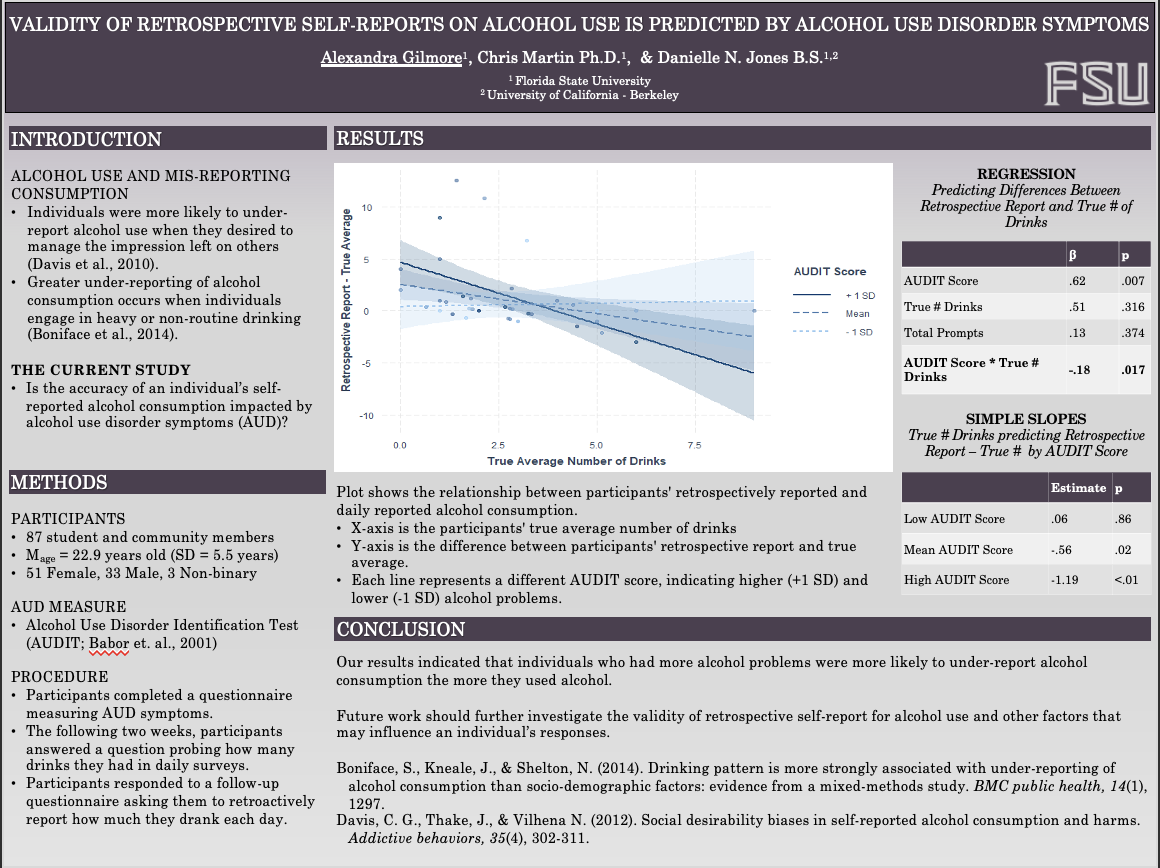
VALIDITY OF RETROSPECTIVE SELF-REPORTS ON ALCOHOL USE IS PREDICTED BY ALCOHOL USE DISORDER SYMPTOMS
Authors: Lex Gilmore, Dr. Chris MartinStudent Major: Psychology
Mentor: Dr. Chris Martin
Mentor's Department: Psychology Mentor's College: Arts and Sciences Co-Presenters:
Abstract
Research on alcohol use disorder (AUD) typically relies on retrospective self-report, yet prior research revealed that people systematically misreport their alcohol consumption. For example, individuals are more likely to under-report alcohol use when they desired to manage the impression they leave on others (Davis et al., 2010). Greater under-reporting of alcohol consumption was found in individuals who engaged in heavy and non-routine drinking (Boniface et al., 2014). Against this background, the current study examined whether the accuracy of self-reported alcohol consumption was dependent on AUD symptoms. Participants completed a questionnaire measuring AUD symptoms then, over the course of two weeks, daily surveys that included a question probing how many drinks they had each day. After the daily surveys, participants answered a follow-up questionnaire which asked them to retroactively report how much they drank each day. The difference between their retrospective self-report and their daily reports was calculated. A significant interaction was found showing that increased alcohol use was associated with under-reporting consumption for participants who measured high on the AUD symptom questionnaire. There was no relationship found between the amount of alcohol consumed and under- or over-reported alcohol use in participants who had no alcohol problems. These findings indicated that individuals who had more alcohol problems were more likely to under-report alcohol consumption the more they used alcohol.
Keywords: alcohol use, self-report, alcohol problems, under-report