
Research Symposium
26th annual Undergraduate Research Symposium, April 1, 2026
Baraan Vassighi Poster Session 1: 9:30 am - 10:30 am / Poster #39

BIO
Baraan Vassighi is a second-year student at Florida State University pursuing a Bachelor of Science in Biochemistry on the pre-medical track. Originally from South Florida, she developed an early interest in science and medicine and is particularly interested in the chemical and molecular mechanisms that influence human health and disease. Her academic interests focus on biochemistry and the molecular processes underlying chronic illness and cellular function. Through undergraduate research, Baraan is developing skills in scientific inquiry, data analysis, and collaborative research while exploring how chemical processes within the body contribute to health and disease. In addition to her academic work, she is involved in campus organizations that promote health, fitness, and student engagement. Baraan hopes to further explore how discoveries in biochemistry can deepen our understanding of complex biological systems and inform future medical advancements. After completing her undergraduate degree, she plans to attend medical school and pursue a career as a physician, combining her interests in science, research, and patient care to improve health outcomes.
Social Determinants of Physical and Mental Health Among Women ≥45 Years With Chronic Pain and Cognitive Impairment Using the All of Us Research Program
Authors: Baraan Vassighi, Sector Kofi SorkporStudent Major: Biochemistry
Mentor: Sector Kofi Sorkpor
Mentor's Department: Nursing Mentor's College: College of Nursing Co-Presenters: Martina Nemia
Abstract
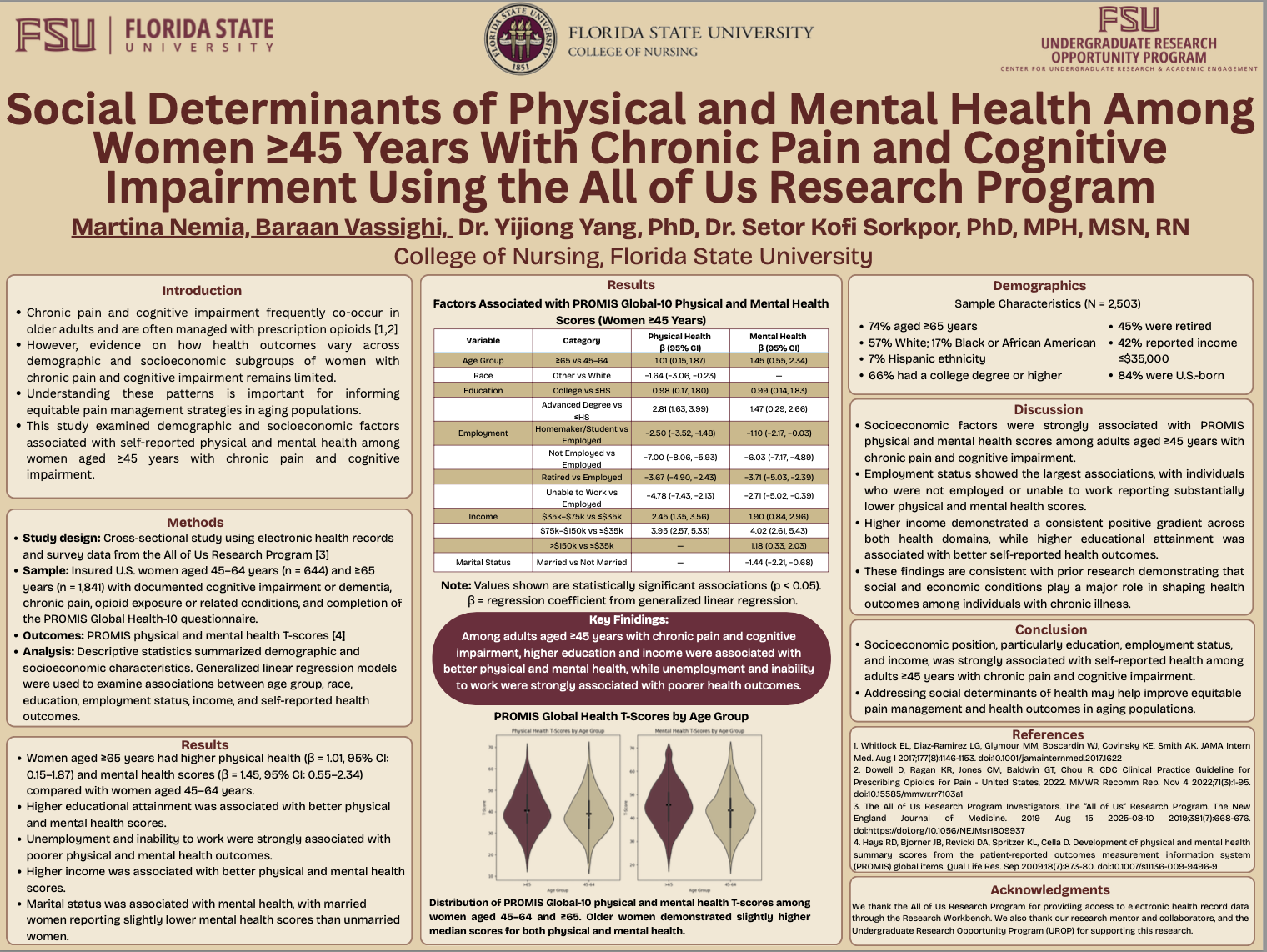
Chronic pain and cognitive impairment frequently co-occur in older adults and are often managed with prescription opioids. However, less is known about how health outcomes differ across demographic and socioeconomic groups of affected individuals. This study examined associations between social determinants of health and self-reported physical and mental health among women aged 45 years and older with chronic pain and cognitive impairment. A cross-sectional analysis was conducted using electronic health record and survey data from the All of Us Research Program. The sample included insured U.S. women aged 45–64 (n = 644) and ≥65 years (n = 1,841) who had documented cognitive impairment or dementia, chronic pain, opioid exposure or related conditions, and completion of the PROMIS Global Health-10 questionnaire. Physical and mental health outcomes were measured using PROMIS T-scores. Generalized linear regression models were used to examine associations between demographic and socioeconomic factors and health outcomes. Higher educational attainment and higher income were significantly associated with better physical and mental health scores. In contrast, unemployment and inability to work were strongly associated with poorer physical and mental health outcomes. Women aged ≥65 demonstrated slightly higher physical and mental health scores compared with women aged 45–64. Overall, socioeconomic position, particularly education, employment status, and income, was strongly associated with health outcomes among women with chronic pain and cognitive impairment. These findings highlight the importance of addressing social determinants of health to improve equitable health outcomes and pain management strategies in aging populations.
Keywords: Chronic Pain; ADRD; Opioid Exposure; Social Determinants of Health; PROMIS Global Health