
Research Symposium
26th annual Undergraduate Research Symposium, April 1, 2026
Alix Urban Poster Session 2: 10:45 am - 11:45 am / Poster #238
BIO
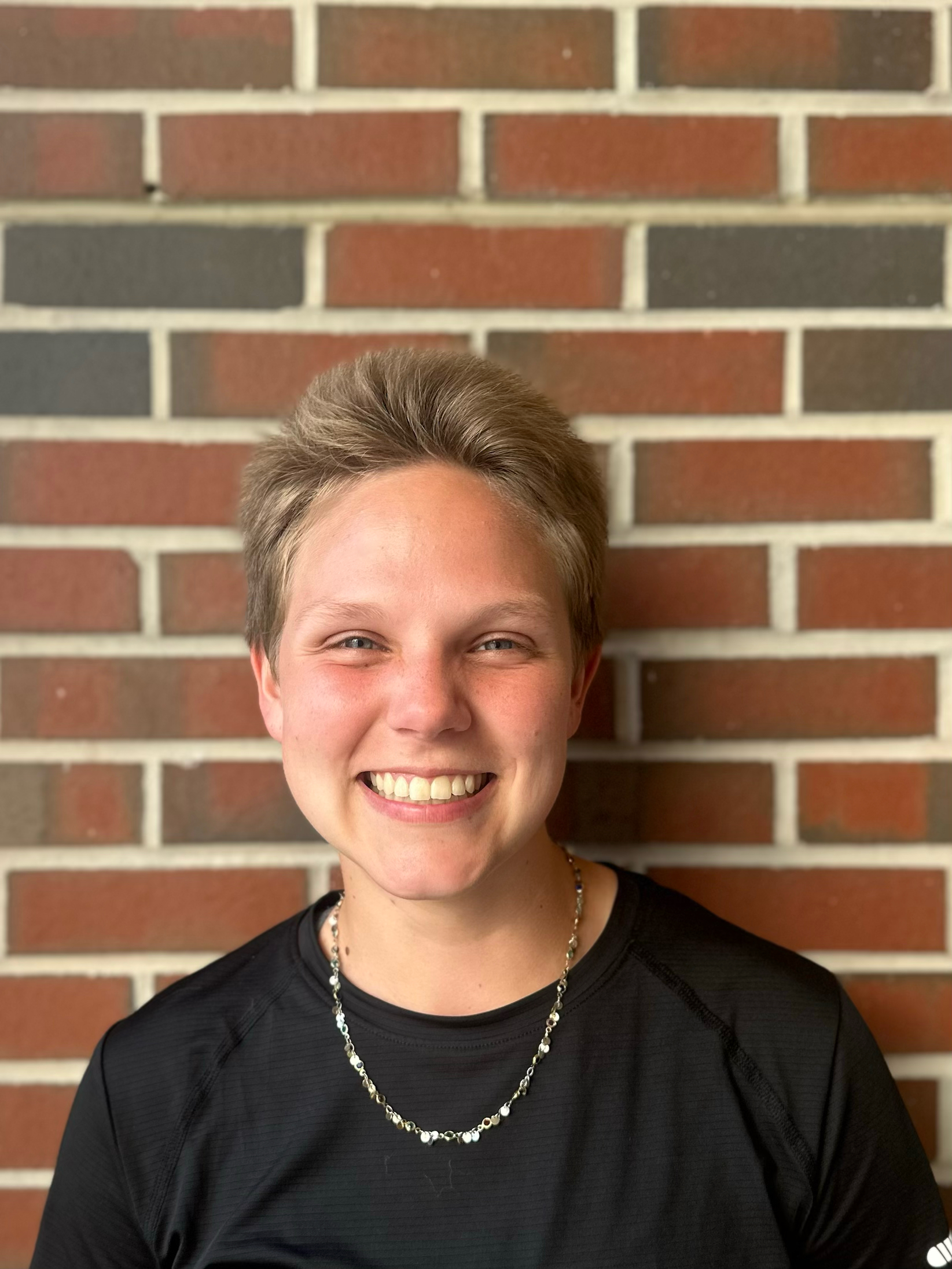
Alix Urban is a first-year student from Sarasota, FL. Currently, her undergraduate major is environmental chemistry. Alix has been conducting research projects throughout high school through a program known as MAST (Math, Science, and Technology). Alix was very excited to be able to continue her research through UROP. With her project, Alix conducted research at the FSU Coastal and Marine Laboratory to test soil samples from the Apalachicola River Delta. Samples went through testing to measure: dry-bulk-density, organic matter %, organic carbon, and total nitrogen concentrations. The soil samples were collected from varying marsh and forest plots. The results of the experiment concluded with the average concentrations of organic carbon and total nitrogen within the marsh and forest vegetation types. After UROP Alix hopes to continue with the research project and improve findings. Dr. Josh Breithaupt and Simone Schuster were very important assets to her project. Dr. Breithaupt is her research mentor, and Simone Schuster is the graduate student she worked closely with. In the future, Alix hopes to continue her research journey (at the Breithaupt lab and beyond) and graduate with her Bachelor of Science degree in Chemical Science.
Apalachicola River Delta Soil Nutrients
Authors: Alix Urban, Josh BreithauptStudent Major: Environmental Chemistry
Mentor: Josh Breithaupt
Mentor's Department: Coastal & Marine Lab Mentor's College: Arts & Sciences Co-Presenters:
Abstract
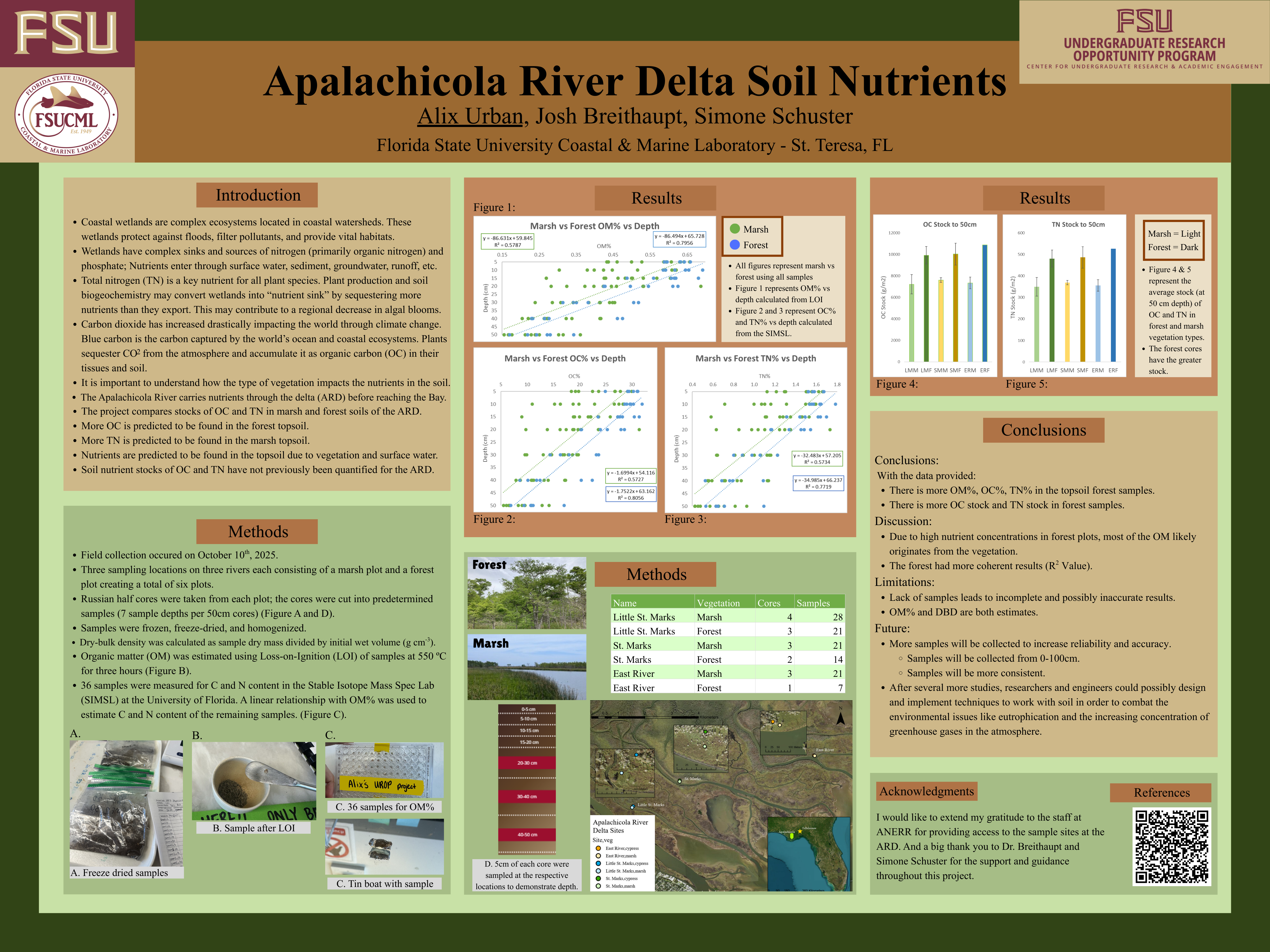
Eutrophication and climate change are two global-scale crises affecting coastal ecosystems. Eutrophication occurs when runoff of fertilizer-derived nutrients like nitrogen and phosphorus enter waterways. Greenhouse gas emissions have increased compounds like carbon dioxide and methane in the atmosphere. Wetland ecosystems can be a valuable nature-based solution for combating these issues through their ability to sequester carbon and nitrogen in their soils. The Apalachicola River Delta (ARD) transports nutrients before depositing into the ocean. This project aims to determine how different vegetation types in the ARD retain nutrients (total nitrogen (TN) and organic carbon (OC)) in the soil.
Three study sites in the ARD were sampled, each with a marsh-dominant plot (marsh) and a cypress-dominated plot (forest). Soil cores were collected using a Russian half-barrel corer and separated into the subsamples with depths from 0-50cm. All samples were frozen, freeze-dried, then recorded for dry weight to calculate dry bulk density (DBD). Subsamples were then combusted at 550°C to estimate organic matter (OM) content. 36 samples were homogenized using a ball mill, then weighed into tin microcapsules and sent to the Stable Isotope Mass Spec Laboratory at the University of Florida to quantify OC and TN content. Soil stocks of OC and TN were calculated as the cumulative mass of each constituent to a 50-cm depth.
The data proved that OC and TN had greater concentrations in forest and topsoil. Future samples will be collected to improve accuracy of concentrations. Future studies will investigate the ARD to combat climate change and eutrophication.
Keywords: Soil, Nutrients, Wetlands