
Research Symposium
26th annual Undergraduate Research Symposium, April 1, 2026
Kevin Marrero Bernabe Poster Session 2: 10:45 am - 11:45 am / Poster #278
BIO
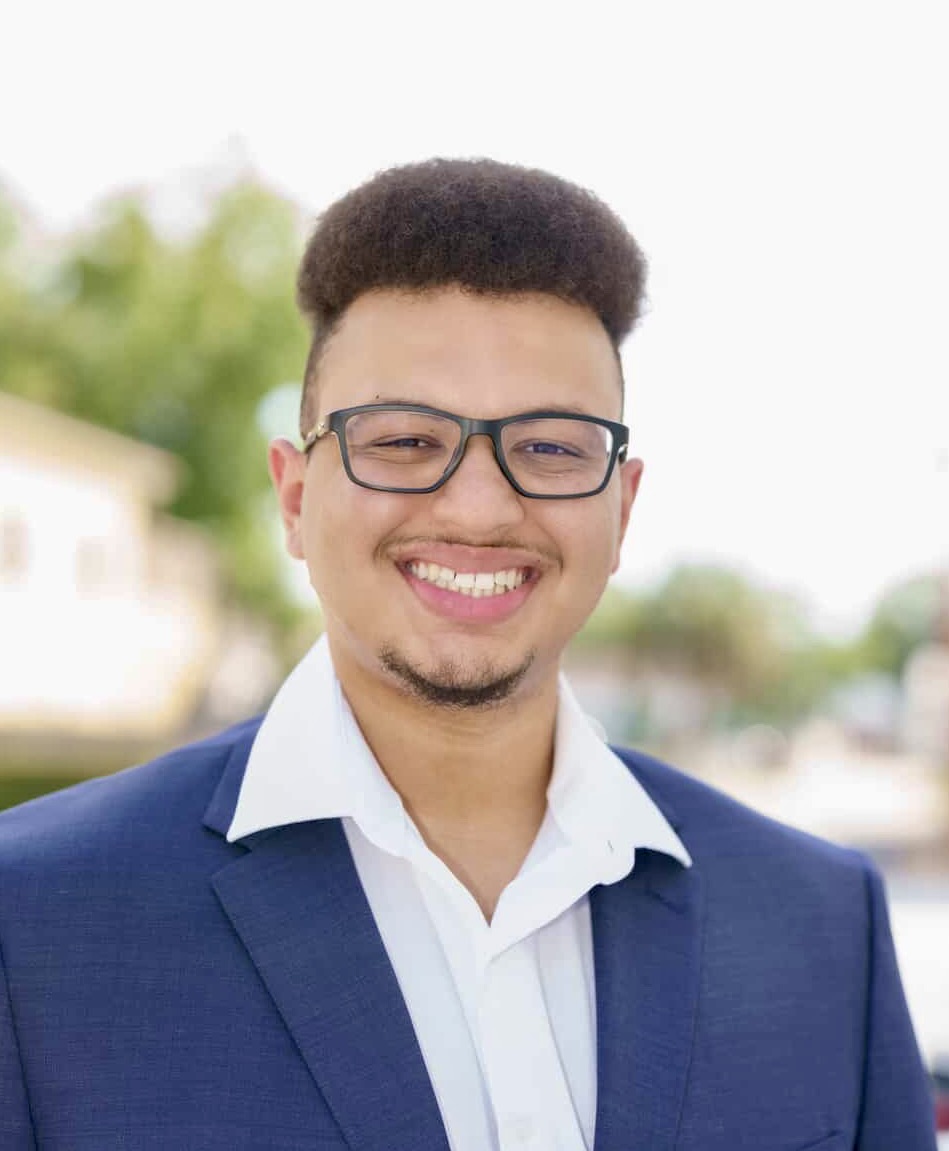
Kevin Marrero Bernabe is a sophomore at Florida State University pursuing a Bachelor of Science in Exercise Physiology. From Crestview, Florida, he is involved in undergraduate research exploring healthcare disparities and ways to improve access to medical services for underserved and underrepresented populations. Through this work, he collaborates with faculty mentors and peers to gain a deeper understanding of how various factors influence health outcomes and access to care.
Beyond academics, Kevin is engaged in service and mentorship through USSTRIDE and the Honors Medical Scholars Program, which supports his development as a future healthcare professional. He has a strong interest in primary care and is committed to addressing disparities to improve equitable access to healthcare services.
After completing his Bachelor of Science, Kevin plans to attend medical school and pursue a career in primary care, combining clinical practice with community engagement to improve health outcomes and ensure all patients have access to quality care.
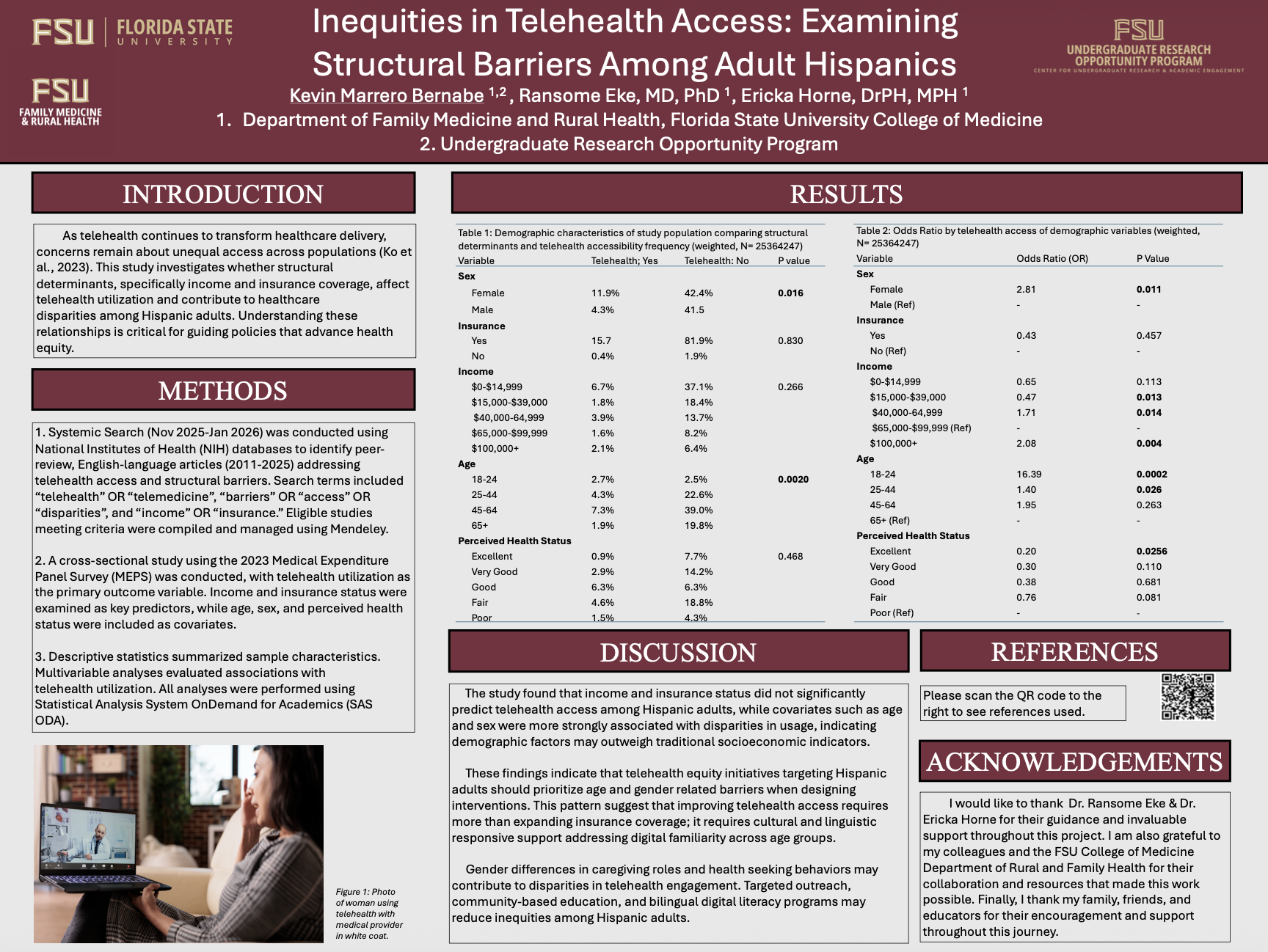
Inequities in Telehealth Access: Examining Structural Barriers Among Adult Hispanics
Authors: Kevin Marrero Bernabe , Dr. Ransome EkeStudent Major: Exercise Physiology
Mentor: Dr. Ransome Eke
Mentor's Department: Department of Family Medicine & Rural Health Mentor's College: College of Medicine Co-Presenters:
Abstract
Telehealth has become an increasingly essential component of healthcare delivery, offering the potential to expand access to care and improve health outcomes. However, not all populations benefit equally, particularly adult Hispanics in the United States, as structural barriers such as income and insurance coverage may create limited access to these services. Understanding these disparities is important for informing policies and interventions that promote equitable healthcare.
This study investigates the relationship between structural barriers and telehealth accessibility among adult Hispanics using data from the Medical Expenditure Panel Survey (MEPS). Variables related to income, insurance type, and healthcare utilization were coded and analyzed using Statistical Analysis Program (SAS) to identify patterns of inequity. Relevant literature was organized and reviewed using Mendeley to provide context and support interpretations of the findings.
Preliminary analysis aims to reveal how financial and insurance-related barriers influence telehealth use among adult Hispanic communities. By identifying populations at risk of limited access, this study showcases key areas where interventions and policy changes may be most effective. This research seeks to contribute evidence that can guide efforts to reduce systemic barriers and ensure all patients have equitable opportunities to benefit from telehealth.
Keywords: Telehealth, Accessibility, Health Disparities