
Research Symposium
26th annual Undergraduate Research Symposium, April 1, 2026
Brylee Drennan Poster Session 2: 10:45 am - 11:45 am / Poster #276
BIO
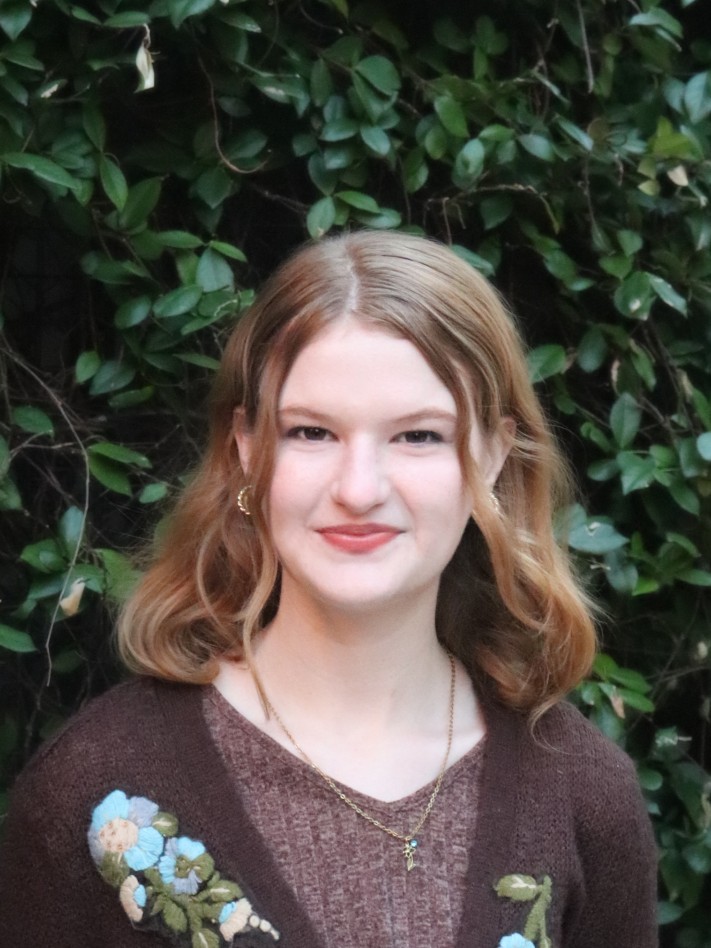
Brylee Drennan is a first-year undergraduate at Florida State University, pursuing a Bachelor of Science in Environmental Science. From McCormick, South Carolina, Brylee is driven by a passion for exploring the connections between people, their health, and the land. Her research interests lie at the intersection of anthropology and environmental science, with a particular focus on how ecological systems shape human well-being.
Brylee currently works as an Undergraduate Research Opportunity Program (UROP) researcher under the mentorship of Dr. Eric Shattuck, where she studies connectedness to nature and health in Florida State University students. After completing her undergraduate degree, Brylee plans to pursue graduate studies, further combining her interdisciplinary interests to address pressing environmental challenges.
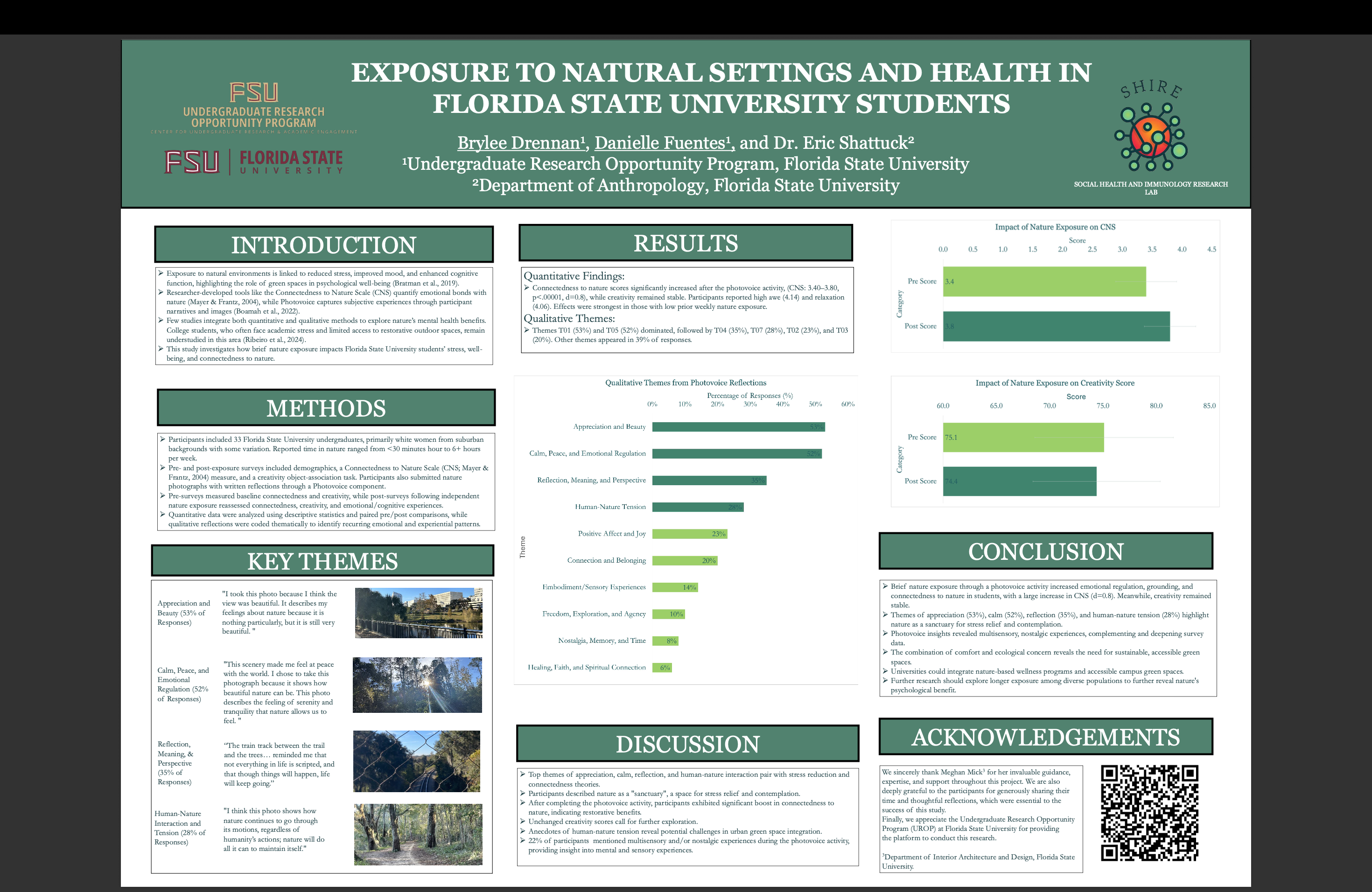
EXPOSURE TO NATURAL SETTINGS AND HEALTH IN FLORIDA STATE UNIVERSITY STUDENTS
Authors: Brylee Drennan, Dr. Eric ShattuckStudent Major: Environmental Science
Mentor: Dr. Eric Shattuck
Mentor's Department: Anthropology Mentor's College: College of Arts and Sciences Co-Presenters: Danielle Fuentes
Abstract
Exposure to natural settings is linked to improved mental well-being, but how college students personally experience nature remains understudied. This project explored perceptions of natural settings among 33 Florida State University students, primarily white (85%) women (82%) from suburban backgrounds (72%). Participants completed surveys before and after spending time in nature and were asked to provide three pictures that captured what nature means to them alongside written reflections.
Analysis of 88 thematic responses revealed several key themes. Appreciation of Beauty and Calm/Emotional Regulation were most prevalent, followed by Reflection and Perspective as well as Human-Nature Interaction. Participants also described Positive Affect, Connection to Nature, Sensory Experiences, and Spiritual/Healing themes respectively. Quantitatively, connectedness to nature increased modestly (pre: M=3.42, SD=0.98; post: M=3.82, SD=0.99), while creativity scores remained fairly stable (pre: M=75.28, SD=6.46; post: M=74.43, SD=5.97).
Results highlight nature’s potential as a stress-relief resource for students. Future work could expand demographic diversity, refine mental health assessments, and explore longitudinal effects. Campus initiatives, such as guided nature walks, could promote outdoor engagement to support well-being and academic success.
Keywords: nature, mental health, student well-being