
Research Symposium
26th annual Undergraduate Research Symposium, April 1, 2026
Nicholas Collazos Poster Session 3: 1:45 pm - 2:45 pm / Poster #233
BIO
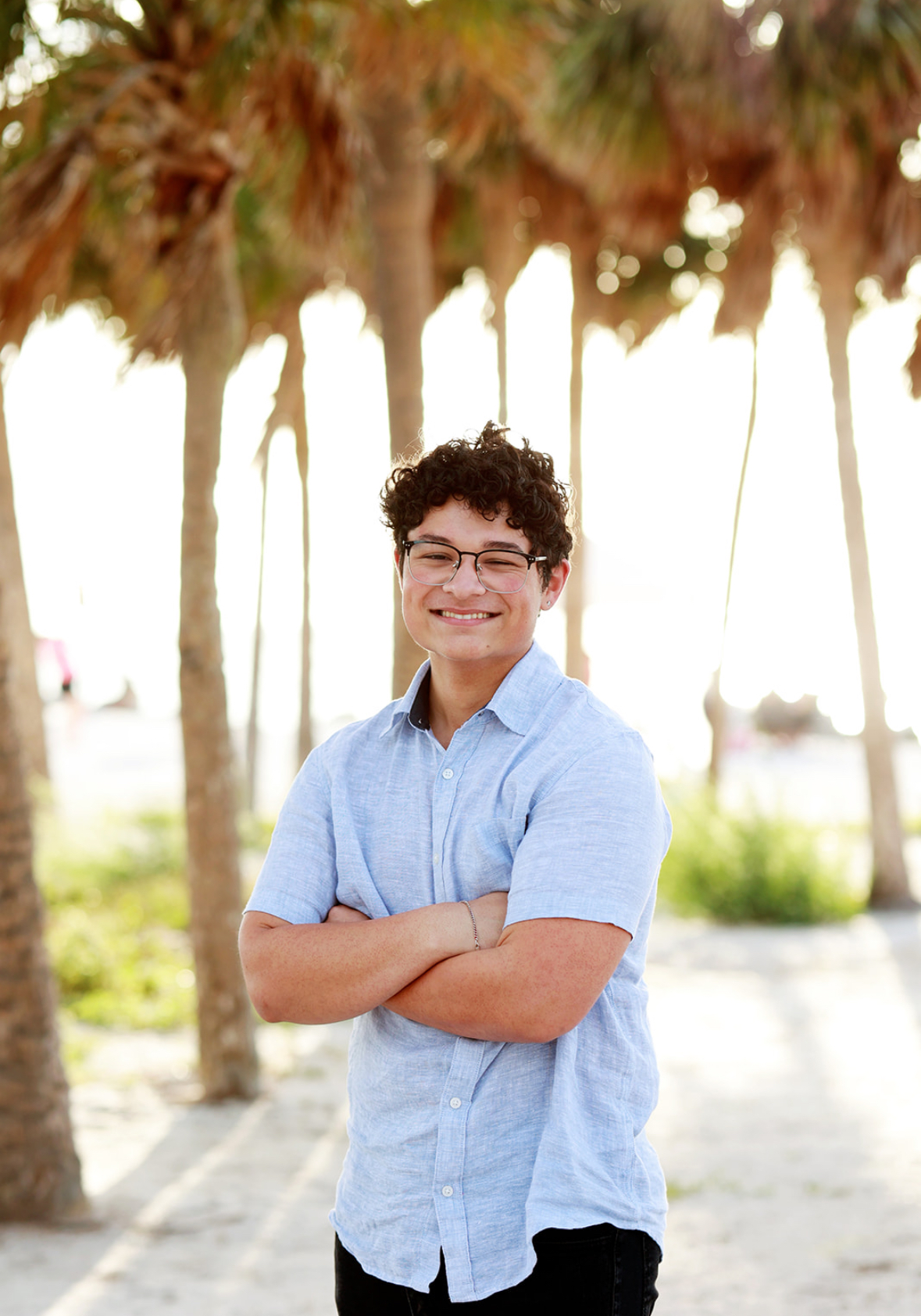
Nicholas is a first-year Presidential Scholar and Pre-Medical Behavioral Neuroscience honors student at Florida State University. Originally from Tampa, Florida, Nicholas plans on attending FSU until Spring of 2029, where he will then attend medical school to pursue a career in psychiatry. Through the Undergraduate Research Opportunity Program and under the mentorship of Landon Heller, Nicholas is researching different approaches to combating the reading comprehension gap present in students with reading disabilities through meta analyses of studies conducted around the world.
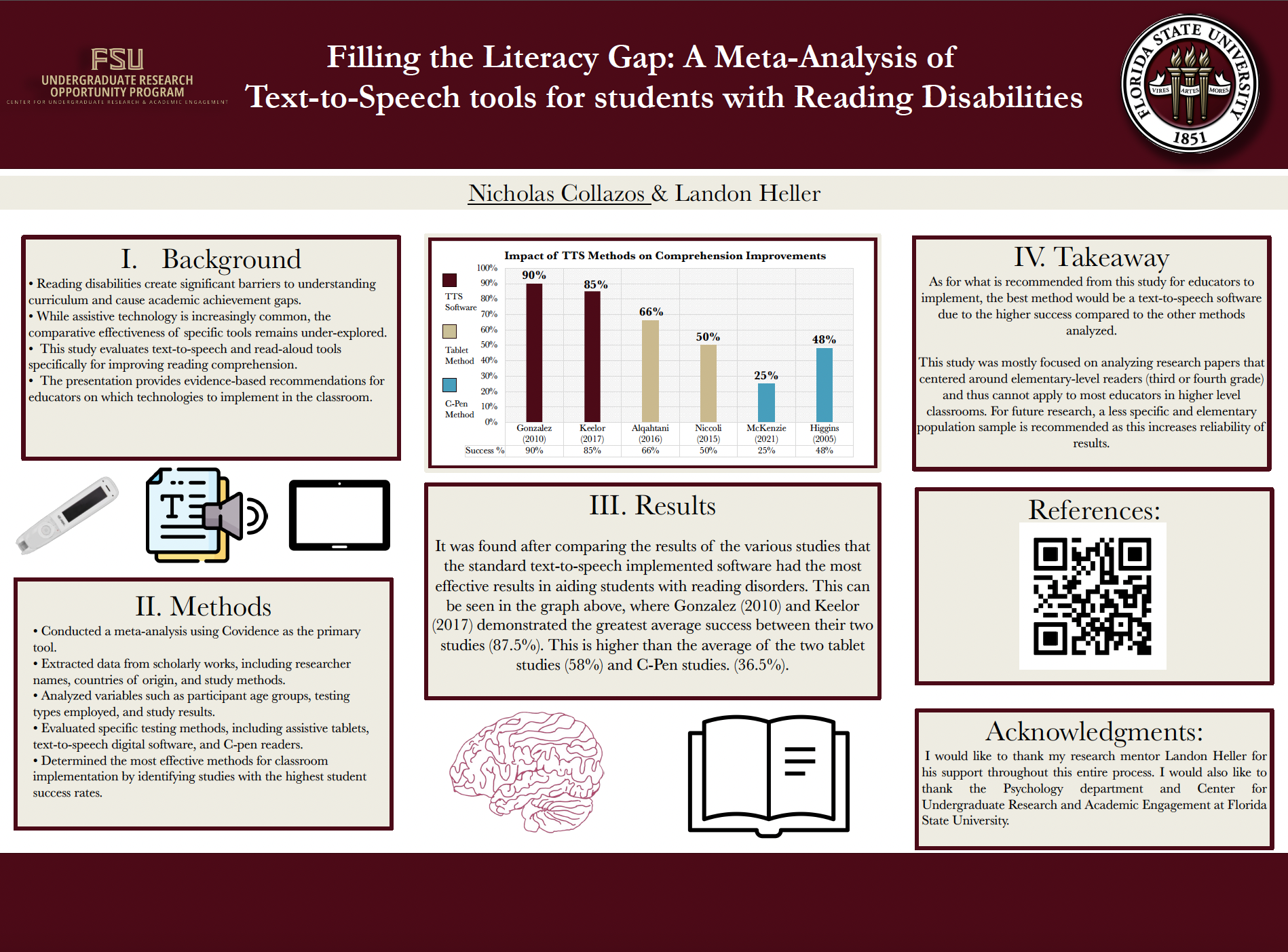
Filling the Literacy Gap: A Meta-Analysis of Text-to-Speech tools for students with Reading Disabilities
Authors: Nicholas Collazos, Landon HellerStudent Major: Behavioral Neuroscience
Mentor: Landon Heller
Mentor's Department: Psychology Mentor's College: Arts & Sciences Co-Presenters:
Abstract
Students with reading disabilities often face significant barriers to understanding curriculum
and demonstrating literacy proficiency, frequently leading to academic achievement gaps. While assistive technology has become increasingly prevalent in modern classrooms to combat these challenges, the comparative effectiveness of specific technologies remains under-explored. This study focuses on the effectiveness of different text-to-speech and read-aloud tools’ ability to improve the reading comprehension of students with reading disabilities. By conducting comprehensive meta-analyses of multiple scholarly studies, I assessed students’ comprehension levels across various digital read-aloud methods to determine which specific tools provide the most effective support for information retention and comprehension. I analyzed student performance based on quantifiable data extracted from previous studies to determine which software features contribute most significantly to student success. Past research suggests that high-quality text-to-speech software yields a significant increase in comprehension scores, particularly when students are engaging with complex texts for their grade level. These findings indicate that personalized digital interfaces can bridge the gap between decoding struggles and cognitive processing. This presentation evaluates current assistive technologies and provides evidence-based recommendations for educators on what technologies to implement for students with reading disabilities in their classroom.
Keywords: Psychology, Reading, Dyslexia