
Research Symposium
26th annual Undergraduate Research Symposium, April 1, 2026
Jennifer González Soriano Poster Session 4: 3:00 pm - 4:00 pm / Poster #154
BIO
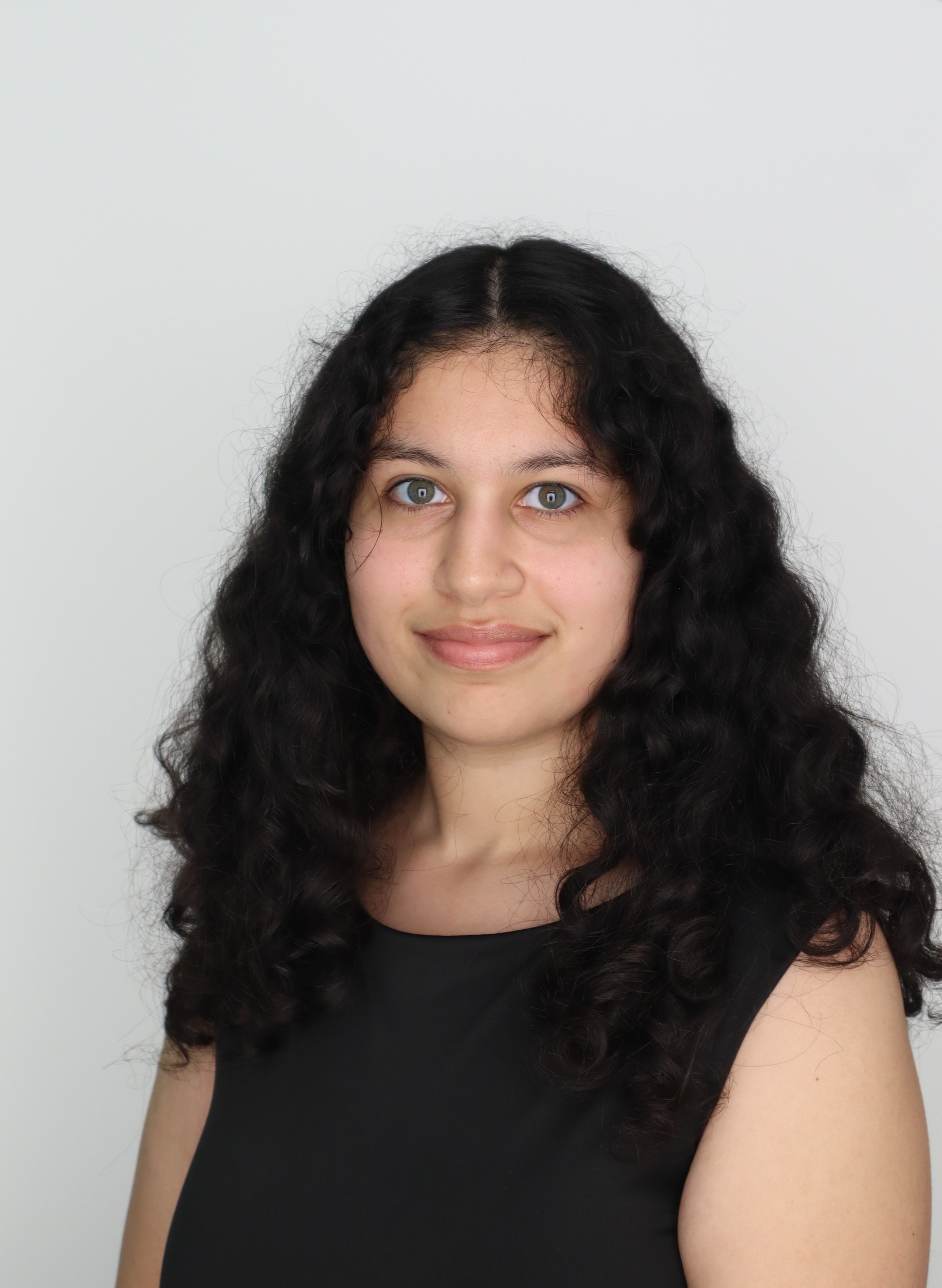
Jennifer González Soriano is a junior majoring in Psychology and minoring in Statistics. As a transfer student, this is her first year at Florida State University and her first time working in a psychology laboratory. She is a research assistant at the Learning, Memory, and Language Lab under the guidance of Dr. Michael Kaschak and Ms. Anuja Thomas, who have supported her throughout the research process over this academic year. After graduating, she plans to pursue a PhD in Clinical Psychology and is interested in researching the etiology of anxiety disorders as well as their maintaining cognitive and behavioral factors.
Anxiety and Sensitivity to Inter-Turn Silences
Authors: Jennifer González Soriano, Dr. Michael KaschakStudent Major: Psychology
Mentor: Dr. Michael Kaschak
Mentor's Department: Department of Psychology Mentor's College: College of Arts and Sciences Co-Presenters:
Abstract
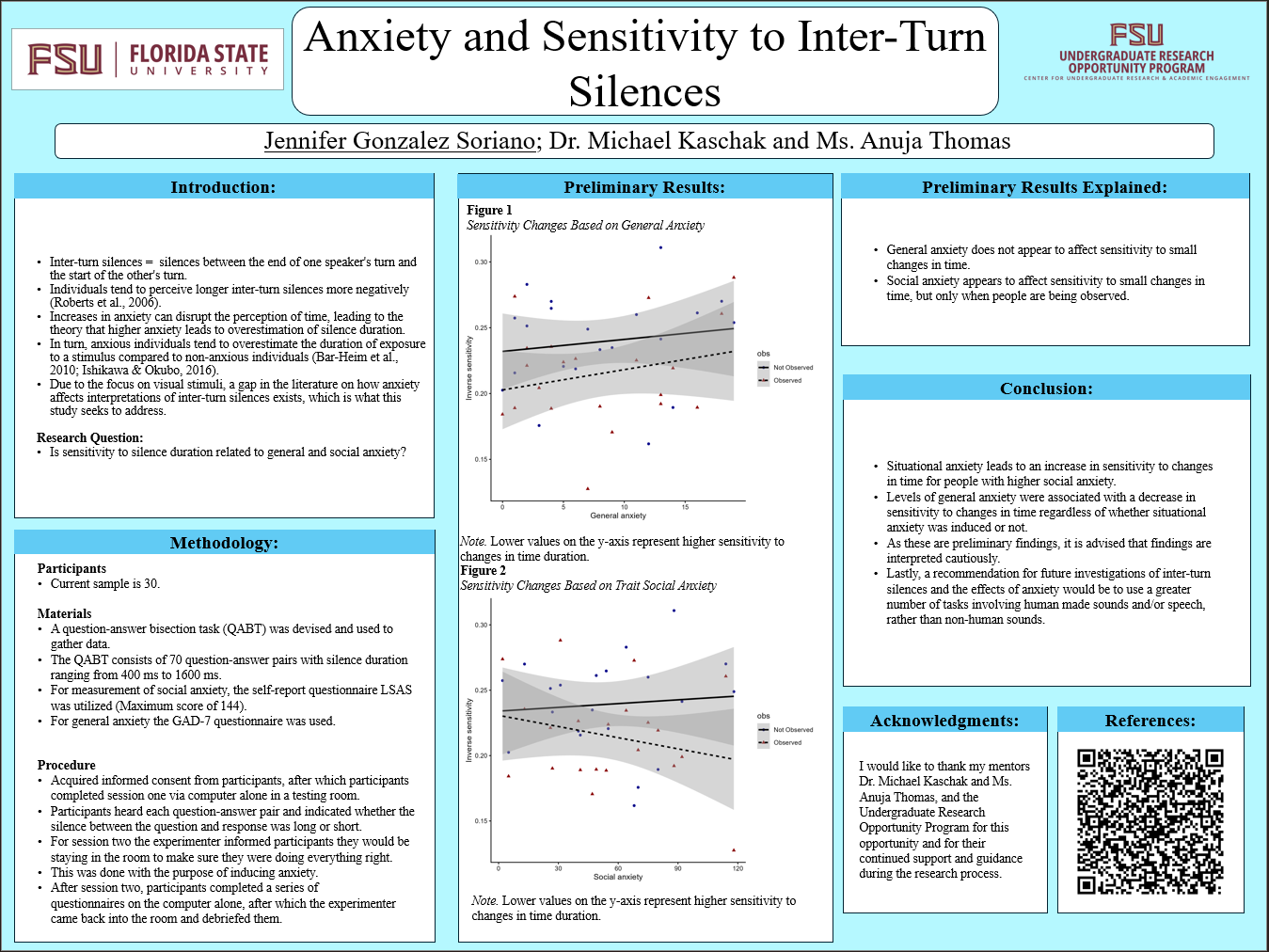
Individuals find meaning in inter-turn silences–silences that occur as a transition from one speaker to another–and derive information from these. For example, inter-turn silences provide information about how one speaker feels about the other. In some contexts, inter-turn silences can be anxiety inducing. With research suggesting that higher trait social anxiety can lead to overestimation of time elapsed when an ambiguous stimulus is presented. Furthermore, an increase in situational anxiety can be disruptive for individuals when making temporal estimates. Previous research raises the question of whether sensitivity to silence duration is related to general and social anxiety. To test what was the acceptable threshold for inter-turn silences, the question-answer bisection task (QABT) was devised. The task consists of 70 question-answer pairs with silence duration ranging from 400ms to 1600ms. Participants needed to indicate whether the silence duration was long or short. The participants were alone during session one, meanwhile the experimenter was present during session two. After this, participants completed the LSAS and GAD-7 questionnaires to measure levels of social and general anxiety, respectively. It is expected that individuals with higher social anxiety will have a higher sensitivity to changes in silence duration, especially when observed. It is also expected that general anxiety will have no effect on sensitivity to changes in silence duration. In turn, this study could aid the understanding behind the cognitive processes underlying the interpretation of inter-turn silences and illustrate how individuals differ in their perception of the same stimulus.
Keywords: Anxiety Sensitivity Silences