
Research Symposium
26th annual Undergraduate Research Symposium, April 1, 2026
Richard Amthor Poster Session 2: 10:45 am - 11:45 am / Poster #304
BIO
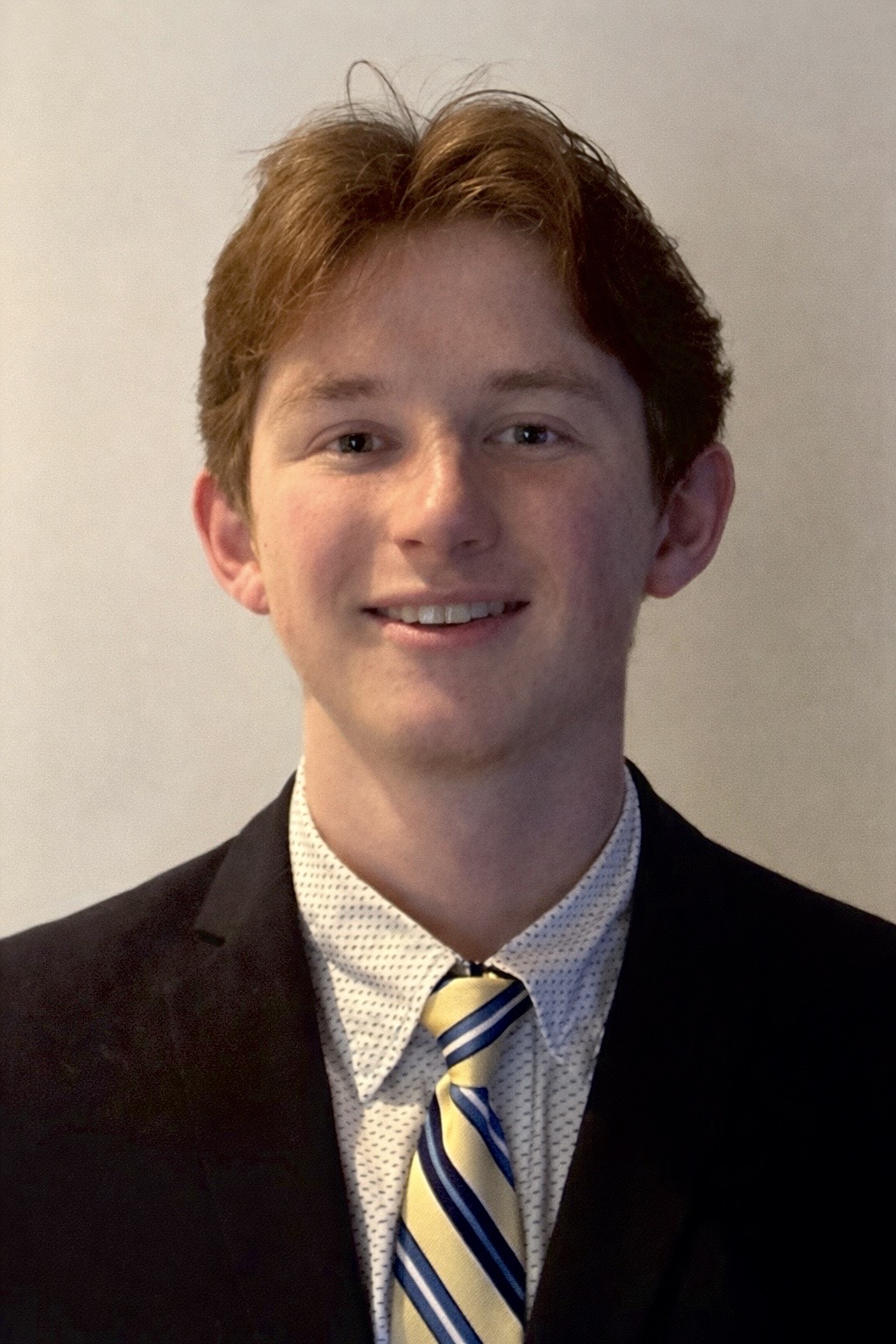
Richard Amthor is a second‑year student at Florida State University, pursuing a Bachelor of Science in Biochemistry. He is actively involved in two research labs on campus. Under the mentorship of Dr. Vanessa Dennen, he contributes to a project examining how social media influences emotional phenotype among college students, exploring the relationship between digital environments and psychological well‑being. In his second lab, mentored by Dr. Hedi Mattoussi, Richard researches gold nanoparticles and their development for biological applications, gaining hands‑on experience with nanotechnology and its potential in medical and biochemical contexts. Originally from Oceanside, New York, Richard is driven by a strong interest in the biomedical sciences and a commitment to improving patient care. After completing his undergraduate degree, he plans to attend medical school and begin his journey toward becoming a physician
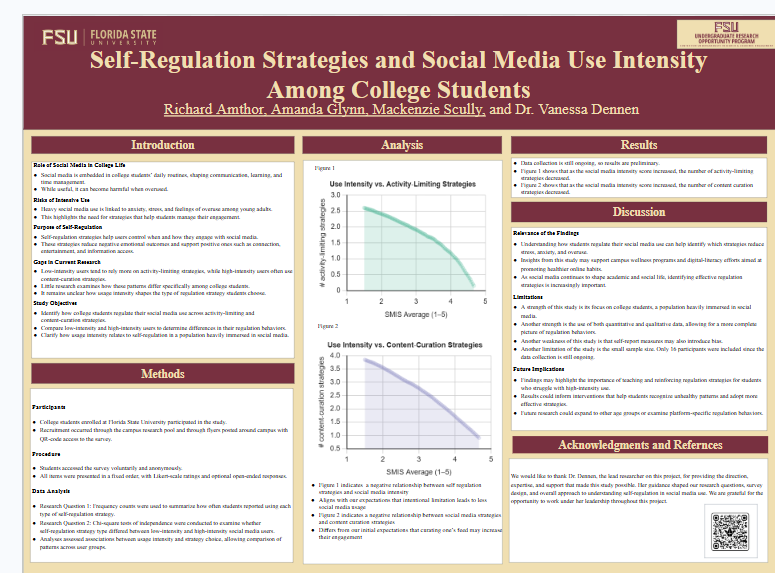
Self-Regulation Strategies and Social Media Use Intensity Among College Students
Authors: Richard Amthor, Dr. Vanessa DennenStudent Major: Biochemistry
Mentor: Dr. Vanessa Dennen
Mentor's Department: Educational Psychology & Learning Systems Mentor's College: Anne Spencer Daves College of Education, Health and Human Sciences Co-Presenters: Mackenzie Scully and Amanda Glynn
Abstract
Social media has become a central part of young people’s lives as over 90% of young adults in the United States use social media. As social media has become more popular, user intensity has also increased. However, people have found that increased social media use makes balancing their academic obligations and social life challenging. Social media seems to affect mood and wellbeing, so it's important to know what factors shape social media experiences. In this study, we focus on self-regulation, which refers to strategies people use to guide, monitor, or limit their social media use in order to maximize positive experiences. In our study we created an online survey through the Qualtrics platform. This survey was distributed in a research participation pool and advertised through flyers around campus. The survey asks students questions about their demographics and their social media usage and self-regulation strategies. Survey items include 10-point agreement scales and open-ended responses.. While data collection is still in progress, we expect to find that people with more self-regulation strategies have positive experiences using social media. Additionally, we expect that people with fewer self-regulation strategies may have more negative feelings about their social media use We plan to explore the relationship between intensity of social media use, the number and types of self-regulation strategies used, and emotional experiences related to social media. This is important as social media becomes more prevalent in our society. This will help us understand our communities better, and form more genuine connections with peers
Keywords: Social media, Self‑Regulation, College Students