
Research Symposium
26th annual Undergraduate Research Symposium, April 1, 2026
Sophia Ocfemia Poster Session 3: 1:45 pm - 2:45 pm / Poster #1
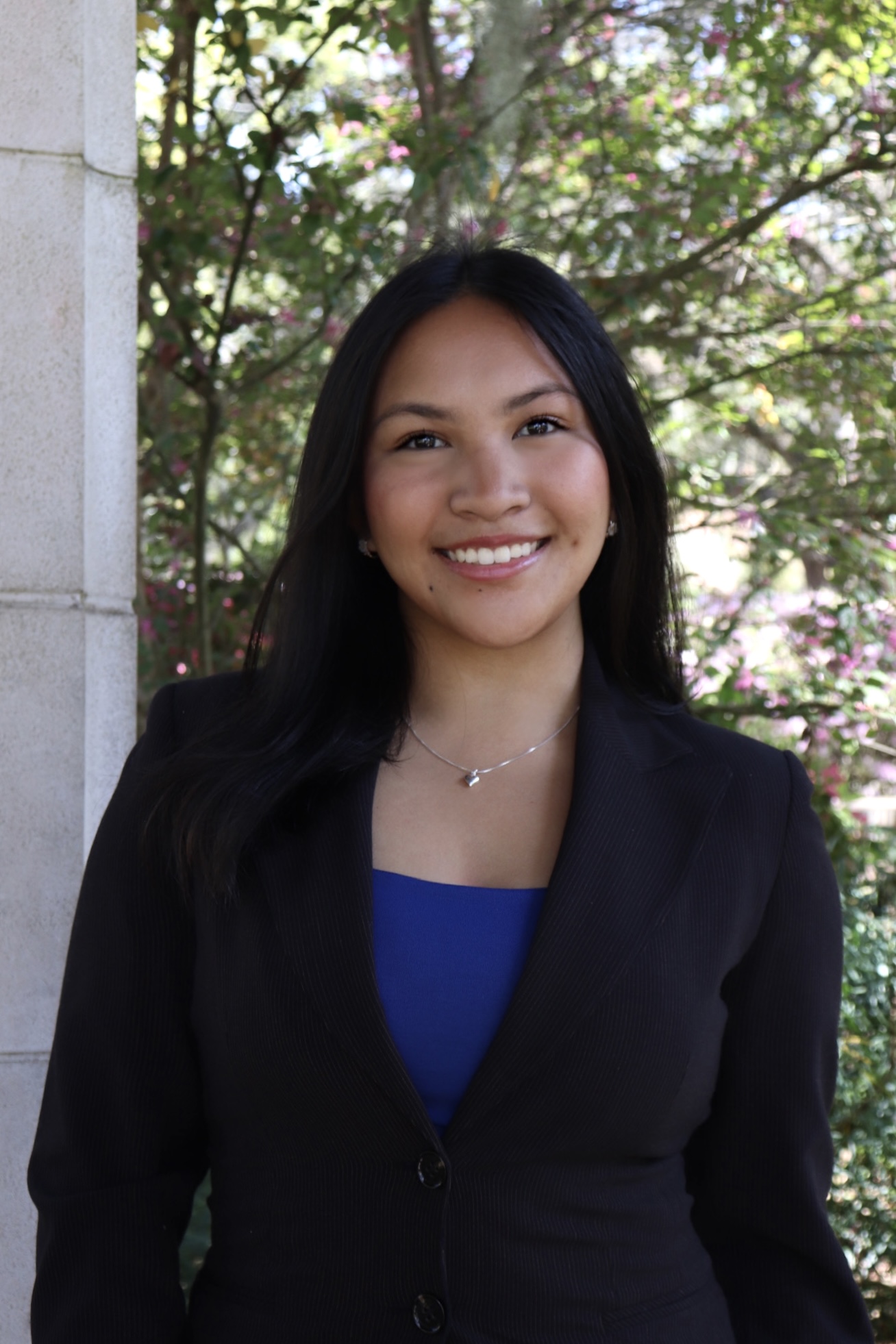
BIO
Sophia Ocfemia is a freshman from Atlanta, GA, pursuing a Bachelor of Music in Music Theatre. She is honored to be a member of FSU’s Honors Program and Presidential Scholar Program, and this is her first time participating in the Undergraduate Research Symposium. She is interested in doing more research that focuses on music cognition and brain development in children. She aspires to be a Broadway performer while also exploring interdisciplinary opportunities to apply her knowledge of music to improve mental health. She is also passionate about working with children in hospital settings and using the power of the arts to support healing, comfort, and resilience.
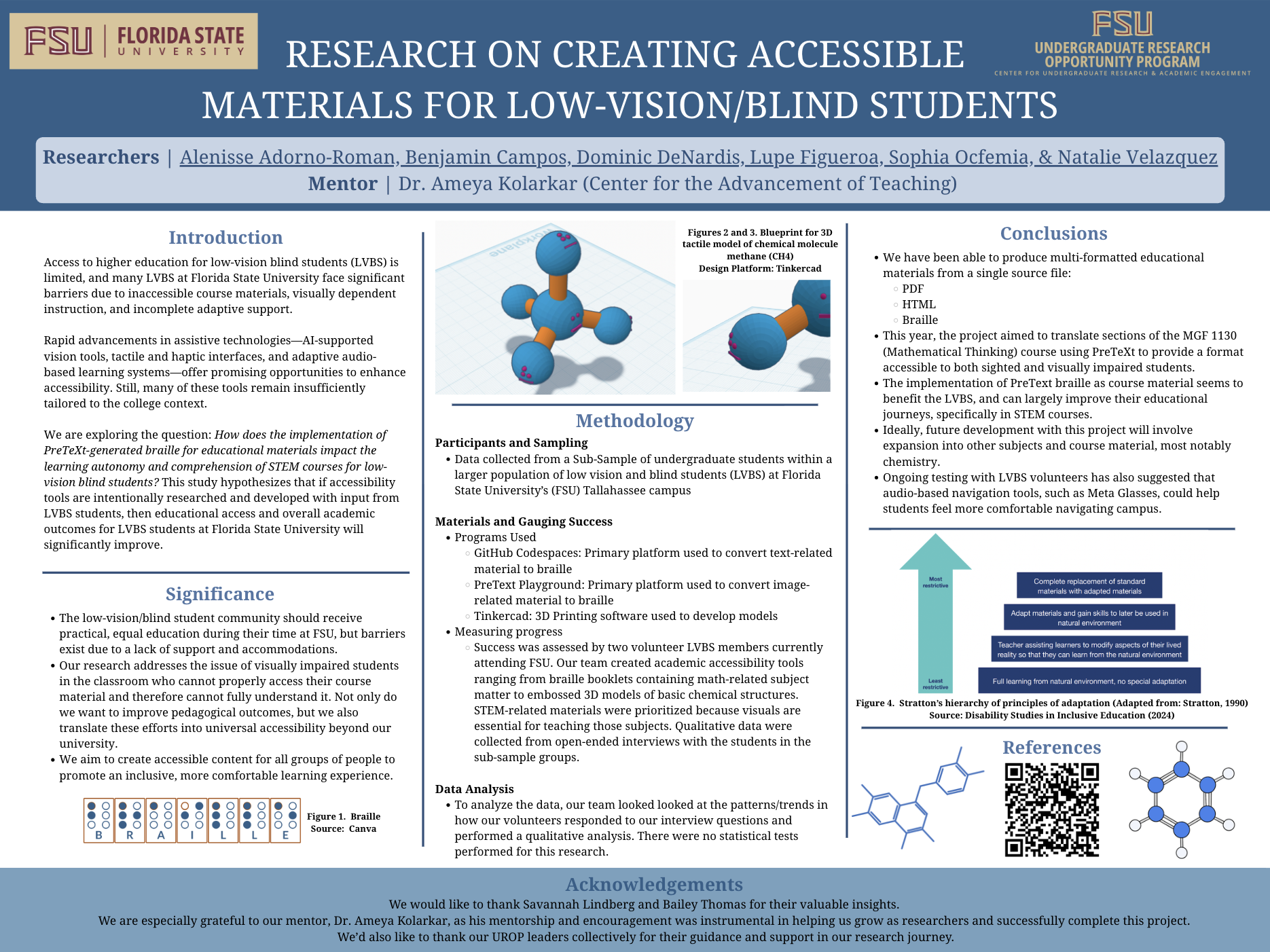
Research on Creating Accessible Materials for Low-Vision Blind Students
Authors: Sophia Ocfemia, Ameya KolarkarStudent Major: Music Theatre
Mentor: Ameya Kolarkar
Mentor's Department: Center for the Advancement of Teaching Mentor's College: College of Arts and Sciences Co-Presenters: Alenisse Adorno-Roman, Benjamin Campos, Dominic DeNardis, Lupe Figueroa, Natalie Velazquez
Abstract
As we make progress toward universal accessibility and equitable education for students with disabilities, significant barriers persist in STEM education for low-vision and blind students (LVBS). This study investigates accessibility tools that can be researched or developed to support LVBS at Florida State University (FSU), where some course material and instruction remain inaccessible. Building on prior use of 3-D printing for tactile learning, our team uses coding and the PreTeXt format to translate core math units into multiple formats, including braille. We are also exploring assistive spatial intelligence that provide audio instructions for commonly traveled campus paths, such as Meta AI glasses. LVBS volunteers at FSU test each tool and provide structured feedback. Individual coding components are created separately, refined through trial and error, compiled into a single text, and converted into braille. In collaboration with the Innovation Hub, we are also developing tactile molecular models with embossed braille labels for chemistry instruction. Findings are preliminary but encouraging. Early LVBS feedback indicates that braille translations generated through PreTeXt increase access to visual STEM content, while tactile chemistry models and navigation improves confidence in learning and movement across campus. These results suggest that accessibility tools designed with direct LVBS input can strengthen learning experiences and campus participation. Grounded in Universal Design for Learning principles, this work supports equitable access at FSU and offers scalable strategies for broader adoption across higher education.
Keywords: Education, Braille, Accessibility