
Research Symposium
26th annual Undergraduate Research Symposium, April 1, 2026
Joshua Stubbs Poster Session 1: 9:30 am - 10:30 am / Poster #133

BIO
A dream will stay a dream if you never take the steps to achieve them. Joshua Stubbs is a real estate student at Florida State University interested in real estate development, strategy, and how cities grow over time. Outside of academics and work, Joshua enjoys wrestling, fitness, cooking, and studying ancient Judaism and early Christian history, which has given Joshua a deeper appreciation for history, culture, and long-term thinking.
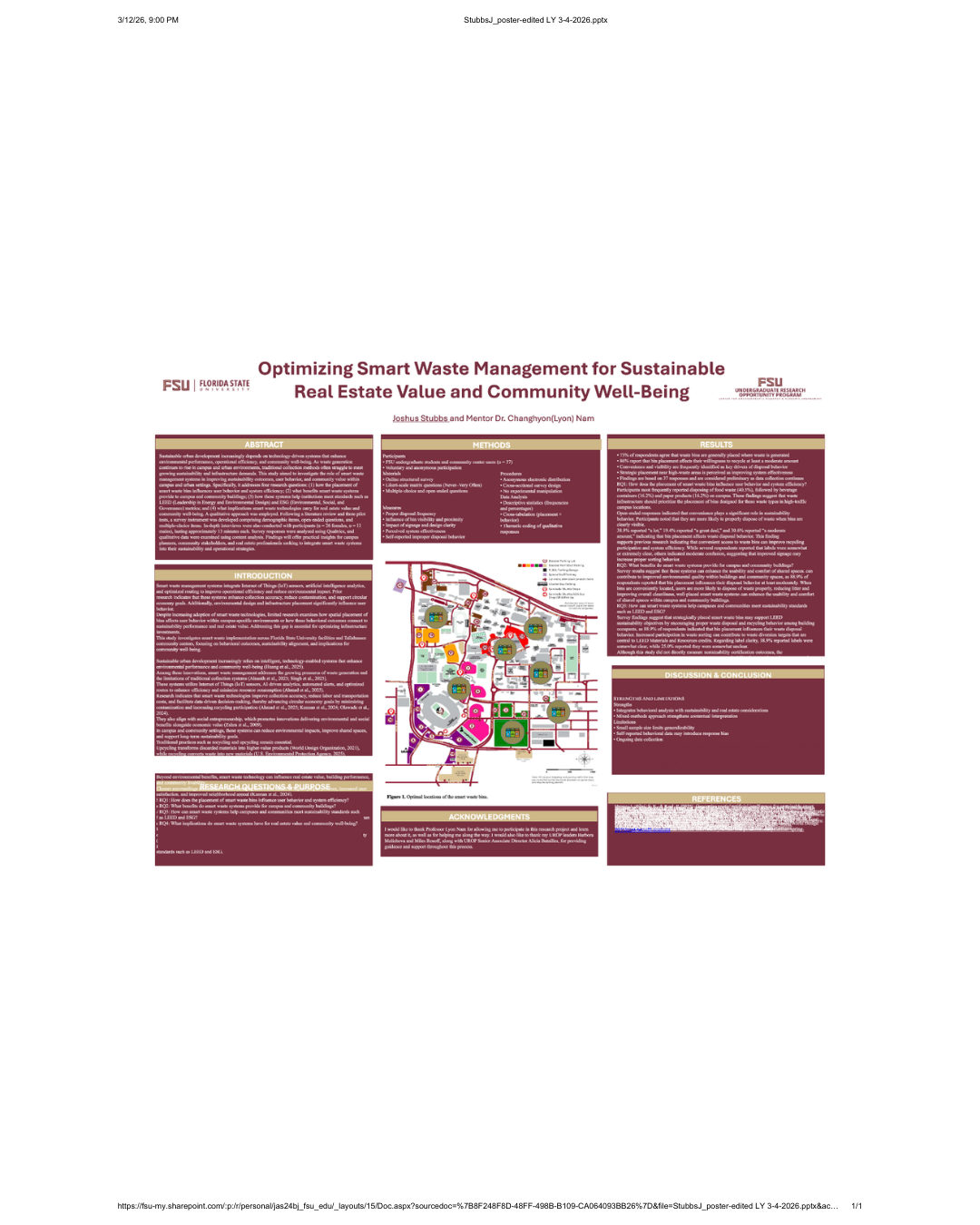
Optimizing Smart Waste Management for Sustainable Real Estate Value and Community Well-Being
Authors: Joshua Stubbs, Changhyun Nam (Lyon)Student Major: Real Estate
Mentor: Changhyun Nam (Lyon)
Mentor's Department: Jim Moran College of Entrepreneurship Mentor's College: College of Information Co-Presenters:
Abstract
Sustainable urban development increasingly depends on technology-driven systems that enhance environmental performance, operational efficiency, and community well-being. As waste generation continues to rise in campus and urban environments, traditional collection methods often struggle to meet growing sustainability and infrastructure demands. This study aimed to investigate the role of smart waste management systems in improving sustainability outcomes, user behavior, and community value within campus and urban settings. Specifically, it addresses four research questions: (1) how the placement of smart waste bins influences user behavior and system efficiency; (2) what benefits smart waste systems provide to campus and community buildings; (3) how these systems help institutions meet standards such as LEED (Leadership in Energy and Environmental Design) and ESG (Environmental, Social, and Governance) metrics; and (4) what implications smart waste technologies carry for real estate value and community well-being. A qualitative approach was employed. Following a literature review and three pilot tests, a survey instrument was developed comprising demographic items, open-ended questions, and multiple-choice items. In-depth interviews were also conducted with participants (n = 26 females, n = 11 males), lasting approximately 13 minutes each. Survey responses were analyzed using Qualtrics, and qualitative data were examined using content analysis. Findings will offer practical insights for campus planners, community stakeholders, and real estate professionals seeking to integrate smart waste systems into their sustainability and operational strategies.
Keywords: Smart Waste Management, Real Estate, Sustainability