
Research Symposium
26th annual Undergraduate Research Symposium, April 1, 2026
Natalie McKenna Natalie McKenna Poster Session 3: 1:45 pm - 2:45 pm / Poster #101

BIO
Natalie McKenna is a first-year student at Florida State University from the suburbs of Chicago. She is majoring in Cell and Molecular Neuroscience and minoring in Humanities. As a pre-med student, she is particularly interested in the intersection of medicine and the socioeconomic factors that influence health and healthcare. She plans to pursue a career in medicine as a neurologist. On campus, she is involved in FSU’s Honors Program and the University Sinfonia Orchestra. Outside of academics, she enjoys making art, playing the viola, and watching movies.
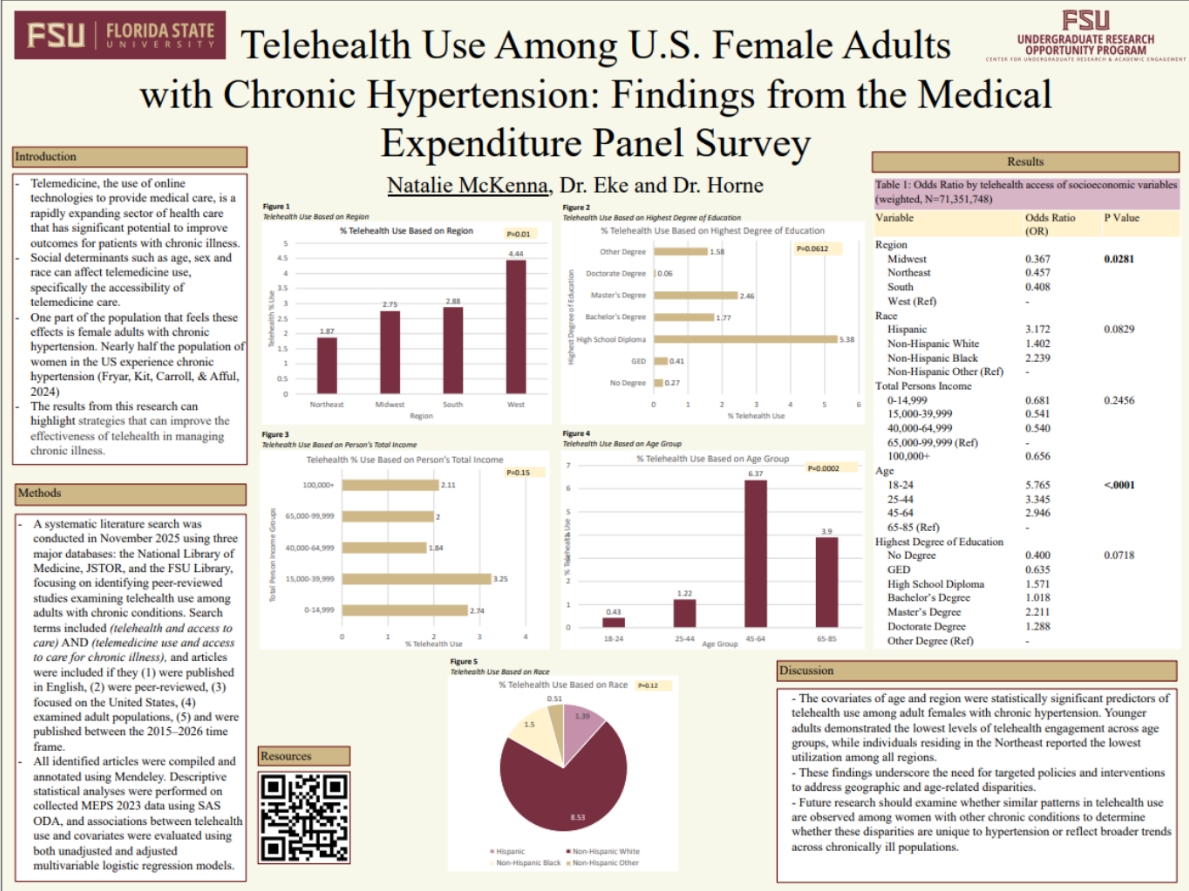
Telehealth Use Among U.S. Female Adults with Chronic Hypertension: Findings from the Medical Expenditure Panel Survey
Authors: Natalie McKenna Natalie McKenna, Ransome EkeStudent Major: Cell/Molecular Neuroscience
Mentor: Ransome Eke
Mentor's Department: Department of Family Medicine and Rural Health Mentor's College: College of Medicine Co-Presenters:
Abstract
Telemedicine is an expanding component of health care with the potential to improve outcomes for patients with chronic illness. Social determinants such as age, region, income, education, and race influence access to and use of telemedicine, making it important to understand how these factors shape engagement among clinically vulnerable groups. Adult females with chronic hypertension require additional medical care, and telemedicine use may increase accessibility. This study examines demographic and socioeconomic factors associated with telemedicine use among U.S. adult females with chronic hypertension.
A systematic literature search conducted in November 2025 identified peer‑reviewed studies on telehealth use among adults with chronic conditions in the United States. Articles were included if they were published in English, peer‑reviewed, focused on U.S. adults, and published between 2015 and 2026. Primary data for this analysis were drawn from the 2023 Medical Expenditure Panel Survey (MEPS) consolidated and outpatient files. Descriptive statistical analyses were performed on collected MEPS data using SAS OnDemand for Academics (SAS ODA), and associations between telehealth use and covariates were evaluated using both unadjusted and adjusted multivariable logistic regression models.
The analytic sample included 5,607 respondents, representing a weighted population of 71,655,118 adult females with chronic hypertension. Telehealth was used in 13.59% of cases. Utilization significantly varied by region and age, revealing clear demographic and socioeconomic differences. These findings highlight disparities in telehealth adoption and can inform strategies to improve equitable access and strengthen telehealth delivery for women managing chronic hypertension.
Keywords: telehealth, hypertension, chronic