
Research Symposium
26th annual Undergraduate Research Symposium, April 1, 2026
Dashell Tellez Poster Session 4: 3:00 pm - 4:00 pm / Poster #286
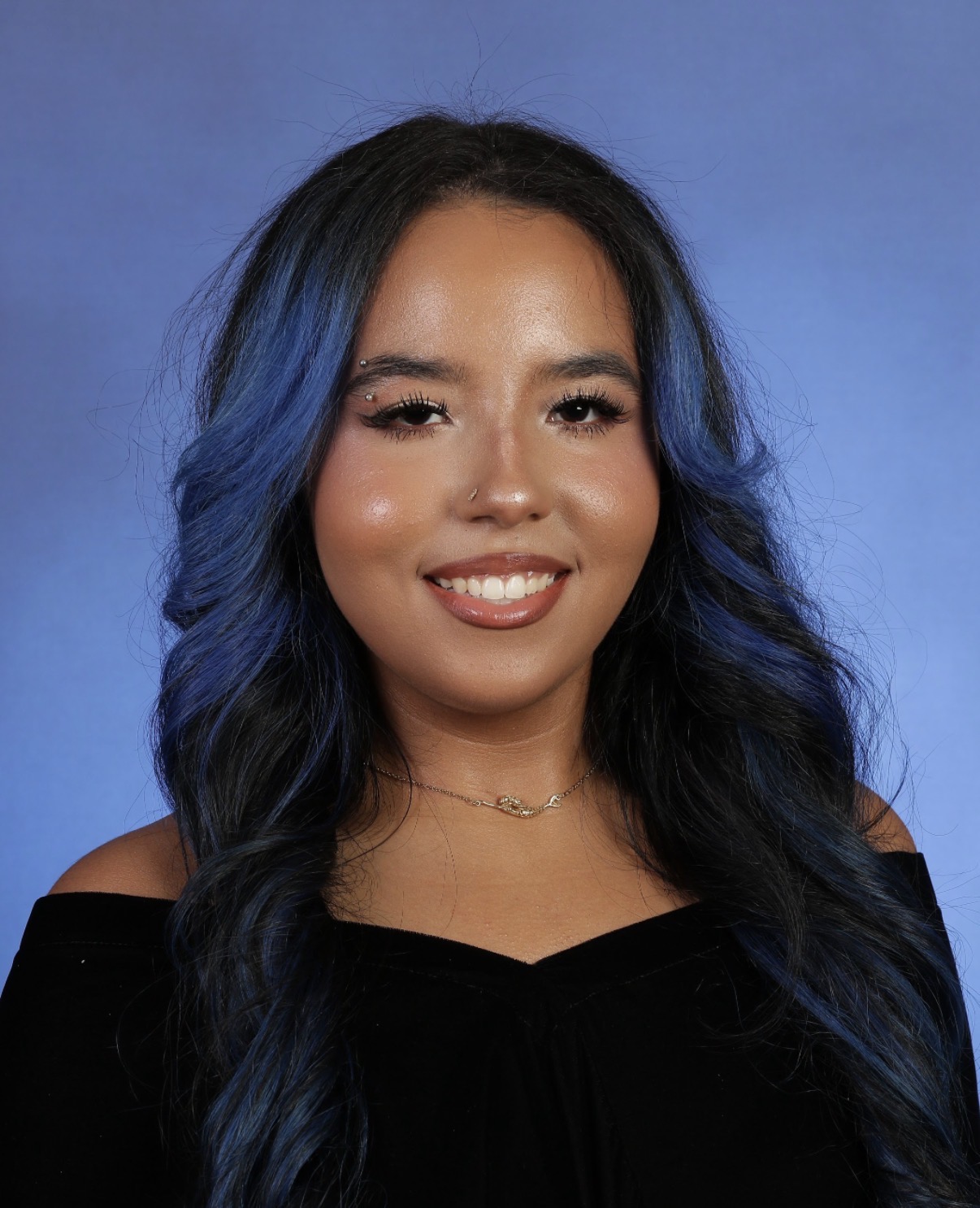
BIO
My name is Dashell Tellez, and I am a first-year Presidential Scholar from Miami, Florida. My major is Behavioral Neuroscience with a minor in Chemistry and an expected minor in Child Development. My research interests particularly relate to clinical psychology and the interdisciplinary nature of how brain structures, functions, and disorders relate to behavior and cognition at a micro- and macroscopic level. My goals are to finish my neuroscience degree and partake in a graduate studies opportunity before attending medical school in hopes of ultimately becoming a neurologist.
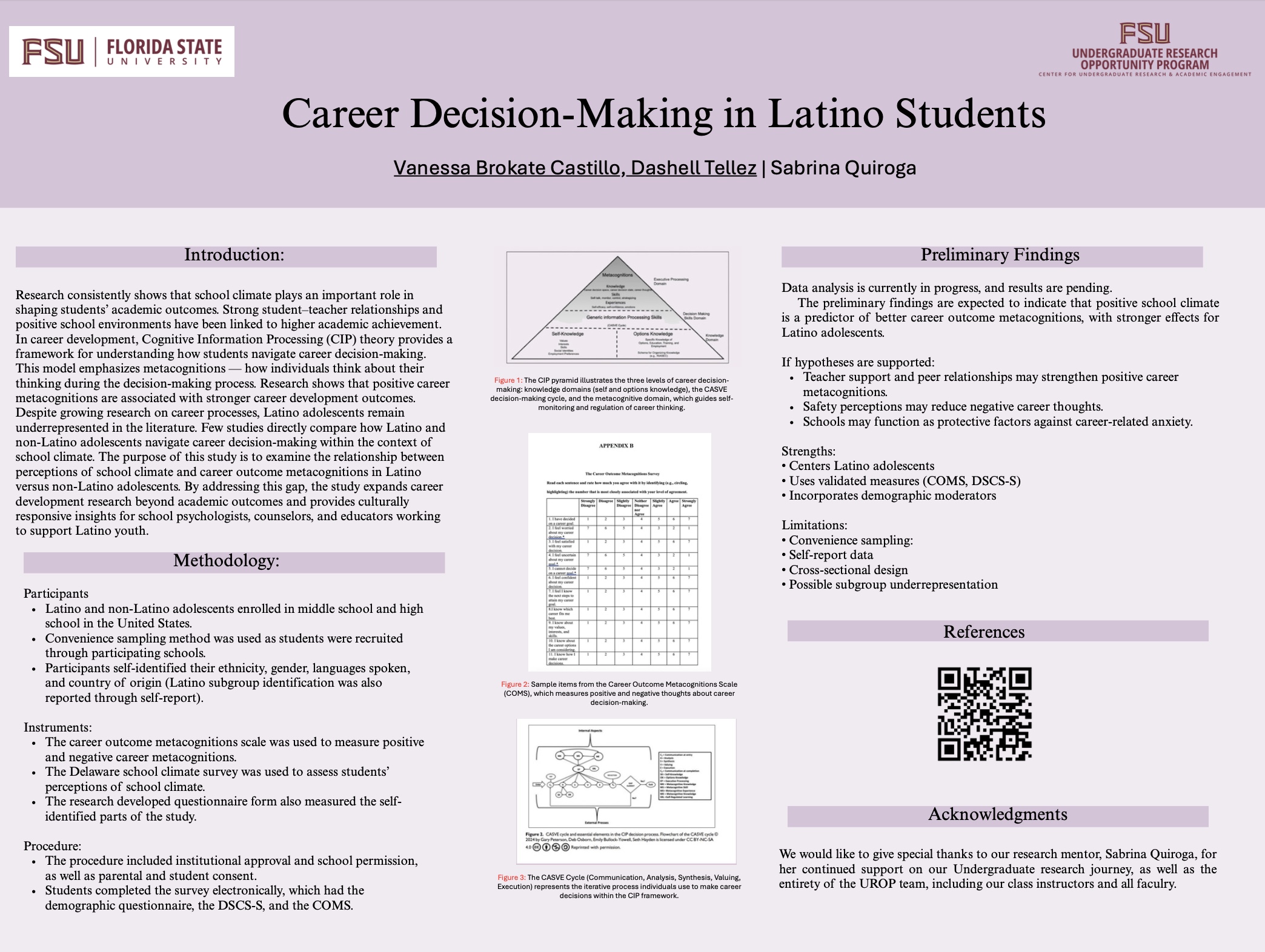
Career Decision-Making in Latino Students
Authors: Dashell Tellez, Sabrina QuirogaStudent Major: Behavioral Neuroscience
Mentor: Sabrina Quiroga
Mentor's Department: Department of Educational Psychology & Learning Systems Mentor's College: Anne Spencer Daves College of Education, Health, and Human Sciences Co-Presenters: Vanessa Brokate Castillo
Abstract
Our study examines how perceptions of school climate influence career metacognitions among Latino and non-Latino adolescents. School climate, including teacher-student relationships, peer interactions, and perceptions of safety, plays a critical role in shaping students’ academic engagement and future aspirations. Despite this, limited research has examined how these environmental factors influence adolescents’ internal beliefs about their future pathways, particularly among Latino youth. Latino adolescents often encounter cultural and systemic barriers, including discrimination, language challenges, and tensions between family expectations and individual goals, which may shape how they evaluate their ability to pursue educational and occupational opportunities. Guided by Cognitive Information Processing (CIP) theory, this study explores how school climate interacts with adolescents’ metacognitive beliefs about their future careers. Specifically, it investigates differences in positive and negative career outcome metacognitions between Latino and non-Latino adolescents and identifies which dimensions of school climate most strongly predict these beliefs. The study also examines whether demographic factors, including gender, language background, grade level, and college aspirations, moderate these relationships. Using a quantitative survey design, adolescents will report their perceptions of school climate and career outcome metacognitions. Findings aim to clarify how school environments shape students’ beliefs about their future pathways and to inform culturally responsive strategies that schools and health service psychologists can use to better support Latino adolescents’ academic and vocational development.
Keywords: Behavioral Neuroscience, School Environment, Latinos, Psychology, Metacognition