
Research Symposium
26th annual Undergraduate Research Symposium, April 1, 2026
Elizabeth Wall Poster Session 4: 3:00 pm - 4:00 pm / Poster #12
BIO
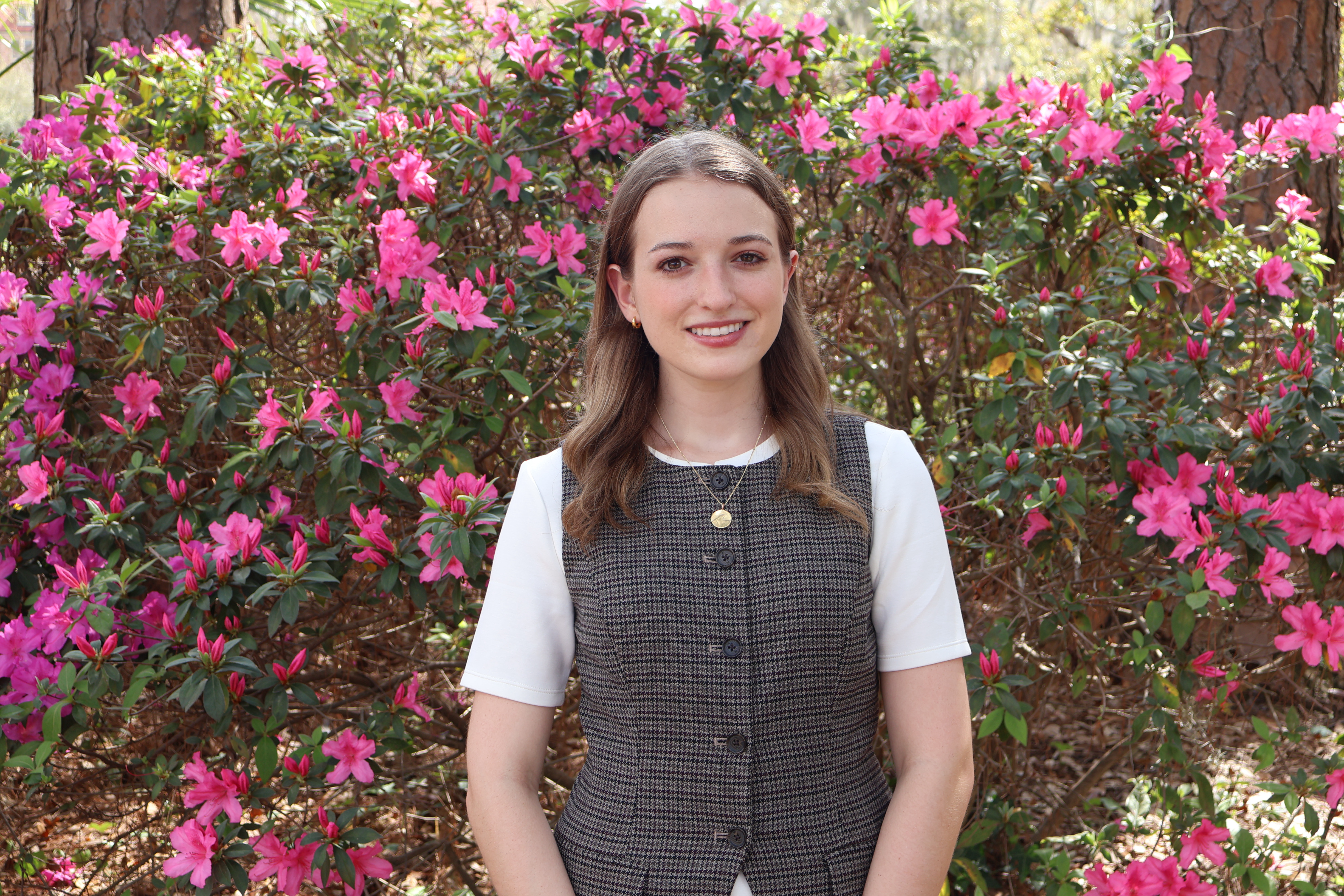
Elizabeth Wall is a freshman researcher in the College of Arts and Sciences, and is pursuing a Bachelor of Science in Environmental Science & Policy and Editing, Writing, and Media as a double major. As a part of the honors program at Florida State University, Elizabeth is a member of the Undergraduate Research Opportunity Program, where she is researching the degree of acknowledgment to the Seminole and Miccosukee natives that is present in the legislative sanctioning to create Everglades National Park. Working under Dr. Andrew Frank in the Department of History, Elizabeth has been able to expand her skills in literary analysis and data evaluation. With these skills, she applies them in various engagements such as Sustainable Campus, Florida Association of Environmental Professionals, and Environmental Service Program, where she is able to actualize her aspirations of a career in Environmental Law.
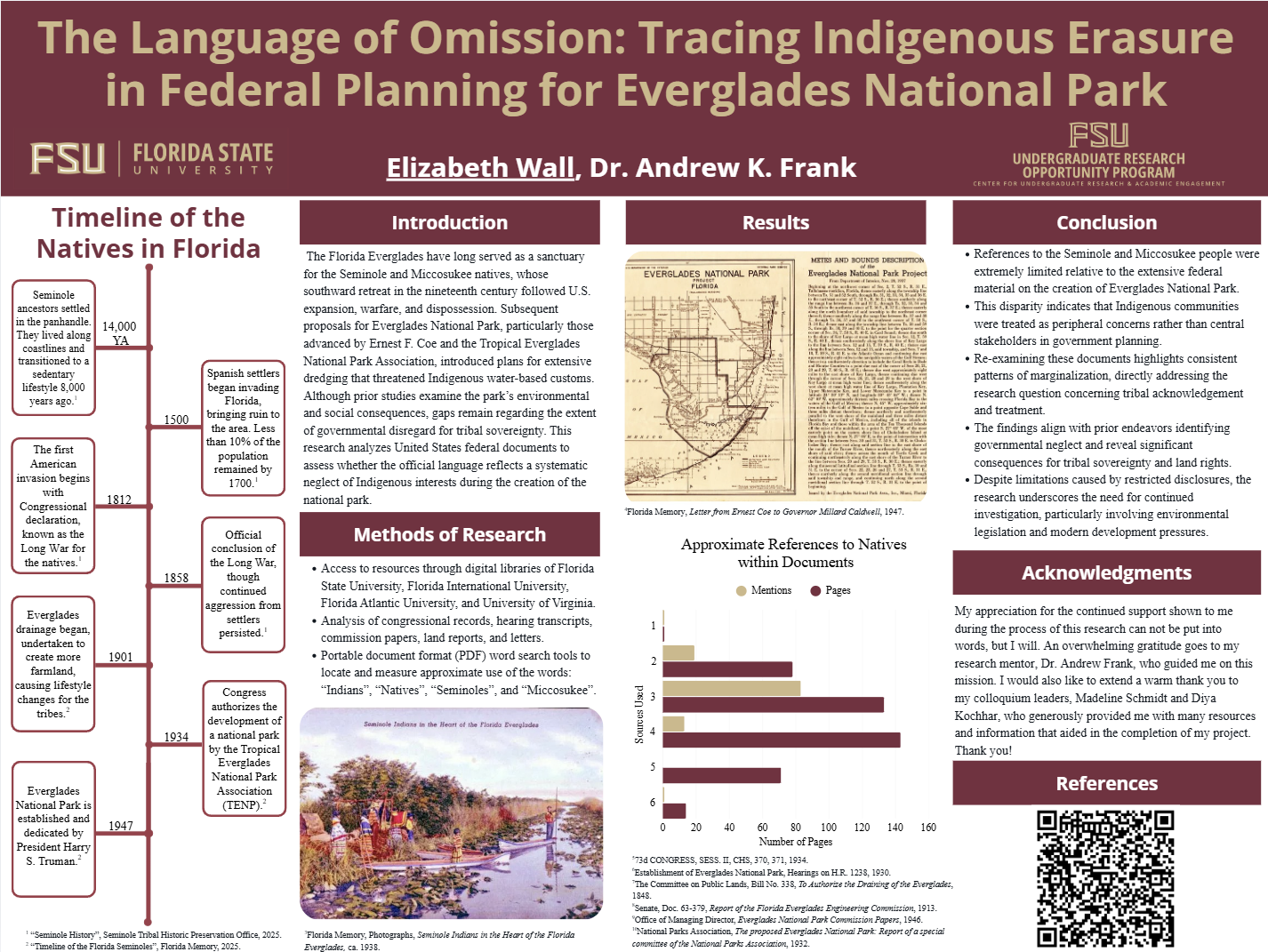
The Language of Omission: Tracing Indigenous Erasure in Federal Planning for Everglades National Park
Authors: Elizabeth Wall, Dr. Andrew FrankStudent Major: Environmental Science & Policy, Editing, Writing, and Media
Mentor: Dr. Andrew Frank
Mentor's Department: Department of History Mentor's College: College of Arts and Sciences Co-Presenters:
Abstract
This study argues the degree to which the United States government and the U.S. Army Corps of Engineers considered the Seminole and Miccosukee peoples during the planning and establishment of Everglades National Park in 1934. Although the park emerged from decades of federal surveying and land use proposals, its creation occurred in a region where the Seminole people had long sought refuge from colonial expansion and conflict. The essential question being investigated pertains to how analyzing historical legal documents related to the creation of Everglades National Park can offer insight into how these communities were acknowledged and treated throughout the process. Using a corpus of archival materials, including congressional records, hearing transcripts, land use proposals, and interagency correspondences, this study employs vocabulary analysis to assess connotations surrounding references to Native communities, utilizing document searching tools to quantify their presence within the texts. Findings show that tribal mentions were either absent or occurred at exceptionally low frequencies relative to the overall volume of documentation. When present, references to the Seminoles and Miccosukees frequently appeared in negative or dismissive framings, often positioning them as impediments to federal development objectives. These patterns highlight a broader historical neglect by governmental and developmental bodies and emphasize the marginalization of Native land relationships during major environmental initiatives. Ultimately, this research contributes to ongoing conversations about the sovereignty of Indigenous communities and the long-term consequences of disregarding their environmental and cultural ties during state-directed land transformation.
Keywords: Seminole, Miccosukee, Everglades, Legislature, Environmental