
Research Symposium
26th annual Undergraduate Research Symposium, April 1, 2026
Shannon Smekle Poster Session 3: 1:45 pm - 2:45 pm / Poster #103

BIO
Shannon Smekle is a 2nd-year Cell and Molecular Neuroscience major with a minor in Chemistry on the premedical track. She is in the Honors Program and hopes to serve underrepresented communities in the future as a gynecologist. The Undergraduate Research Opportunity Program has given her the chance to step into academic research, which she conducted with Dr. Ransome Eke and Dr. Ericka Horne, focusing on public health and patient outcomes in underserved and underrepresented communities. She hopes to continue her pursuit of research in health disparities and women's health to ensure equitable care for all patients.
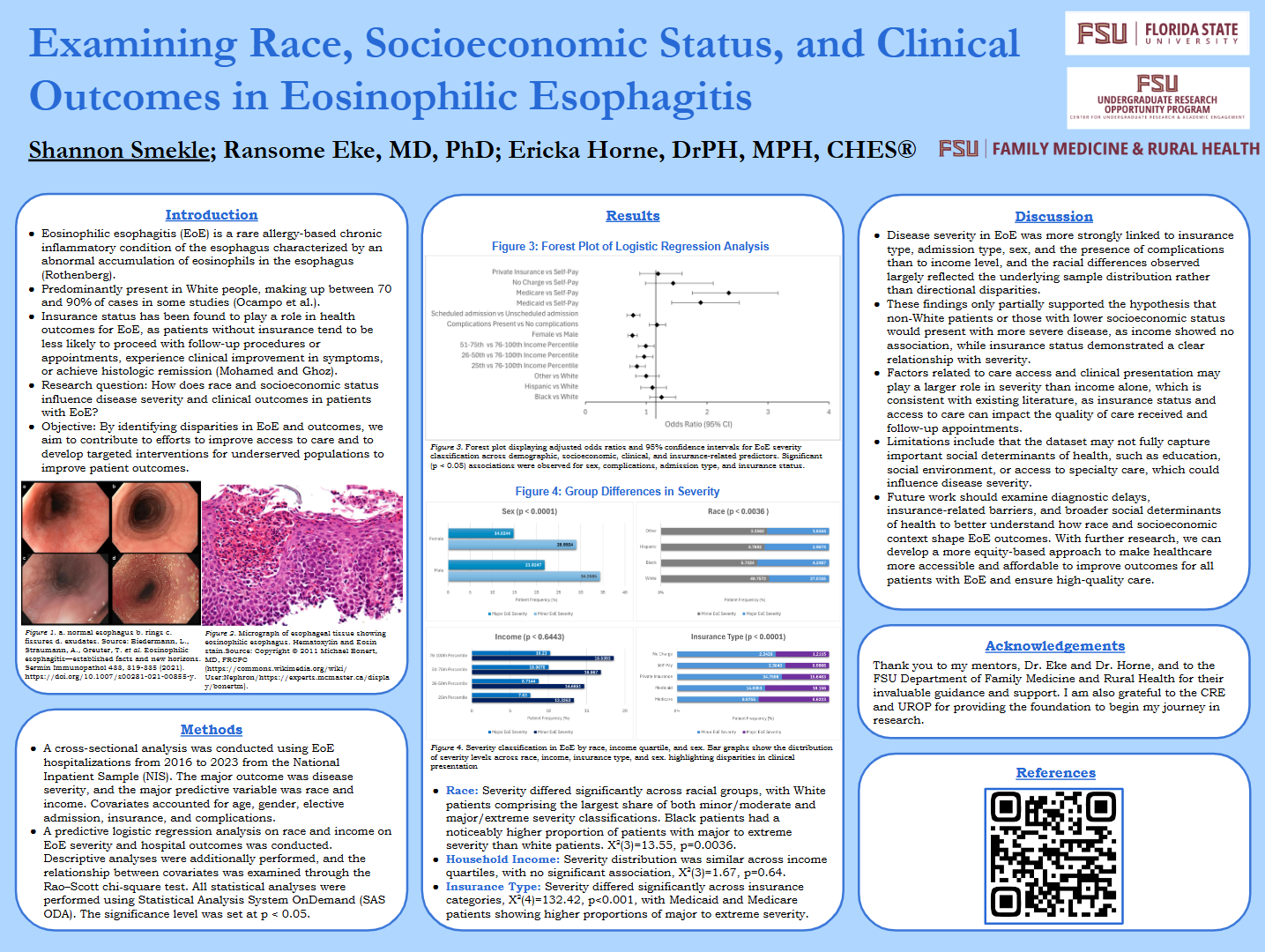
Examining Race, Socioeconomic Status, and Clinical Outcomes in Eosinophilic Esophagitis
Authors: Shannon Smekle, Ransome EkeStudent Major: Cell and Molecular Neuroscience
Mentor: Ransome Eke
Mentor's Department: Department of Family Medicine and Rural Health Mentor's College: College of Medicine Co-Presenters:
Abstract
Eosinophilic esophagitis (EoE) is a rare, allergy-induced, chronic inflammatory condition in the esophagus. White patients are more likely to be diagnosed with EoE and have private insurance, while non-White patients tend to either not have insurance or be on Medicare/Medicaid. This study examined how race and socioeconomic status influence disease severity in patients with EoE. By identifying disparities in EoE and outcomes, we aim to contribute to efforts to improve access to care and to develop targeted interventions for underserved populations to improve patient outcomes.
A literature review was conducted from December 2025 to January 2026 to identify the differences in health outcomes among minority populations and different income brackets. A cross-sectional analysis was conducted using EoE hospitalizations from 2016 to 2023 from the National Inpatient Sample (NIS); the major outcome was disease severity, and the major predictive variable was race and income. A predictive regression analysis on race and socioeconomic status on EoE severity and hospital outcomes was conducted using Statistical Analysis System On Demand (SAS ODA); covariates accounted for age, gender, elective admission, length of stay, insurance, and complications.
Race showed a partial impact, while income showed no impact on EoE severity. Covariates of gender, elective admission, insurance, and complications were shown to be significant predictors. This indicates a need for more equity-based approaches and increased accessibility to improve outcomes.
Keywords: Eosinophilic Esophagitis Clinical Outcomes