
Research Symposium
26th annual Undergraduate Research Symposium, April 1, 2026
Natalia Figueroa Poster Session 3: 1:45 pm - 2:45 pm / Poster #95
BIO
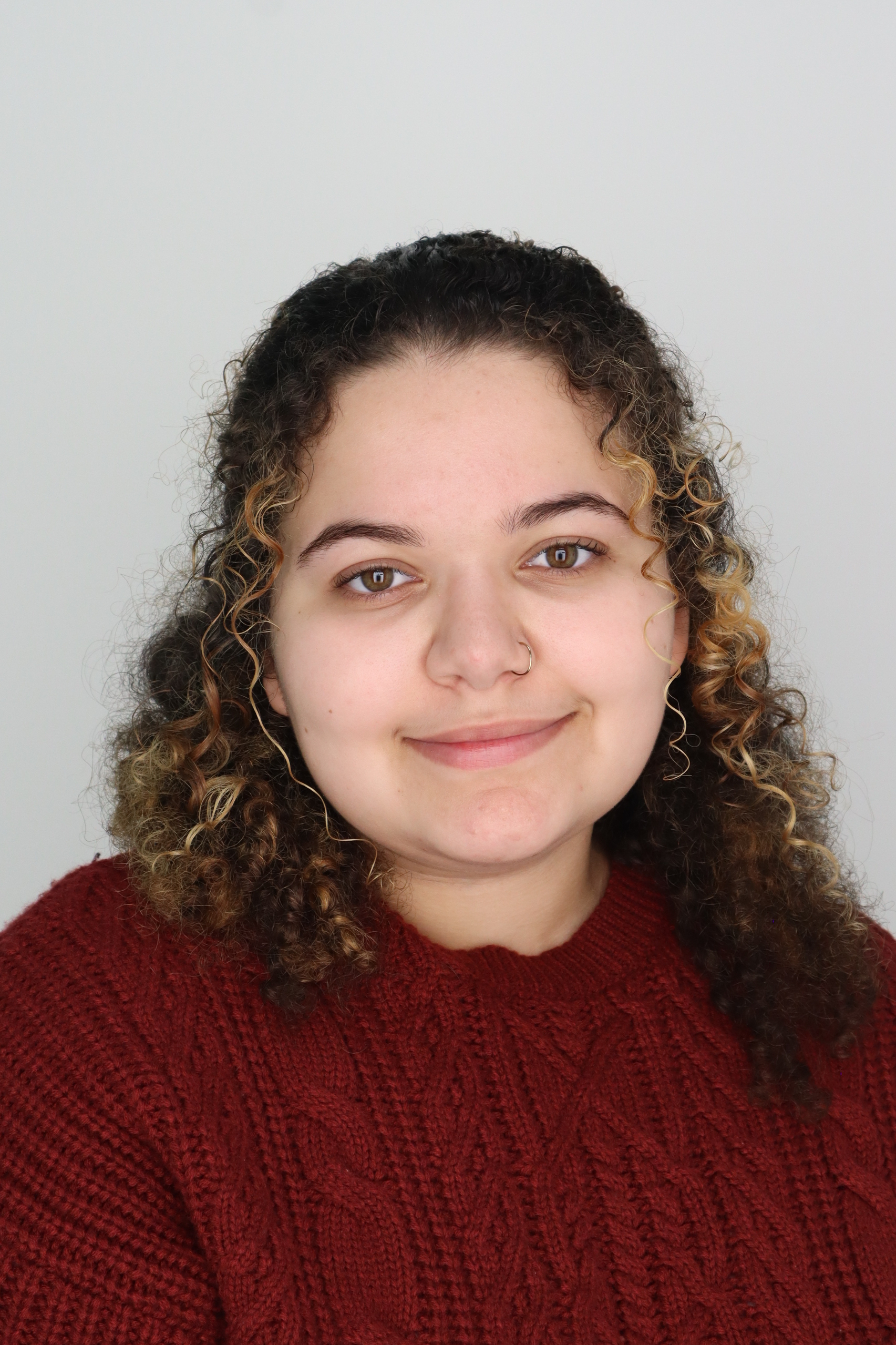
Natalia Figueroa is a sophomore Cell and Molecular Neuroscience major, with a collateral minor in Chemistry. Through UROP she works with the Wagner Lab in dyslexia research, and does DIS with the Varela Lab to research memory consolidation and sleep. Outside of classes she's an active member in the Neuroscience Undergraduate Student Association, as well as the Rural Med Collective. In the future she aspires to go to medical school, as well as continue being an active member in the field of research.
Meta-Analysis of Dyslexia Indicators
Authors: Natalia Figueroa, Richard WagnerStudent Major: Cell and Molecular Neuroscience
Mentor: Richard Wagner
Mentor's Department: Department of Psychology Mentor's College: College of Arts and Science Co-Presenters: Sophia Bell, Kendall Knapp, Isabella Erb
Abstract
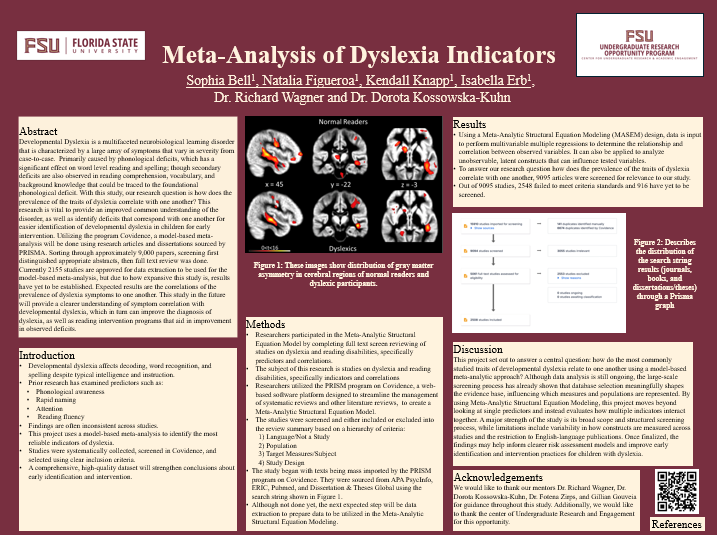
Developmental Dyslexia is a multifaceted neurobiological learning disorder that is characterized by a large array of symptoms that vary in severity from case-to-case. Primarily caused by phonological deficits, which has a significant effect on word level reading and spelling; though secondary deficits are also observed in reading comprehension, vocabulary, and background knowledge that could be traced to the foundational phonological deficit. With this study, our research question is how does the prevalence of the traits of dyslexia correlate with one another? This research is vital to provide an improved common understanding of the disorder, as well as identify deficits that correspond with one another for easier identification of developmental dyslexia in children for early intervention. Utilizing the program Covidence, a model-based meta analysis will be done using research articles and dissertations sourced by PRISMA. Sorting through approximately 9,000 papers, screening first distinguished appropriate abstracts, then full text review was done. Currently 2155 studies are approved for data extraction to be used for the model-based meta-analysis, but due to how expansive this study is, results have yet to be established. Expected results are the correlations of the prevalence of dyslexia symptoms to one another. This study in the future will provide a clearer understanding of symptom correlation with developmental dyslexia, which in turn can improve the diagnosis of dyslexia, as well as reading intervention programs that aid in improvement in observed deficits.
Keywords: Dyslexia, Learning Disorders, Meta-Analysis, Psychology, Neuroscience