
Research Symposium
26th annual Undergraduate Research Symposium, April 1, 2026
Elijah Sakhleh Poster Session 3: 1:45 pm - 2:45 pm / Poster #235

BIO
Pre-Medical Pre-Surgerical Undergraduate Student
The Relationship Between Alcohol Use and Suicidal Behavior Among Adolescents
Authors: Elijah Sakhleh, Qinglan FengStudent Major: Cellular And Molecular Neuroscience
Mentor: Qinglan Feng
Mentor's Department: Florida Department of Prevention Research Mentor's College: n/a Co-Presenters:
Abstract
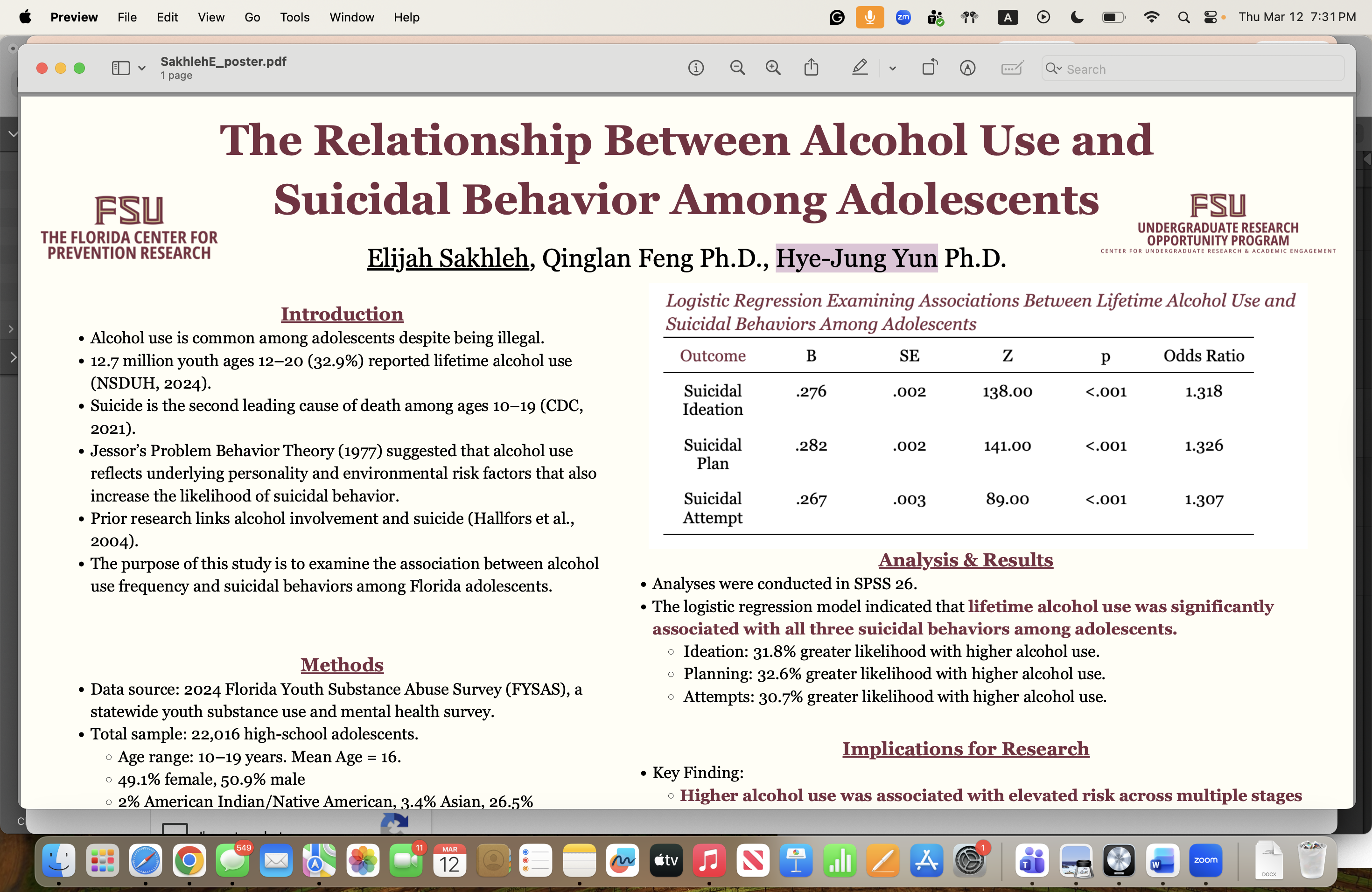
Adolescent alcohol use and abuse have long been recognized as contributing factors in suicidal behavior, yet their relationship remains a critical public health concern. High school adolescents warrant attention due to the illegality of underage drinking and the limited research addressing this issue. Moreover, alcohol-related impairment during a critical period of cognitive and neurodevelopment is understudied. This research study examined the relationship between alcohol use and suicidal behavior (ideation, planning, and attempt) among adolescents in Florida. Using data from the 2023-2024 Florida Youth Substance Abuse Survey (FYSAS), a cross-sectional survey design, we analyzed responses from a statewide sample of high-school adolescents (M = 16). Alcohol use was measured through self-reported frequency, while suicidal behavior was assessed using self-reported presence of suicidal ideation, suicide plans, and suicide attempts in the past year from high school students. Logistic regression in SPSS was conducted to evaluate the associations and significance between alcohol use and suicide risk factors. Results indicated a significant positive relationship between higher levels of alcohol use and increased reports of suicidal behavior. These findings suggest that alcohol use is a significant risk factor and may play a more substantial role in adolescent suicidality than simply contributing to general physical harm. Implications extend to research, practice, policy, and identification in youth and adolescents.
Keywords: alcohol, suicidal behavior,