
Research Symposium
26th annual Undergraduate Research Symposium, April 1, 2026
Mira Lemstrom Poster Session 2: 10:45 am - 11:45 am / Poster #216

BIO
Mira is a first-year studying Biological Sciences with a concentration in Ecology, Evolution, and Environmental Science. She is from Gainesville, Florida and is interested in conservation biology and ecology. Mira aims to complete a post-graduate degree in these fields, with the goal of becoming a researcher and professor within the natural sciences.
Is there evidence of maternal investment in a gynodioecious endangered plant?
Authors: Mira Lemstrom, Joshua RoweStudent Major: Biological Sciences
Mentor: Joshua Rowe
Mentor's Department: Department of Biological Science Mentor's College: College of Arts and Sciences Co-Presenters: Lana Fulmer
Abstract
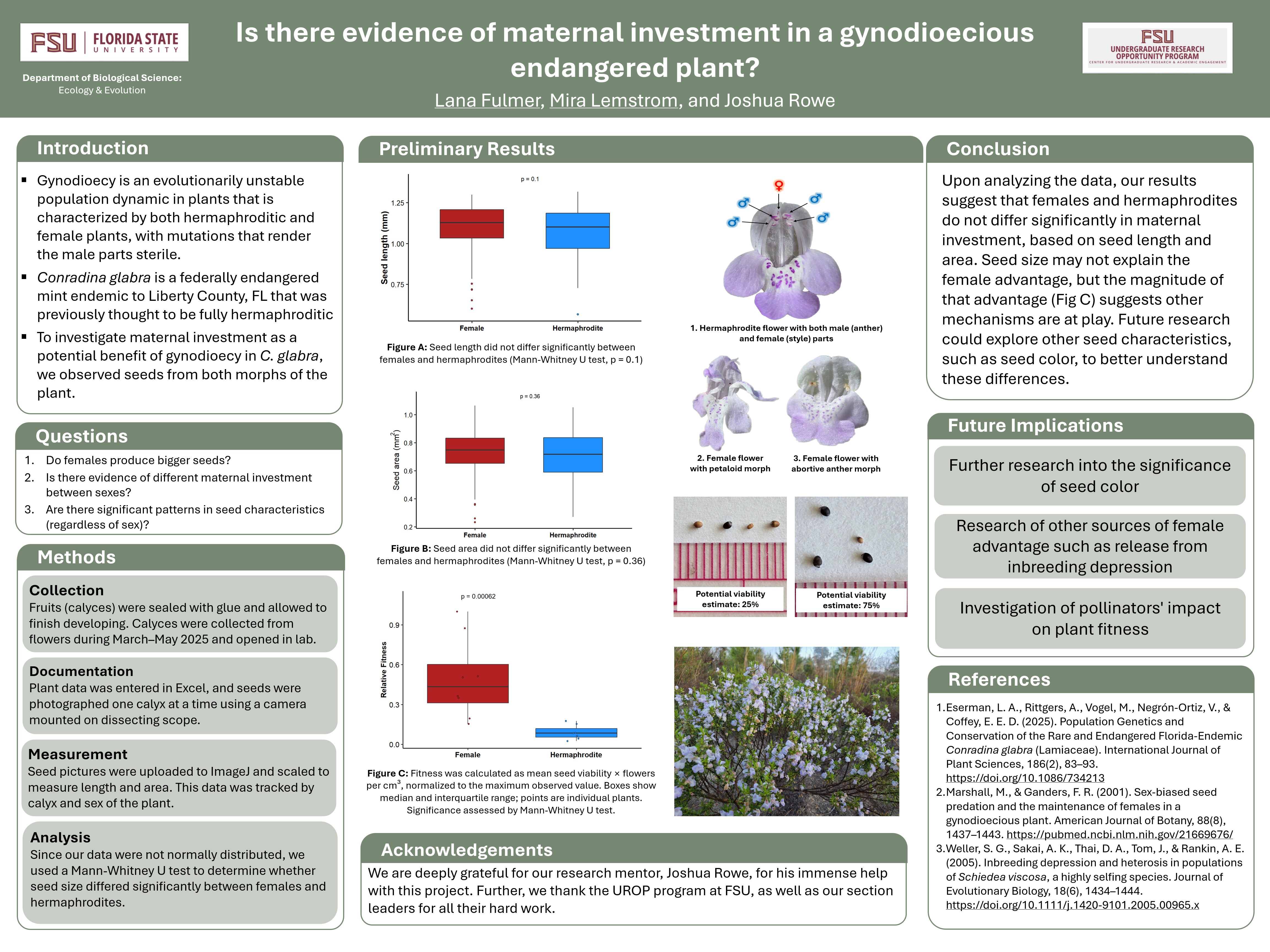
Sizes of viable seeds were compared from both hermaphroditic and female varieties of the gynodioecious Conradina glabra (Apalachicola rosemary) to study resource allocation. Listed as federally endangered, C. glabra is a mint endemic to Liberty County, Florida and was previously thought to be completely hermaphroditic. Given the evolutionarily unstable nature of gynodioecy, broader research is being conducted on known populations of C. glabra to determine the impact of a male-sterile (effectively female) morph of the plant. To this end, seeds collected from marked C. glabra plants at Torreya State Park were photographed under a microscope and measured using ImageJ processing software. Seeds were categorized by their size (large or small) and color (dark or pale). The length and area of each seed were measured in millimeters. Sizes of seeds taken from hermaphroditic and female plants were analyzed using a statistical regression to find that there was no significant difference in seed sizes. While this did not support our hypothesis that female plants would have larger seeds because of more resource availability to concentrate as maternal investment, the experiment shifted our focus to other seed characteristics, such as color and viability. Patterns among these characteristics could potentially serve as different indicators of maternal investment between the two sexes and contribute to future research to improve conservation methods for this species.
Keywords: Plant ecology, reproductive ecology, gynodioecy, resource allocation, maternal investment