
Research Symposium
26th annual Undergraduate Research Symposium, April 1, 2026
Nina Hamlin Poster Session 1: 9:30 am - 10:30 am / Poster #191
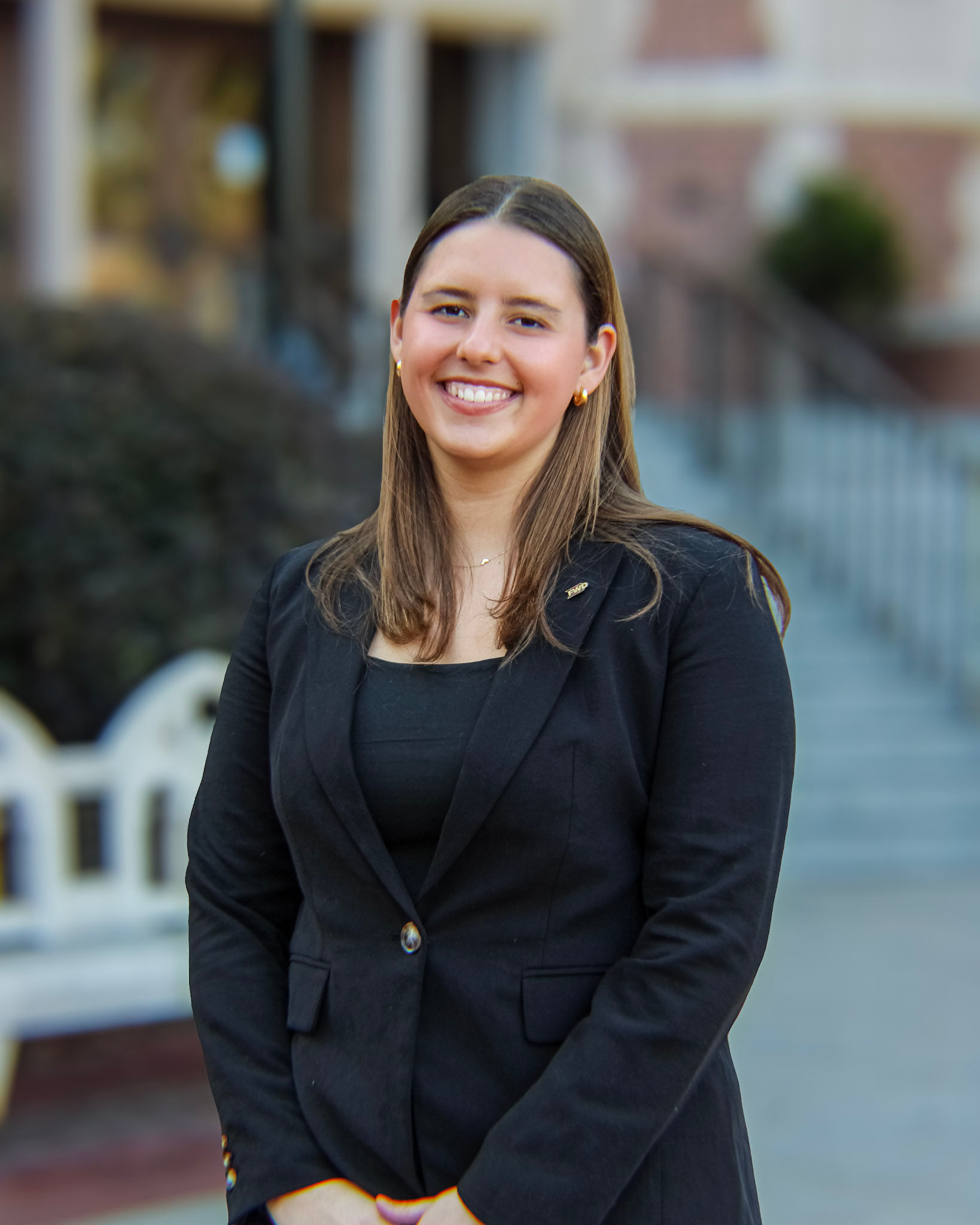
BIO
Nina Hamlin is a sophomore at Florida State University pursuing a Bachelor of Science in Cell and Molecular Neuroscience on the pre-medical track. During the 2025–2026 academic year, she is participating in the Undergraduate Research Opportunity Program (UROP) and conducting research under the mentorship of Dr. Ravikumar Gelli. Through this program, she is gaining experience in the research process while developing skills in critical thinking, data analysis, and scientific collaboration. After completing her undergraduate studies, Nina plans to attend medical school and pursue a career as an orthopedic surgeon.
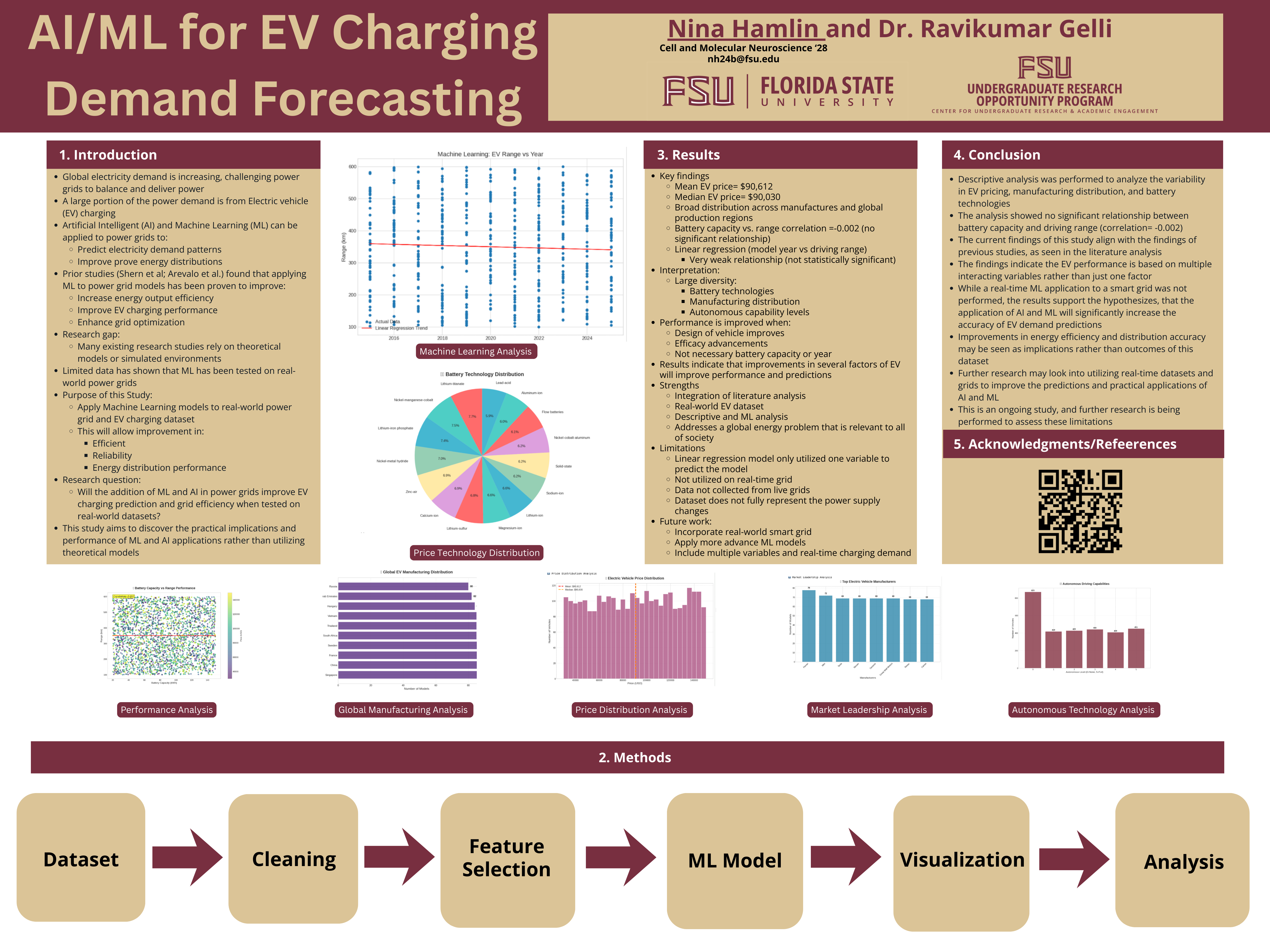
Al/ML for EV Charging Demand Forecasting
Authors: Nina Hamlin, Dr. Ravikumar GelliStudent Major: Cell and Molecular Neuroscince
Mentor: Dr. Ravikumar Gelli
Mentor's Department: Electrical and Computer Engineering Mentor's College: FAMU-FSU College of Engineering Co-Presenters:
Abstract
This project investigates how Artificial Intelligence (AI) and Machine Learning (ML) can improve efficiency and reliability in smart electric power grids. As renewable energy and electric vehicle (EV) use increases, energy distribution becomes essential. This study specifically aims to study how ML can accurately predict EV charging demand and how these predictions improve grid stability and energy distribution. To assess this, a literature review was conducted to examine AI application in smart grids. A publicly available dataset from Kaggle, an online data science platform that provides real-world datasets, was used to model EV charging patterns, Machine Learning algorithms were applied to predict demand and evaluate potential grid integration with AI. It is hypothesized that the application of ML and AI will improve charging efficiency and reduce energy waste. Future studies may include models with real-time data to improve predictability and accuracy in power grids.
Keywords: AI/ML in EV charging