
Research Symposium
26th annual Undergraduate Research Symposium, April 1, 2026
Samantha Foreman Poster Session 4: 3:00 pm - 4:00 pm / Poster #202
BIO
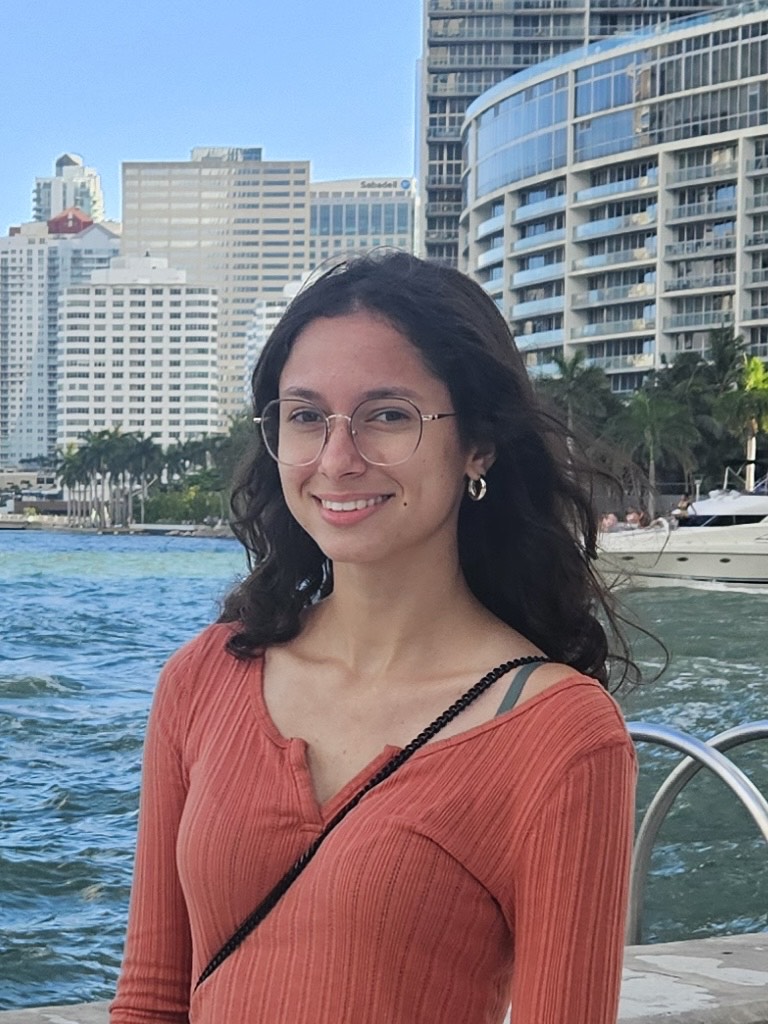
Samantha Foreman is a second-year student majoring in Geology at Florida State University. Her academic interests include understanding Earth’s systems, including rock formation, environmental change, and the processes that shape landscapes. Under Dr. Amy Baco-Taylor she contributed to the study of examining substrate characteristics of deep-sea seamount habitats within and outside the Papahānaumokuākea Marine National Sanctuary.
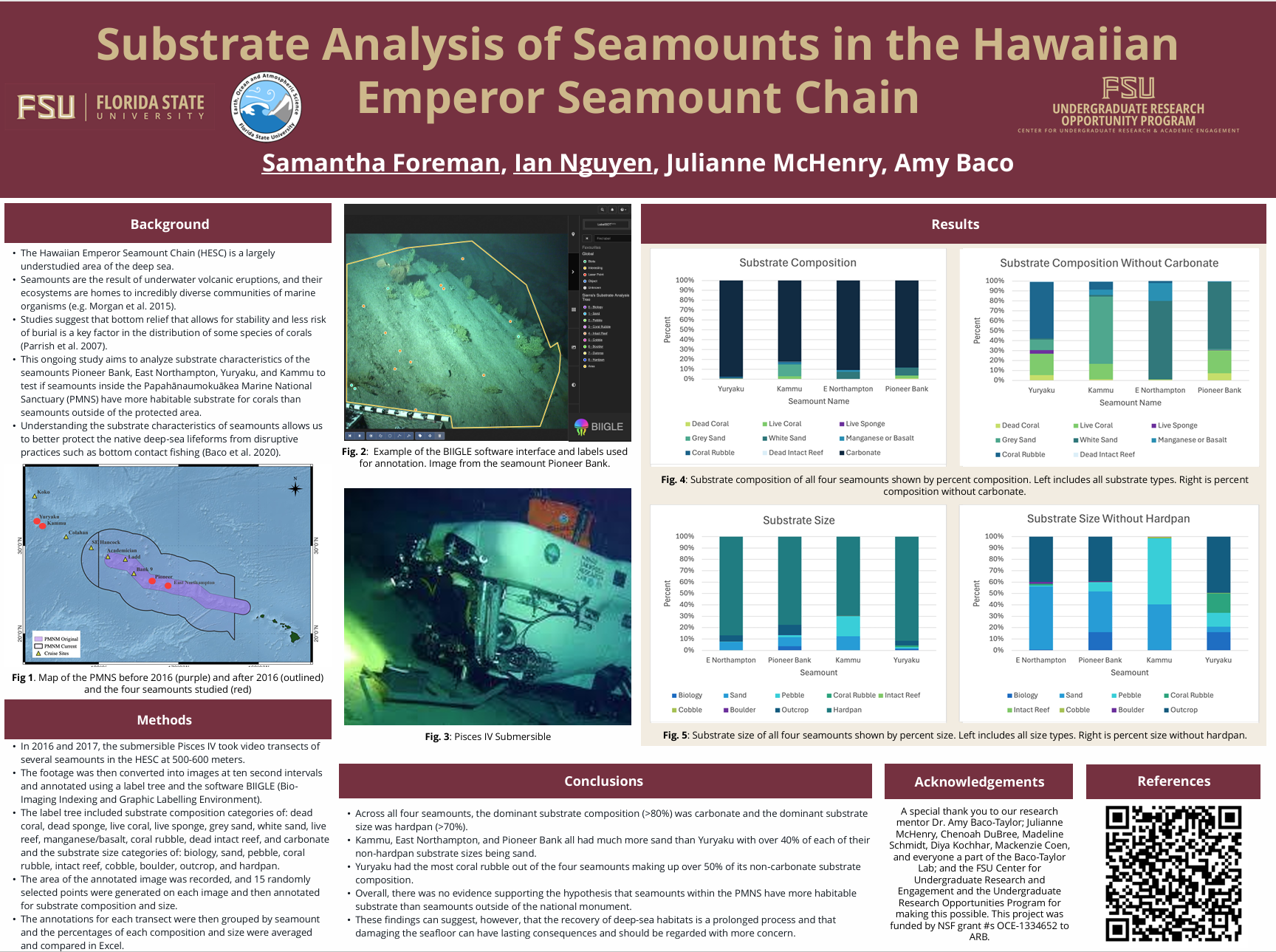
Substrate Analysis of Seamounts in the Hawaiian Emperor Seamount Chain
Authors: Samantha Foreman, Amy Baco-TaylorStudent Major: Geology
Mentor: Amy Baco-Taylor
Mentor's Department: Earth, Ocean, and Atmospheric Sciences Mentor's College: College of Arts and Sciences Co-Presenters: Ian Nguyen
Abstract
The deep sea remains largely understudied, yet it harbors incredibly unique lifeforms. The animals found in an area are often determined in part by available substrate. This study seeks to investigate if there is a difference between the substrate characteristics of two seamounts inside the Papahānaumokuākea Marine National Sanctuary (PMNS), East Northampton and Pioneer Bank, compared to two seamounts outside, Kammu and Yuryaku, which are heavily fished. Our goal was to test for habitat damage, in the form of substrate differences, from disruptive fishing practices within and outside the protected areas. Seafloor images were collected on twelve ten-minute horizontal transects using the Pisces IV submersible in 2016 and 2017. Three transects were analyzed from each of the four seamounts. Bio-Image Indexing and Graphical Labelling Environment (BIIGLE), an image analysis software, was used to annotate substrate characteristics, including composition and size. Preliminary results show substrate composition was primarily carbonate and size was primarily hardpan across all four seamounts. Additionally, Kammu, East Northampton, and Pioneer Bank had a larger percentage of sand compared to Yuryaku, Yuryaku also had a larger percentage of coral rubble compared to the other seamounts. Ultimately, we could not conclude that seamounts within the PMNM have more habitable substrate than seamounts outside of the national monument. Further analyses could compare substrate characteristics over a greater number of seamounts or with varying factors such as depth or amount of trawling. This research can contribute to a better understanding of human impacts on deep-sea ecosystems.
Keywords: Corals, Seamount, Hawaii, Substrate, Carbonate