
Research Symposium
26th annual Undergraduate Research Symposium, April 1, 2026
Bria Edwards Poster Session 3: 1:45 pm - 2:45 pm / Poster #272

BIO
Bria Edwards is a first-generation college student and a freshman attending Florida State University, majoring in Cell & Molecular Neuroscience on the pre-medical track. She is not only a part of the Undergraduate Research Opportunity Program (UROP), but also the SSTRIDE Medical Program, and the Illuminate Scholars Program here at FSU. Her academic interests include neurology and infectious disease, particularly in underserved communities. Bria’s current research examines the prevalence of HSV-1 in communities affected by adverse childhood experiences (ACEs) and in rural populations, focusing on how social and environmental factors influence disease transmission and health outcomes. Through her research, she seeks to better understand how biological and social determinants of health contribute to disparities in disease prevalence and access to care. After completing her undergraduate degree, she plans to attend medical school and become a physician, opening up her own practice here in Florida.
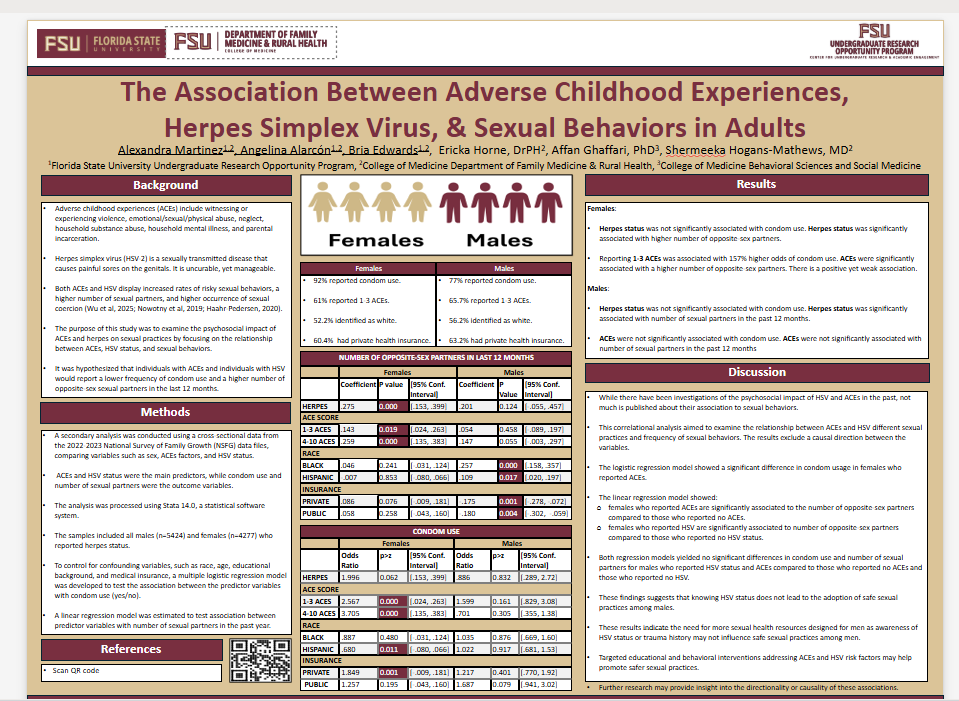
The Association Between Adverse Childhood Experiences, Herpes Simplex Virus, & Sexual Behaviors in Adults
Authors: Bria Edwards , Dr. Shermeeka Hogans-MathewsStudent Major: Cell & Molecular Neuroscience
Mentor: Dr. Shermeeka Hogans-Mathews
Mentor's Department: Department of Family Medicine & Rural Health Mentor's College: College of Medicine Behavioral Sciences and Social Medicine Co-Presenters: Alexandra Martinez, Angelina Alarcon
Abstract
Adverse childhood experiences (ACEs)- including, but not limited to, witnessing or receiving violence; exposure to emotional, sexual, and physical abuse; emotional and/or physical neglect; household substance abuse; household mental illness; parental incarceration- and Herpes Simplex Virus (HSV; genital herpes) status display increased rates of risky sexual behaviors, a higher number of sexual partners, and higher occurrence of sexual coercion (Wu et al, 2025; Nowotny et al, 2019; Haahr-Pedersen, 2020). This investigation focuses on the relationship between ACEs and sexual behaviors compared to the relationship between HSV genital herpes and sexual behaviors. The purpose of this study is to examine the psychosocial impact of ACEs and herpes on sexual practices. To do so, a secondary analysis was conducted using cross-sectional data from the 2022-2023 National Survey of Family Growth (NSFG), comparing variables such as sex, ACEs factors, and HSV status. Our analysis, along with other studies, show that there is a significant impact of traumatic childhood experiences, ranging from abuse to neglect to witnessing violence, and HSV-independent of each other-on sexual practices. We expect to broaden the investigation through a correlational measure between ACEs and HSV regarding sexual practices. Processes from this study incentivize further research that may answer questions relating to the lifestyle practices of HSV-affected and ACE individuals.
Keywords: ACEs, HSV-1, Sexual Behaviors