
Research Symposium
26th annual Undergraduate Research Symposium, April 1, 2026
Juliana Toussaint Poster Session 3: 1:45 pm - 2:45 pm / Poster #187
BIO
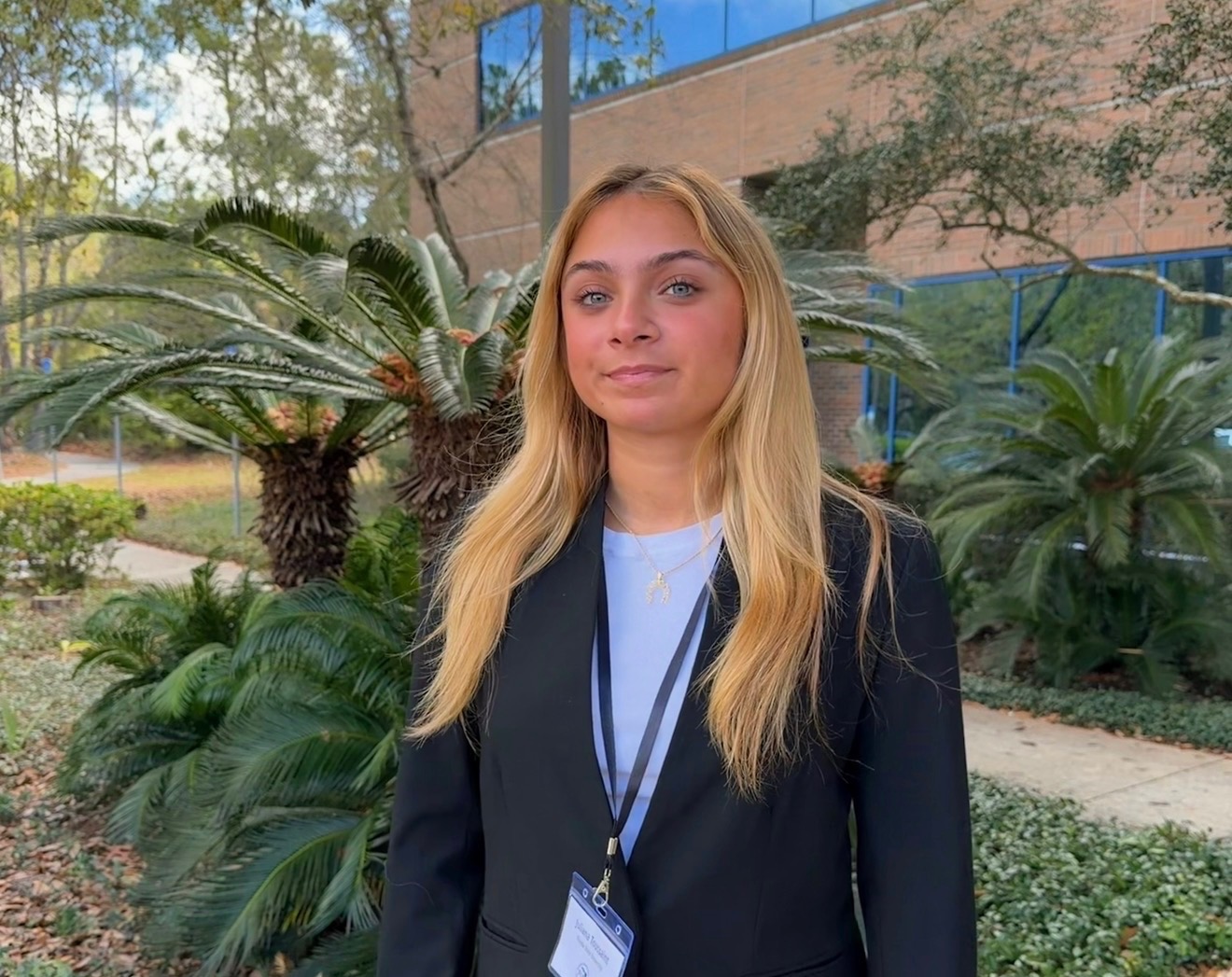
Juliana Toussaint is a second-year student at Florida State University from Chicago, Illinois. She is pursuing a Bachelor of Science in Psychology with a minor in General Business. Juliana has been recognized for her academic achievements through placement on the Dean’s List, her recent induction into Psi Chi, the International Honor Society in Psychology, and membership in Phi Eta Sigma National Honor Society. She is also actively involved in the University Honors Program. Juliana is a research assistant in the Joiner Lab through UROP, where she works with faculty and graduate researchers studying suicide and related psychological risk factors. Under the mentorship of Dr. Thomas Joiner and researcher Sara Prostko, she is developing her Honors in the Major thesis. Following graduation, Juliana plans to pursue a PhD in Clinical Psychology and continue research focused on suicide prevention and substance use.
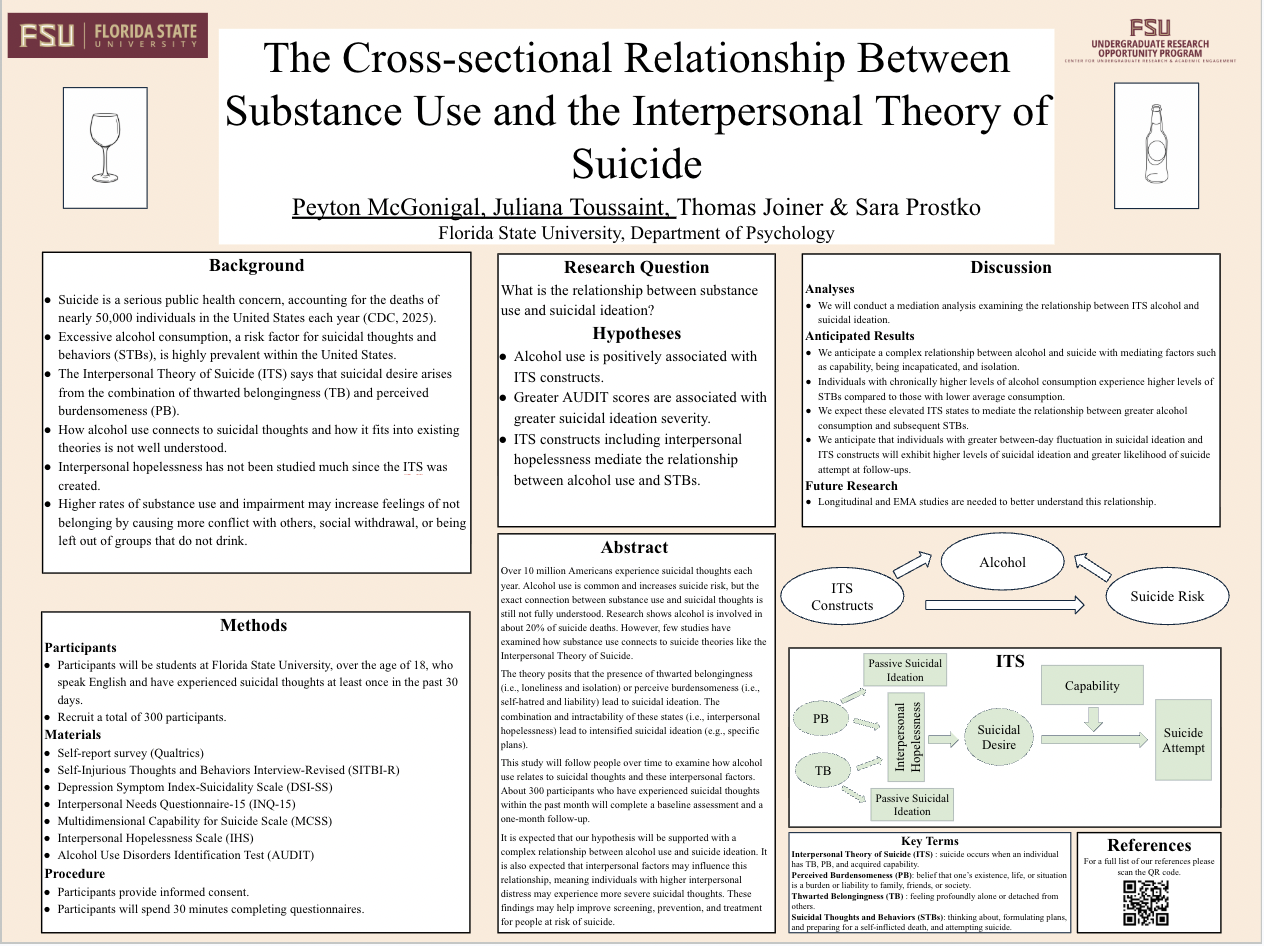
The Cross-sectional Relationship Between Substance Use and the Interpersonal Theory of Suicide
Authors: Juliana Toussaint, Sara ProstkoStudent Major: Psychology
Mentor: Sara Prostko
Mentor's Department: Department of Psychology Mentor's College: Arts and Sciences Co-Presenters: Peyton McGonigal
Abstract
Over 10 million Americans experience suicidal thoughts each year. Alcohol use is common and increases suicide risk, but the exact connection between substance use and suicidal thoughts is still not fully understood. Research shows alcohol is involved in about 20% of suicide deaths. However, few studies have examined how substance use connects to suicide theories like the Interpersonal Theory of Suicide.
The theory posits that the presence of thwarted belongingness (i.e., loneliness and isolation) or perceive burdensomeness (i.e., self-hatred and liability) lead to suicidal ideation. The combination and intractability of these states (i.e., interpersonal hopelessness) lead to intensified suicidal ideation (e.g., specific plans).
This study will follow people over time to examine how alcohol use relates to suicidal thoughts and these interpersonal factors. About 300 participants who have experienced suicidal thoughts within the past month will complete a baseline assessment and a one-month follow-up.
It is expected that our hypothesis will be supported with a complex relationship between alcohol use and suicide ideation. It is also expected that interpersonal factors may influence this relationship, meaning individuals with higher interpersonal distress may experience more severe suicidal thoughts. These findings may help improve screening, prevention, and treatment for people at risk of suicide.
Keywords: alcohol, suicide, substance use