
Research Symposium
26th annual Undergraduate Research Symposium, April 1, 2026
Brianna Tejada Texeira Poster Session 3: 1:45 pm - 2:45 pm / Poster #213

BIO
Brianna Tejada Texeira, originally from West Palm Beach, Florida, is a second-year undergraduate student at Florida State University, majoring in voice performance and biology. Her research analyzes the change in pediatric vaccine schedules over time, and how society has adapted to these changes. Through UROP, she has been able to gain skills analyzing documents from different periods of time, collecting data from literature, and learning more about the medical field’s history. In the future, she has aspirations to pursue a career in the medical field, hoping to use the skills she has gained from her time with the Undergraduate Research Opportunity Program at FSU.
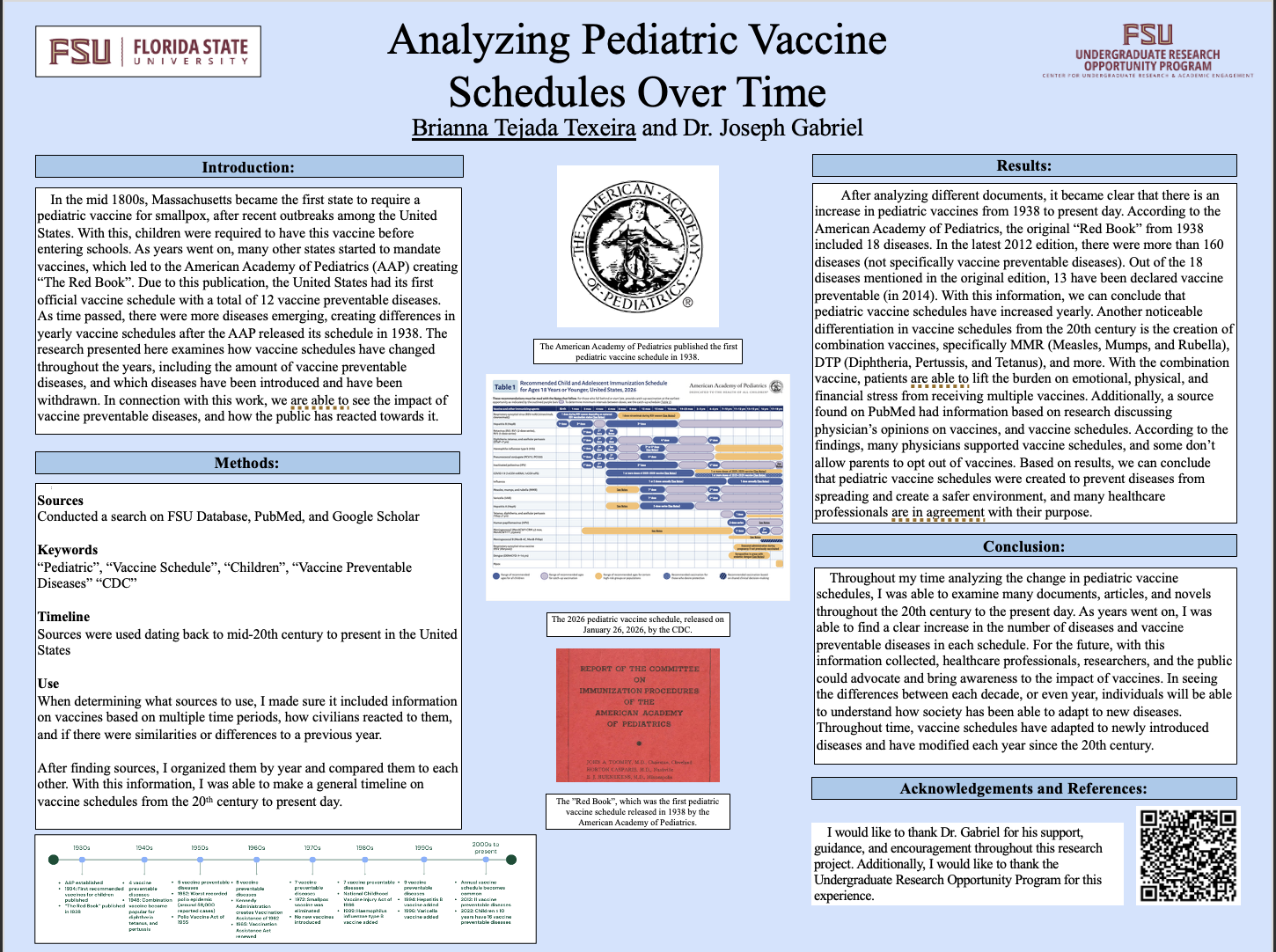
Analyzing Pediatric Vaccine Schedules Over Time
Authors: Brianna Tejada Texeira, Dr. Joseph GabrielStudent Major: Voice Performance and Biology
Mentor: Dr. Joseph Gabriel
Mentor's Department: Department of History Mentor's College: College of Arts and Sciences Co-Presenters:
Abstract
In 1938, the American Academy of Pediatrics created “The Red Book”, which is the first vaccine schedule created. Given this, civilians are given the recommendation, if not mandate to vaccinate their children from certain diseases. Throughout the years, vaccine preventable diseases started to increase, making the vaccine schedule much larger as the years went on. To see the difference from 1938 to present day, it is important to see how vaccine preventable diseases have changed, demonstrating the significance of vaccinating children. To compare and contrast past and present schedules, I was able to use different databases and novels to search for articles discussing pediatric vaccines, and how the public responded to them. After using many databases and reviewing literature, I was able to see that from 1938, there were 4 vaccine preventable diseases (Smallpox, Diphtheria, Pertussis, and Tetanus). However, in the present day, it has increased to more than 30. During this time, there have been combination vaccines, including MMR (Measles, Mumps, and Rubella) and DTP (Diphtheria, Pertussis, and Tetanus), which has minimized the amount of vaccines given. Therefore, we can see a change in reaction from the public because of time, money, and pain from vaccines. Based on results, we can conclude that vaccine preventable diseases started for a reason, saving many civilians from diseases around the world. With this research, we will be able to advocate and bring awareness to the impact of vaccines, positively and negatively.
Keywords: Pediatric, Vaccine, Schedule, Children