
Research Symposium
26th annual Undergraduate Research Symposium, April 1, 2026
May Sulema Poster Session 1: 9:30 am - 10:30 am / Poster #211
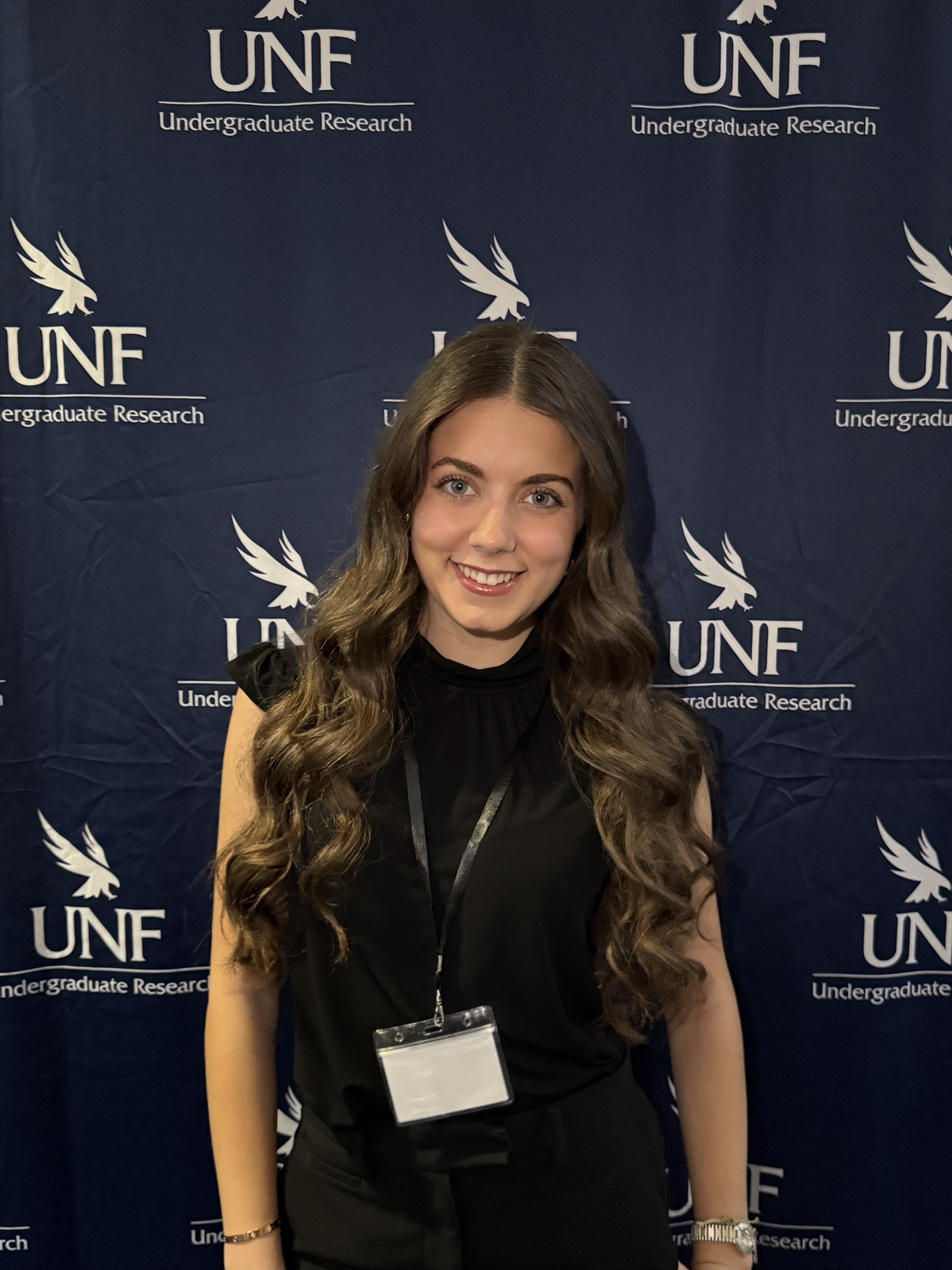
BIO
May Sulema is a fourth-year student at Florida State University, majoring in Psychology and minoring in both Child Development and General Business. While her interests within the field of Psychology are broad, she is particularly interested in suicide and suicide prevention, emotional regulation, and health psychology. May is actively involved in several research and leadership roles within Florida State University, including her work as a Peer Educator with RENEW, and as a Research Assistant in both the Joiner Lab and the March Lab. She is also a member of Kappa Alpha Theta, where she previously served as Mental Health Chairman. May plans to pursue graduate studies and continue her research in the field of Psychology.
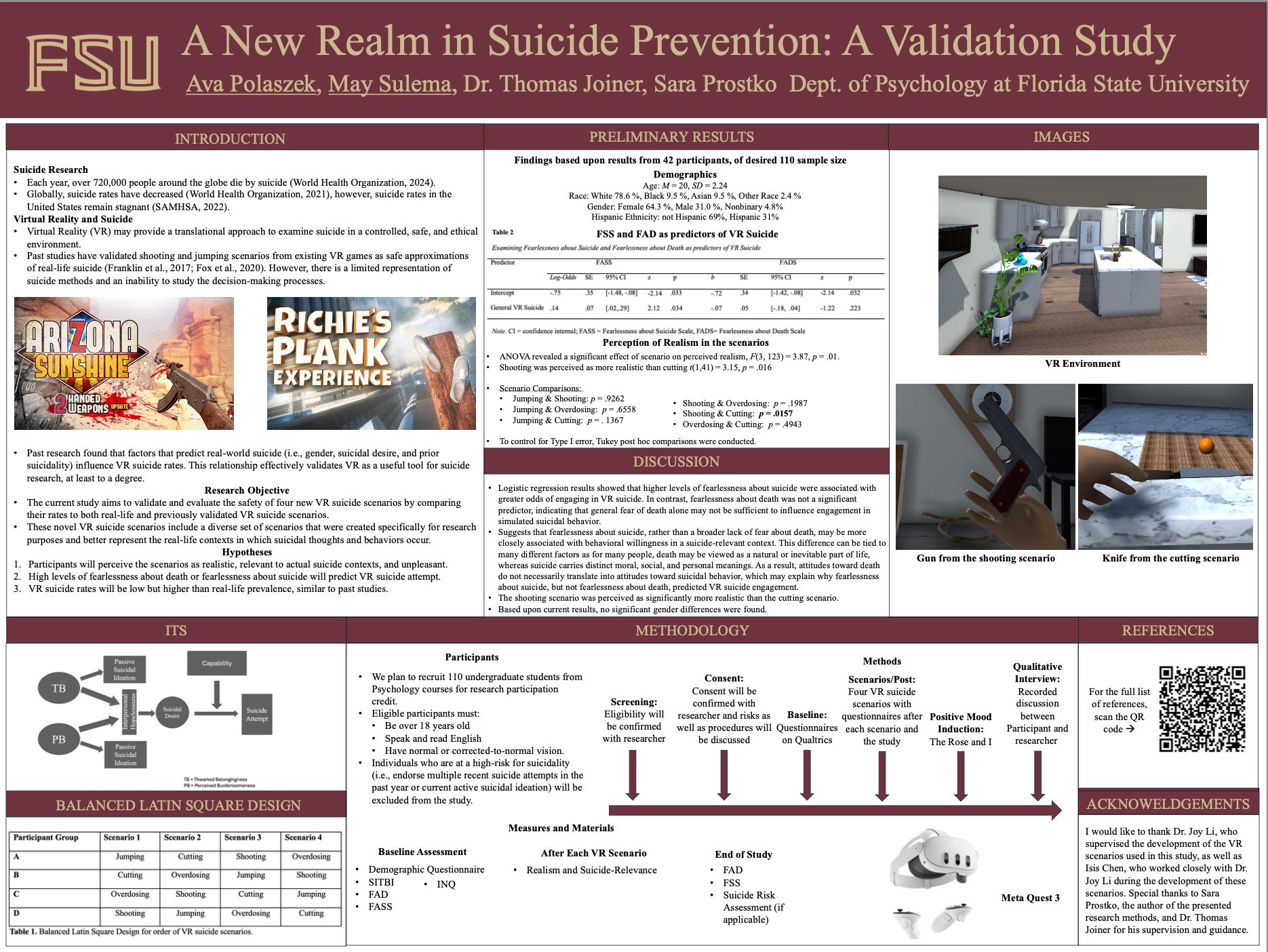
A New Realm in Suicide Prevention: A Validation Study
Authors: May Sulema, Sara ProstkoStudent Major: Psychology
Mentor: Sara Prostko
Mentor's Department: Psychology Mentor's College: College of Arts and Sciences Co-Presenters: Ava Polaszek
Abstract
Suicide remains a leading cause of death and suicide rates in the United States continue to rise. Virtual reality (VR) offers a novel approach for studying suicide risk in a controlled and ethical environment. However, past VR suicide studies relied on VR scenarios from pre-existing commercial games and faced several challenges, including a limited representation of suicide methods and an inability to study decision-making processes. This study aims to validate four newly developed VR suicide scenarios – jumping, cutting, shooting, and overdosing – that have been designed to better reflect real-world methods of suicide in comparison to past VR suicide studies.
Preliminary data from 42 participants randomized across scenarios via a balanced Latin Square Design has been collected. A one-way repeated measures ANOVA examined the perceived realism of each scenario. Results indicated that the shooting scenario was perceived as significantly more realistic than the cutting scenario (b = 1.09, t(31) = 3.19, p = 0.016). Additionally, the difference between the shooting and overdosing scenario approached statistical significance, with the shooting scenario perceived as more realistic (b = 0.78, t(31) = 2.44, p = 0.0898) after controlling for Type 1 error. Finally, capability for suicide, a key construct from the Interpersonal Theory of Suicide showed mixed results in predicting VR suicide. Fearlessness about death (an established component of capability) did not predict VR suicide, a novel measure, fearlessness about suicide did (b = 0.16, SE = .08, p = .039).
Keywords: Virtual Reality, Suicide, Suicide Prevention