
Research Symposium
26th annual Undergraduate Research Symposium, April 1, 2026
Leslie Tejada Rodriguez Poster Session 3: 1:45 pm - 2:45 pm / Poster #229
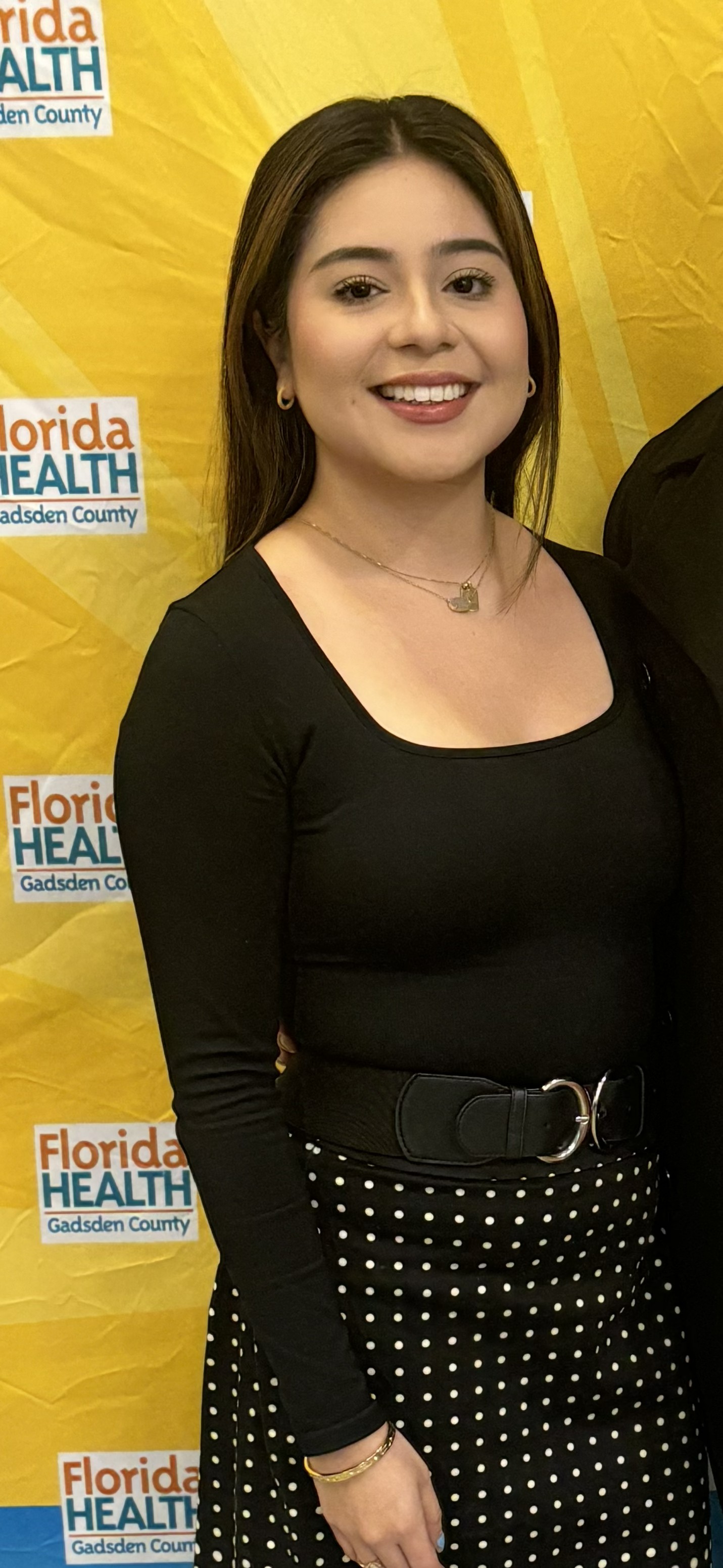
BIO
I am a senior at Florida State University majoring in Public Health with a minor in Social Work. I am someone who loves to challenge myself academically and continually push toward growth. In my free time, I enjoy reading and traveling. I cherish my loved ones and family every day, and my research is dedicated to them—they are my motivation and the heart behind my work. I hope to continue my career in Public Health with a concentration in Health Behavior and Promotion.
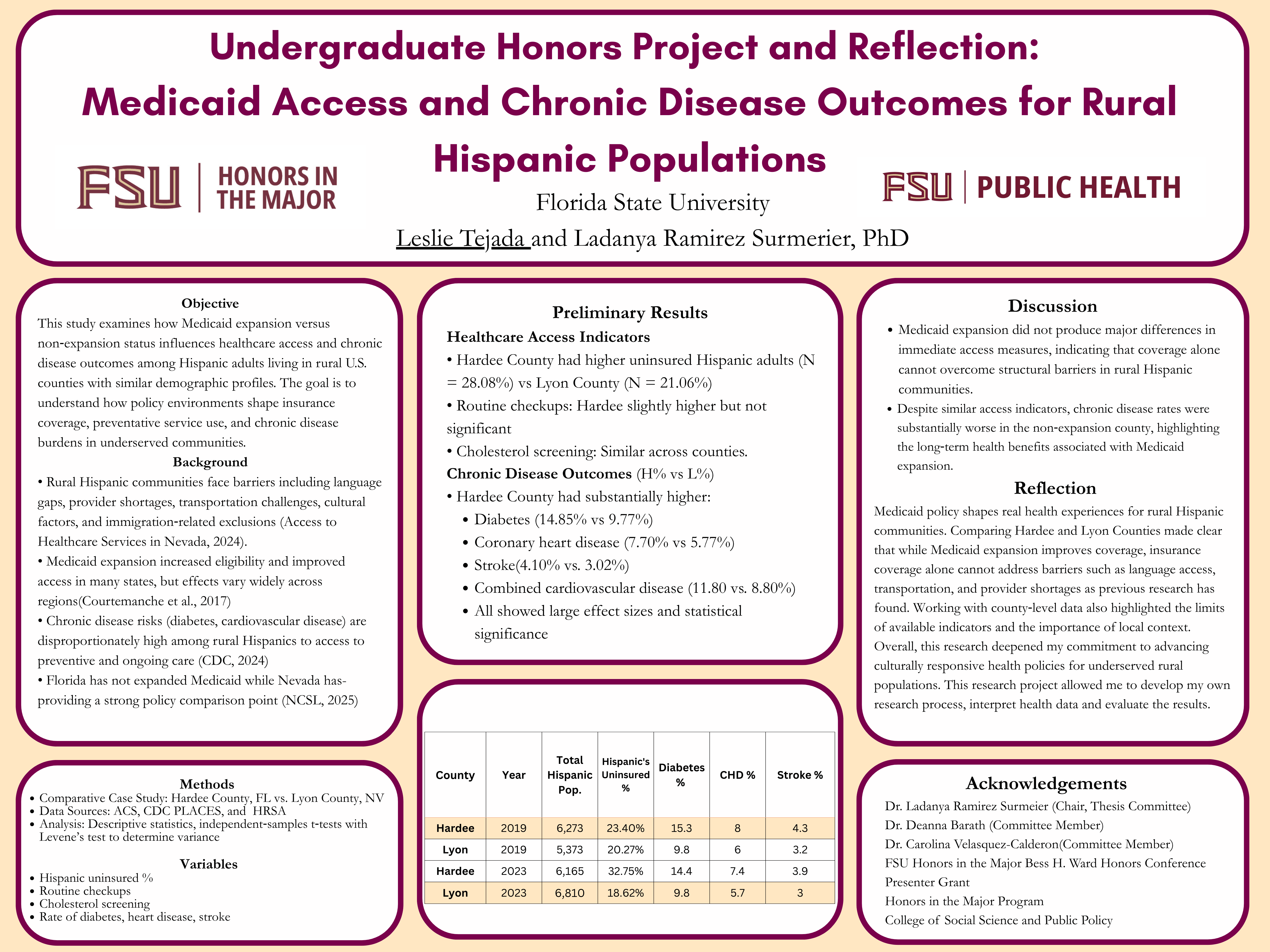
Undergraduate Honors Project and Reflection: Medicaid Access and Chronic Disease Outcomes for Rural Hispanic Populations
Authors: Leslie Tejada Rodriguez , Ladanya Ramirez SurmeierStudent Major: Public Health
Mentor: Ladanya Ramirez Surmeier
Mentor's Department: Public Health Program Mentor's College: Florida State University Co-Presenters:
Abstract
This poster session will highlight the findings of an undergraduate research project examining how Medicaid access influences healthcare access and outcomes for Hispanic populations in rural U.S. communities. Over the course of this year-long project, the student developed foundational research skills, including conducting a comprehensive literature review and applying quantitative methods through an independent samples t-test in SPSS. The project was completed as part of the Honors in the Major Program. By combining statistical analysis with a thematic policy review, the student gained experience in integrating quantitative and qualitative approaches to better understand complex public health issues.
The goal of this project is to determine whether there are measurable differences in healthcare access and chronic disease outcomes specifically diabetes and cardiovascular disease between rural Hispanic populations in a Medicaid expansion state (Nevada) and a non-expansion state (Florida). Medicaid expansion has been shown to improve insurance coverage and access to preventative services, but barriers such as immigration status, language, and provider shortages continue to limit its effectiveness in rural Hispanic communities. Preliminary findings suggest that Hispanic residents in non-expansion states face higher uninsured rates and worse chronic disease outcomes, while expansion states show improvements but still struggle with structural inequities. The implications of these results include the need for more culturally competent care, targeted policy reforms, and expanded access to preventative services in order to reduce health disparities and improve outcomes for vulnerable rural populations.
Keywords: Public Health, Hispanic, Medicaid, Rural communities