
Research Symposium
26th annual Undergraduate Research Symposium, April 1, 2026
James Tiurchy Poster Session 4: 3:00 pm - 4:00 pm / Poster #180

BIO
James is a second-year undergraduate student at Florida State University majoring in Food and Nutritional Sciences on the pre-dental track. James's academic interests focus on the intersection of medicine, public health, and data-driven research, particularly how social and environmental factors influence health outcomes. James is especially interested in using large healthcare datasets and statistical modeling to better understand disparities in disease burden and healthcare utilization.
Through the Undergraduate Research Opportunity Program, James conducted research examining how social determinants of health, including insurance status, income level, and rurality, affect inpatient outcomes among patients hospitalized with eosinophilic esophagitis in the United States. Using the Healthcare Cost and Utilization Project National Inpatient Sample, James analyzed national trends in length of stay and hospital charges while comparing pediatric and adult populations. This work strengthened James's interest in health disparities research and the role that data analysis can play in identifying structural barriers to care.
As a future dentist, James hopes to integrate clinical practice with population-level thinking by understanding how socioeconomic factors shape patient health and access to treatment. James's long-term goal is to provide high-quality care while also contributing to research and initiatives that improve healthcare access and outcomes in underserved communities.
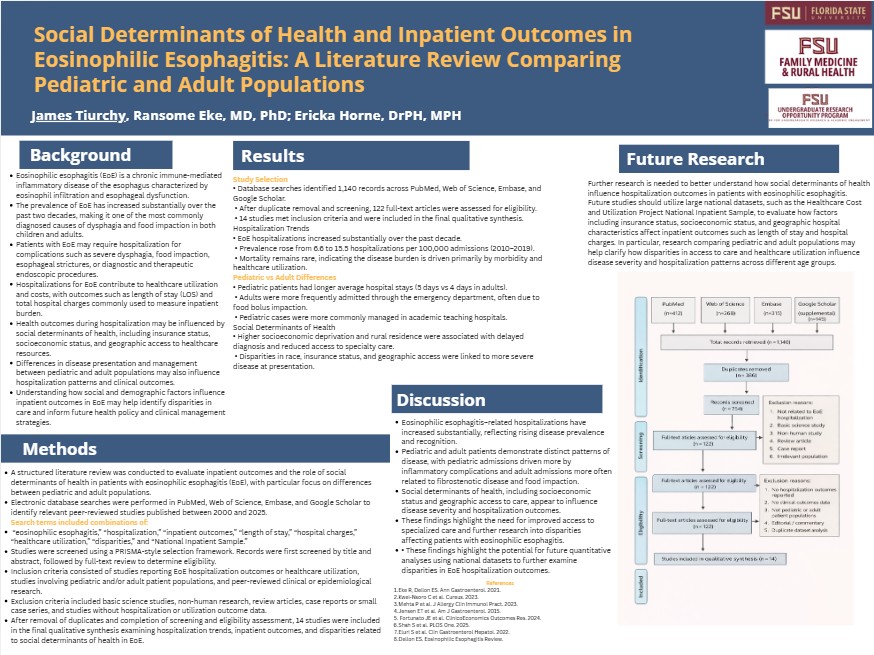
Social Determinants of Inpatient Outcomes in Eosinophilic Esophagitis: A Literature Review
Authors: James Tiurchy, Ericka HorneStudent Major: Food and Nutritional Science
Mentor: Ericka Horne
Mentor's Department: Family Medicine and Rural Health Mentor's College: College of Medicine Co-Presenters:
Abstract
Introduction:
Eosinophilic esophagitis (EoE) is a chronic immune-mediated disease of the esophagus with increasing prevalence in the United States. Although most cases are managed in outpatient settings, hospitalizations still occur and contribute to healthcare utilization through increased length of stay and hospital charges. Social determinants of health such as insurance status, socioeconomic status, and geographic location are known to influence healthcare outcomes in many conditions, but their role in EoE hospitalizations remains unclear.
Methods:
A literature review was conducted using PubMed and related biomedical databases to identify peer-reviewed studies examining hospitalization patterns, inpatient outcomes, and healthcare disparities related to eosinophilic esophagitis. Search terms included combinations of “eosinophilic esophagitis,” “hospitalization,” “length of stay,” “hospital charges,” and “health disparities.” Studies were included if they evaluated inpatient outcomes, healthcare utilization, or socioeconomic and demographic factors associated with EoE hospitalizations.
Results:
Existing literature suggests that EoE hospitalizations have increased over time and contribute to measurable healthcare utilization. Studies using national datasets such as the Healthcare Cost and Utilization Project National Inpatient Sample report variability in outcomes including length of stay and hospital charges. Although direct analysis of social determinants in EoE hospitalizations is limited, broader gastrointestinal research shows that insurance status, income level, and hospital characteristics can influence inpatient outcomes.
Discussion:
Current evidence suggests socioeconomic and healthcare system factors may contribute to variation in EoE hospitalization outcomes, but direct investigation remains limited. Further research is needed to better understand potential disparities and guide strategies that improve healthcare access and resource utilization.
Keywords: Eosinophilic Esophagitis (EoE) Social Determinants of Health Hospitalization Outcomes Health Disparities Healthcare Utilization