
Research Symposium
26th annual Undergraduate Research Symposium, April 1, 2026
Izabella Alexis Hurst Poster Session 1: 9:30 am - 10:30 am / Poster #233

BIO
Izabella Alexis Hurst is a sophomore at Florida State University pursuing a Bachelor of Science in Biomedical Science through the Interdisciplinary Medical Sciences program on the Clinical Professions track. She is interested in the intersection of neuroscience, pain management, and patient-centered care. Izabella Alexis is a researcher in the Complementary Health and Innovation Lab (CHIL) under the mentorship of Dr. Adam Hanley, where she studies brief mindfulness and breathing interventions designed to reduce pain and anxiety in orthopedic imaging waiting rooms. She aspires to attend medical school and pursue a career in anesthesiology, with the goal of improving patient comfort and outcomes through compassionate, evidence-based care.
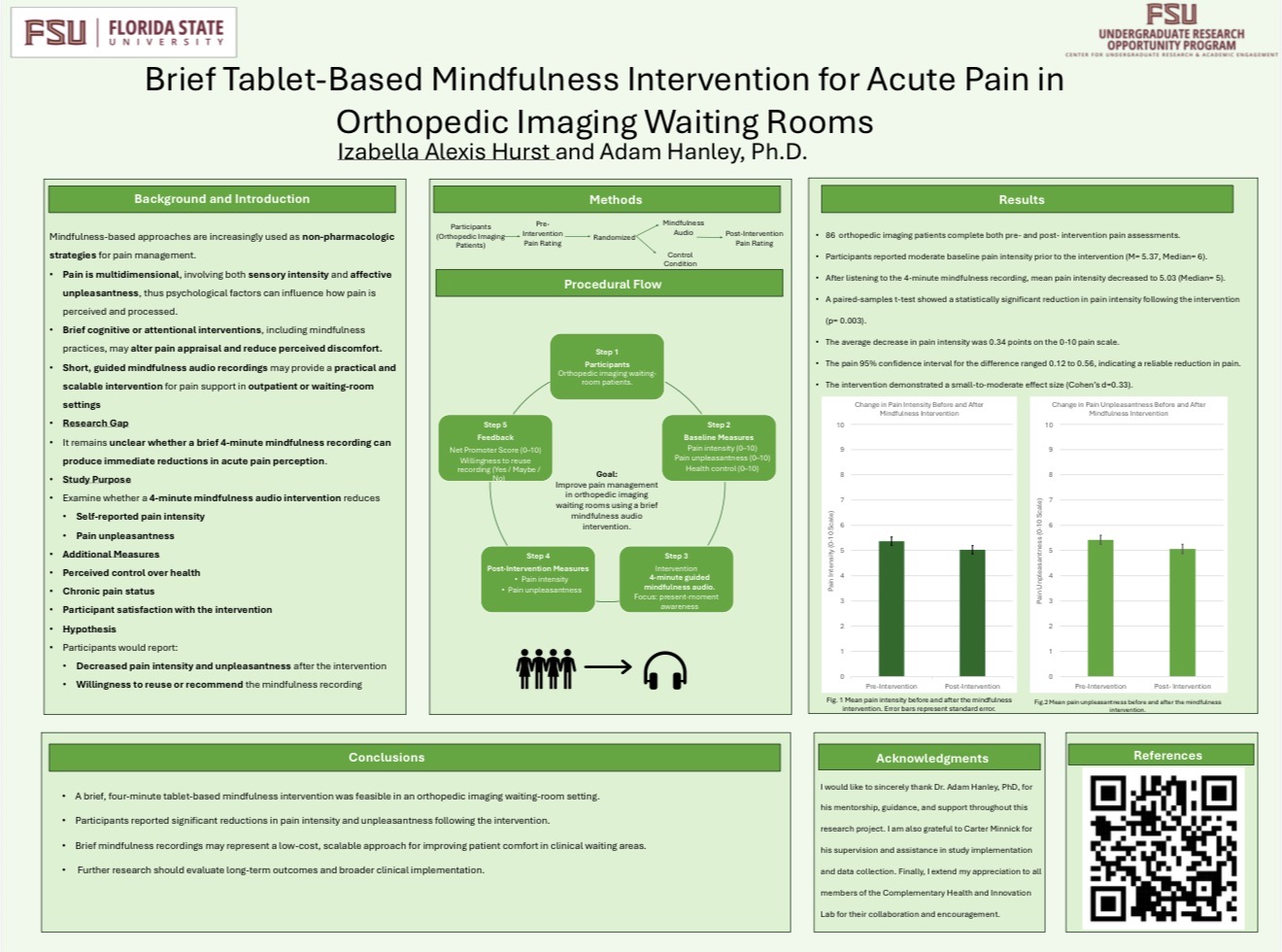
Brief Tablet-Based Mindfulness Intervention for Acute Pain in Orthopedic Imaging Waiting Rooms
Authors: Izabella Alexis Hurst, Dr. Adam HanleyStudent Major: Interdisciplinary Medical Sciences: Clinical Professions
Mentor: Dr. Adam Hanley
Mentor's Department: College of Nursing Mentor's College: College of Nursing Co-Presenters:
Abstract
Pain is highly prevalent among patients waiting for orthopedic imaging, yet many evidence
based mind body interventions remain time intensive, resource heavy, or difficult to
implement in busy clinical environments. This study investigates whether brief, tablet based
mind body interventions such as guided breathing or mindfulness exercises can meaningfully improve patient outcomes in a real world orthopedic setting. Specifically, the research examines their effects on pain intensity, patient engagement, self efficacy, and willingness to recommend care.
Using a quantitative experimental design, orthopedic patients in imaging waiting areas are
invited to complete a short tablet delivered intervention. Patient reported outcomes are
collected and analyzed to evaluate intervention effectiveness. The study is guided by a
biopsychosocial framework, recognizing that psychological and behavioral factors
significantly influence pain perception and overall patient experience.
It is hypothesized that patients who complete the intervention will report lower pain intensity,
greater engagement, higher self efficacy, and increased willingness to recommend care
compared to those who do not participate.
If supported, these findings would suggest that very brief, low cost, and scalable mind body
strategies can enhance patient centered care without disrupting workflow or increasing
clinician burden. This research highlights the potential for accessible, non pharmacological
interventions to complement traditional medical treatment and improve patient
empowerment, satisfaction, and overall healthcare experience
Keywords: Mindfulness, pain management, behavioral intervention