
Research Symposium
26th annual Undergraduate Research Symposium, April 1, 2026
Elizabeth Cappiello Poster Session 1: 9:30 am - 10:30 am / Poster #103

BIO
Elizabeth Cappiello is a second-year undergraduate student pursuing a Bachelor of Science in Nursing with a minor in child development. Through her involvement in the Undergraduate Research Opportunity Program (UROP) at Florida State University, she has developed an interest in examining how environmental and social factors influence health, particularly among women, vulnerable populations, and children. Elizabeth is conducting research under her UROP mentor, Dr. Jessica Bahorski, examining infant feeding practices among low-income mothers enrolled in government-funded programs and developing interventions to support them. Elizabeth is passionate about providing compassionate, patient-centered care to support individuals and their families and to improve health outcomes, especially for vulnerable populations. At Florida State University, she has gained valuable experience in reviewing scientific literature, data analysis, collaboration, and critical thinking. After earning her Bachelor of Science in Nursing, Elizabeth plans to pursue a career as a registered nurse, where she hopes to become an advocate for her patients, promote preventative care, and improve the health of the communities she serves.
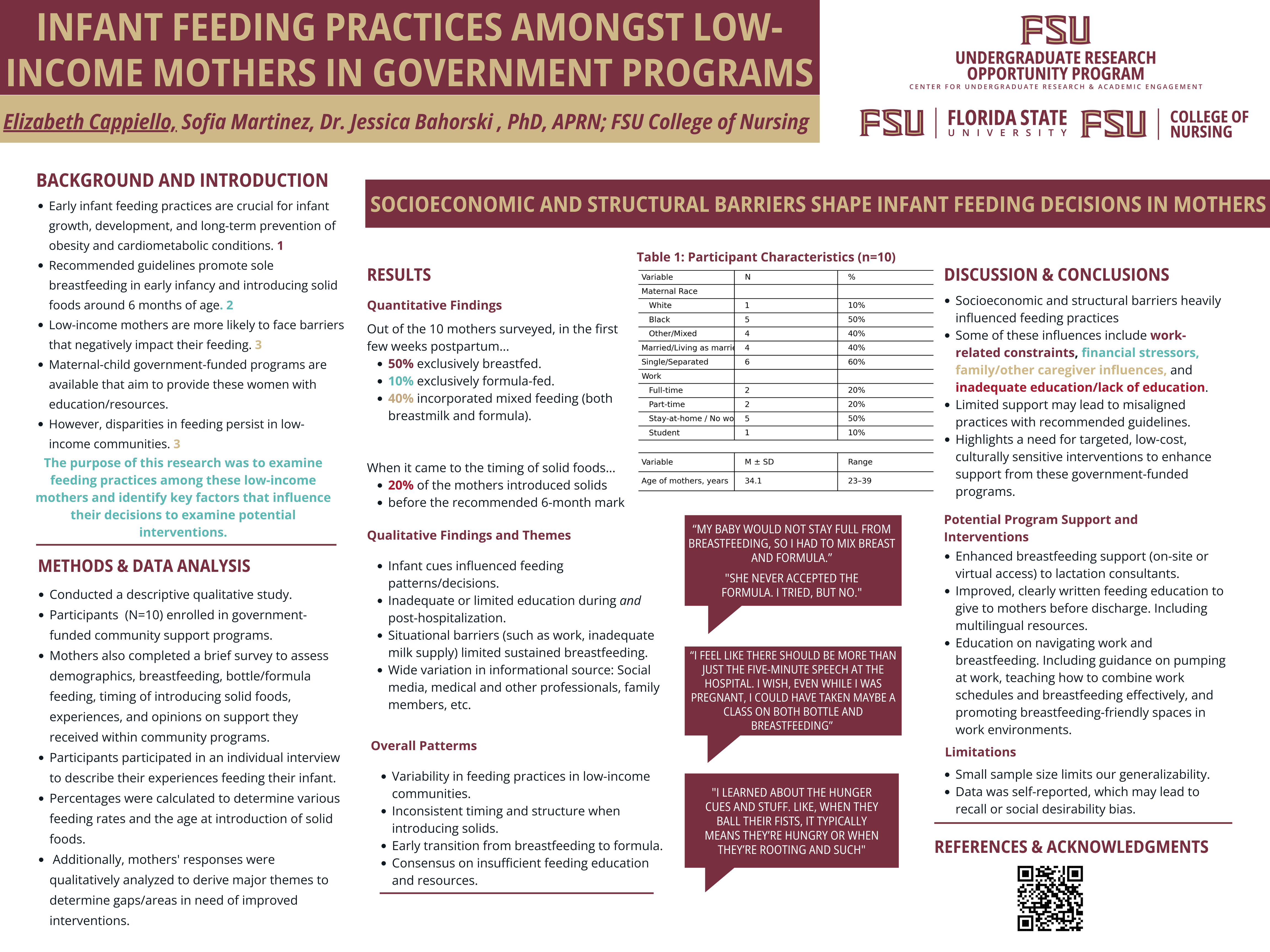
Infant Feeding Practices Amongst Low-Income Mothers In Government Programs
Authors: Elizabeth Cappiello, Jessica BahorskiStudent Major: Nursing
Mentor: Jessica Bahorski
Mentor's Department: Nursing Mentor's College: College of Nursing Co-Presenters:
Abstract
Infant feeding practices during the first few years of life are crucial for promoting healthy growth, development, and for preventing long-term health outcomes such as obesity and related cardiometabolic conditions. Low-income mothers face heightened challenges that impact their decisions relating to breastfeeding, bottle feeding, and the timing of introducing solid foods. The purpose of this research was to examine feeding practices among this population and identify key factors that influence their decisions. Data was collected from mothers participating in government-funded support programs. Participants (N=10) completed a survey that gathered demographic information and infant feeding practices. Participants then completed an individual interview to provide additional information regarding factors that influenced these practices. Results indicated that 50% of these mothers breastfed exclusively in the first few weeks postpartum, 40% mixed breastfeeding with formula, and 10% fed formula exclusively. Additionally, 20% provided solid foods before the recommended 6-month marker. The qualitative data resulted in themes of infant cues, lack of/poor education, and situations that limit breastfeeding. Influences on these patterns included work-related constraints, financial stressors, limited access to resources, and family/other caregiver influences. This suggests that feeding practices among these low-income mothers are heavily influenced by socioeconomic and structural barriers. Limited support and resources may lead mothers to adopt feeding practices that may not align with recommended guidelines and require improvement to reduce health disparities and produce healthy long-term outcomes. This highlights a significant need to create targeted, low-cost, and culturally sensitive interventions to enhance support for these mothers.
Keywords: Feeding, infants, socioeconomic, maternal, nutrition