
Research Symposium
26th annual Undergraduate Research Symposium, April 1, 2026
Maria Mankin Poster Session 2: 10:45 am - 11:45 am / Poster #8

BIO
Maria Mankin is a sophomore at Florida State University pursuing a Bachelor of Science in Behavioral Neuroscience with a minor in Chemistry on the pre-medical track. She is an undergraduate researcher in the Undergraduate Research Opportunity Program (UROP) working with mentor Adam Hanley at Tallahassee Orthopedic Clinic, where her research investigates brief mind–body interventions designed to reduce pain and anxiety in orthopedic patients. Her work focuses on how techniques such as mindfulness and controlled breathing may improve patient experiences in clinical settings.
Beyond research, Maria is actively involved in clinical service and student leadership. She volunteers at Tallahassee Memorial HealthCare in the surgical care unit and serves in the Florida State University Medical Response Unit. Through this organization, she was recently elected Director of Standards and Compliance, a leadership role in which she helps oversee responder participation, training compliance, and operational accountability for over 150 student responders.
Through her combined experiences in research, clinical service, and emergency response, Maria has developed a strong interest in the relationship between neuroscience, patient care, and evidence-based medicine. She plans to pursue medical school and hopes to continue integrating research with clinical practice to improve patient outcomes.
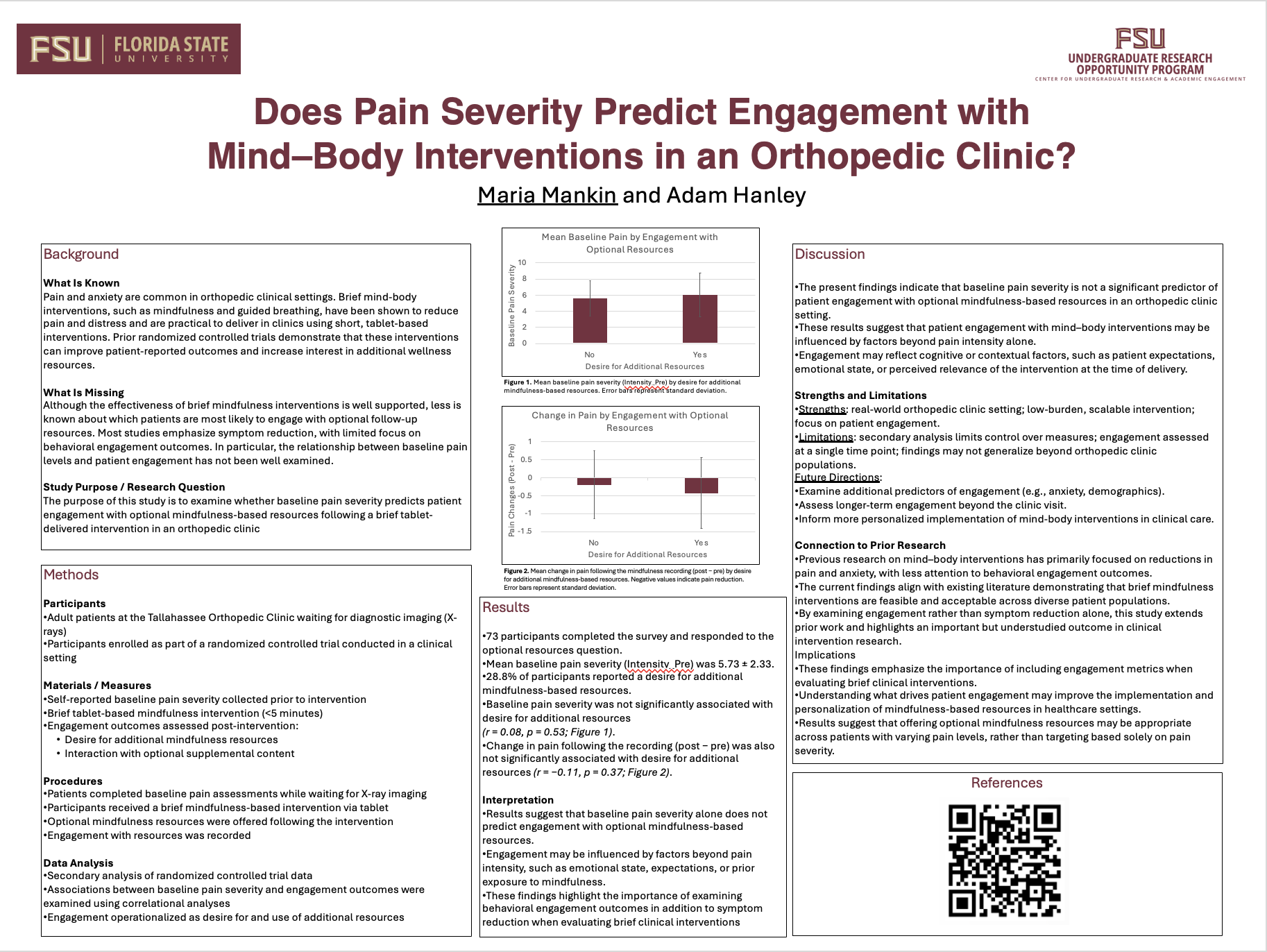
Does Pain Severity Predict Engagement with Mind–Body Interventions in an Orthopedic Clinic?
Authors: Maria Mankin, Adam HanleyStudent Major: Behavioral Neuroscience
Mentor: Adam Hanley
Mentor's Department: Complementary Health and Innovation Lab Mentor's College: College of Nursing Co-Presenters:
Abstract
Mind-body interventions such as mindfulness and breathwork have shown potential in reducing pain and anxiety in medical settings; however, patient engagement with these interventions and related resources remains fairly unknown. Understanding factors that influence engagement could influence the design of more effective and accessible interventions in clinical care. The present study examined whether baseline pain levels were associated with patient engagement with optional mindfulness-based resources following a brief tablet-based intervention administered in an orthopedic clinic setting.
Adult patients waiting for x-ray imaging at the Tallahassee Orthopedic Clinic were invited to participate in a randomized controlled trial involving a 5-minute brief mind-body intervention through a tablet. Self-reported pain levels were collected before the intervention, and engagement outcomes were assessed based on patients’ interaction with additional mindfulness resources following the intervention. Engagement was operationalized as utilization of optional resources, including selection of additional content and duration of use.
Preliminary analyses explored relationships between baseline pain severity and engagement behaviors that followed. Results contribute to understanding how patient-reported pain may influence receptivity to brief mindfulness interventions and associated resources in a real-world clinical environment. These findings have implications for optimizing patient-centered delivery of mind-body interventions and altering engagement strategies based on clinical characteristics.
Keywords: pain, mindfulness, intervention, orthopedic, patient