
Research Symposium
26th annual Undergraduate Research Symposium, April 1, 2026
Aaliyah Hattach Poster Session 4: 3:00 pm - 4:00 pm / Poster #226
BIO
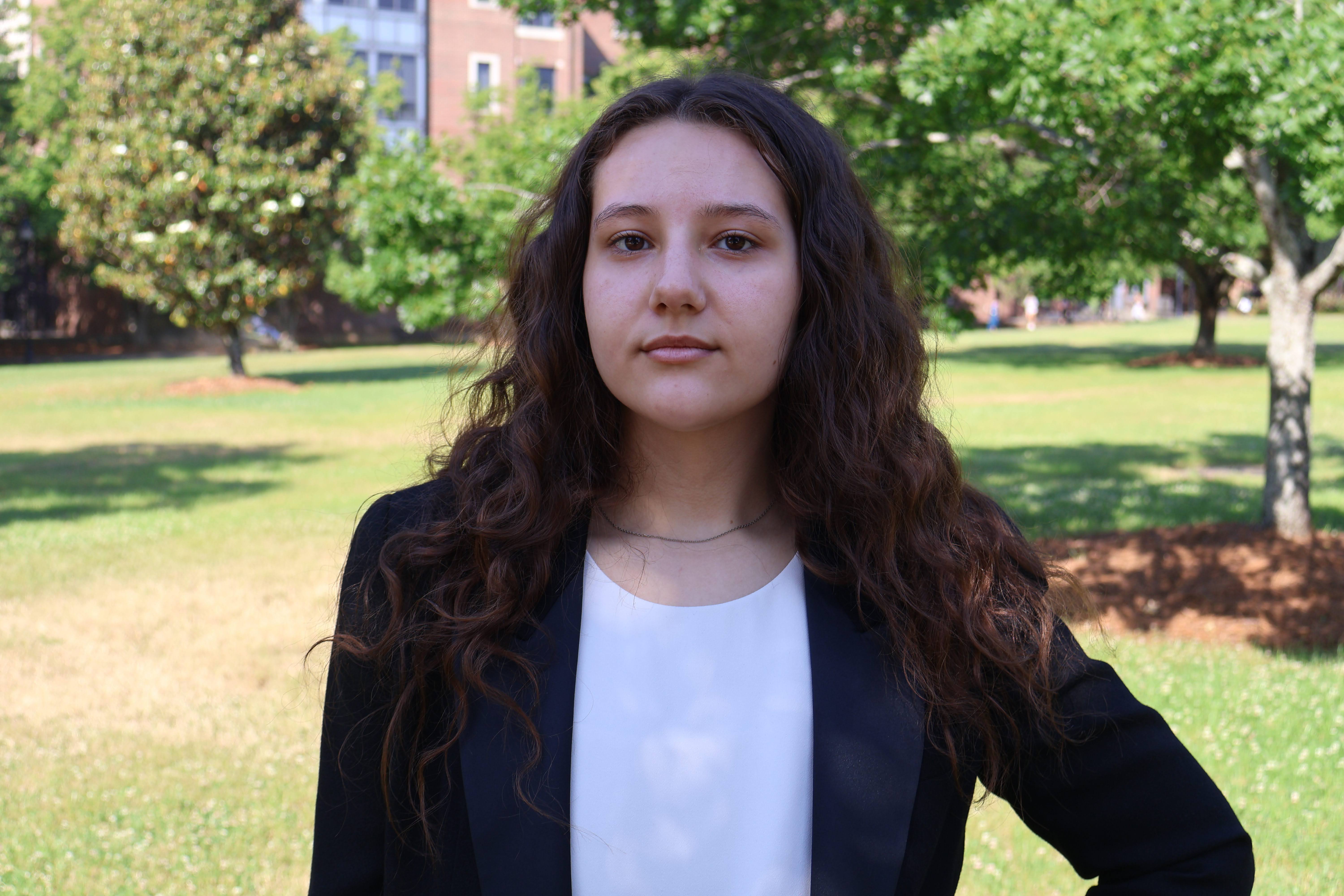
Aaliyah is a fourth-year undergraduate student from Tampa, Florida. She is currently pursuing a Bachelor of Science in Management at Florida State University with double minors in English and Arabic. Her research interests lie in organizational behavior and human resources, particularly how differences in background, perspective, and opportunity shape workplace experiences and participation within organizations. Her research is conducted under the mentorship of Organizational Behavior and Human Resources PhD student Destiny Cole from the Department of Management.
Aaliyah is a member of the Arabic Honor Society and has been named to the President’s List for six semesters. She is also a recipient of the Bright Futures and Florida State University Vires Scholarships. She is interested in careers focused on leadership development, organizational dynamics, and intercultural collaboration. In particular, she is interested in how nonprofits and organizations operate across different cultural contexts and how leadership strategies adapt in international settings.
Gendered Aging in the Workplace
Authors: Aaliyah Hattach, Destiny ColeStudent Major: Business Management
Mentor: Destiny Cole
Mentor's Department: Department of Management Mentor's College: Herbert Wertheim College of Business Co-Presenters:
Abstract
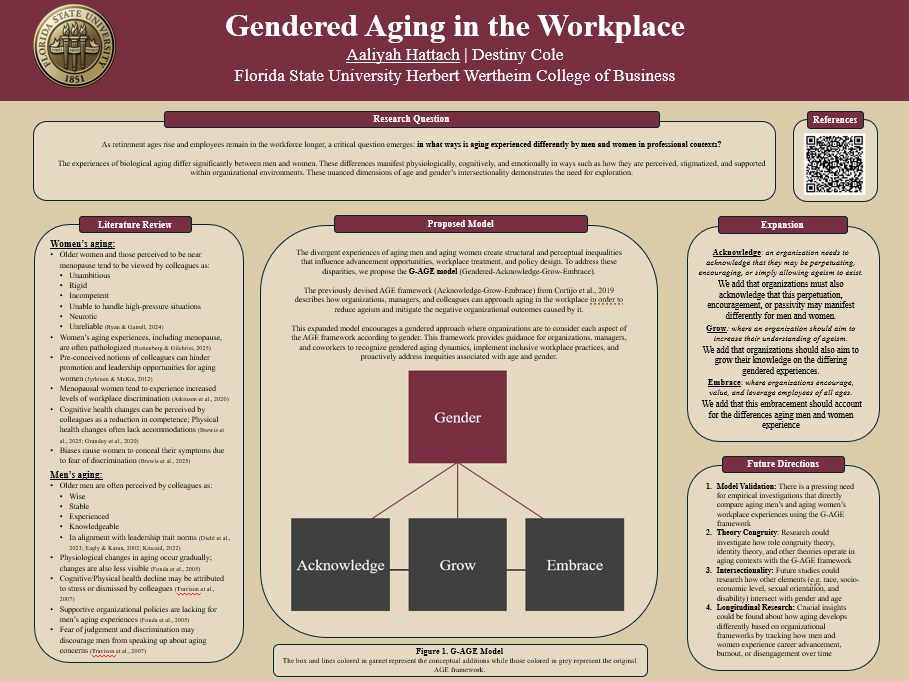
As retirement ages rise and employees remain in the workforce longer, the intersection of gender and aging has become increasingly consequential for organizations. Yet the ways in which aging is experienced differently by men and women in professional contexts remains underexplored. This review synthesizes research across leadership, gender, and aging literatures to examine how aging shapes workplace perceptions, leadership trajectories, and organizational policies in gendered ways. We argue that men’s aging—although largely absent from formal organizational policy discussions—is often viewed as consistent with prevailing leadership prototypes, reinforcing perceptions of competence and authority. In contrast, women’s aging, despite receiving growing scholarly attention, continues to be accompanied by stigma, appearance-based biases, and heightened perceptions of role incongruity in leadership contexts. These divergent experiences create structural and perceptual inequalities that influence advancement opportunities, workplace treatment, and policy design. To address these disparities, we extend the AGE framework (Cortijo et al., 2019) and introduce the G-AGE framework (Gendered–Acknowledge–Grow–Embrace). This expanded model provides guidance for organizations, managers, and coworkers to recognize gendered aging dynamics, implement inclusive workplace practices, and proactively address inequities associated with age and gender. In doing so, we aim to advance scholarship at the intersection of gender and aging while offering actionable direction for more equitable organizational systems.
Keywords: Menopause, aging, policies, stereotypes, practices