
Research Symposium
26th annual Undergraduate Research Symposium, April 1, 2026
Jillian Derodel Poster Session 3: 1:45 pm - 2:45 pm / Poster #65
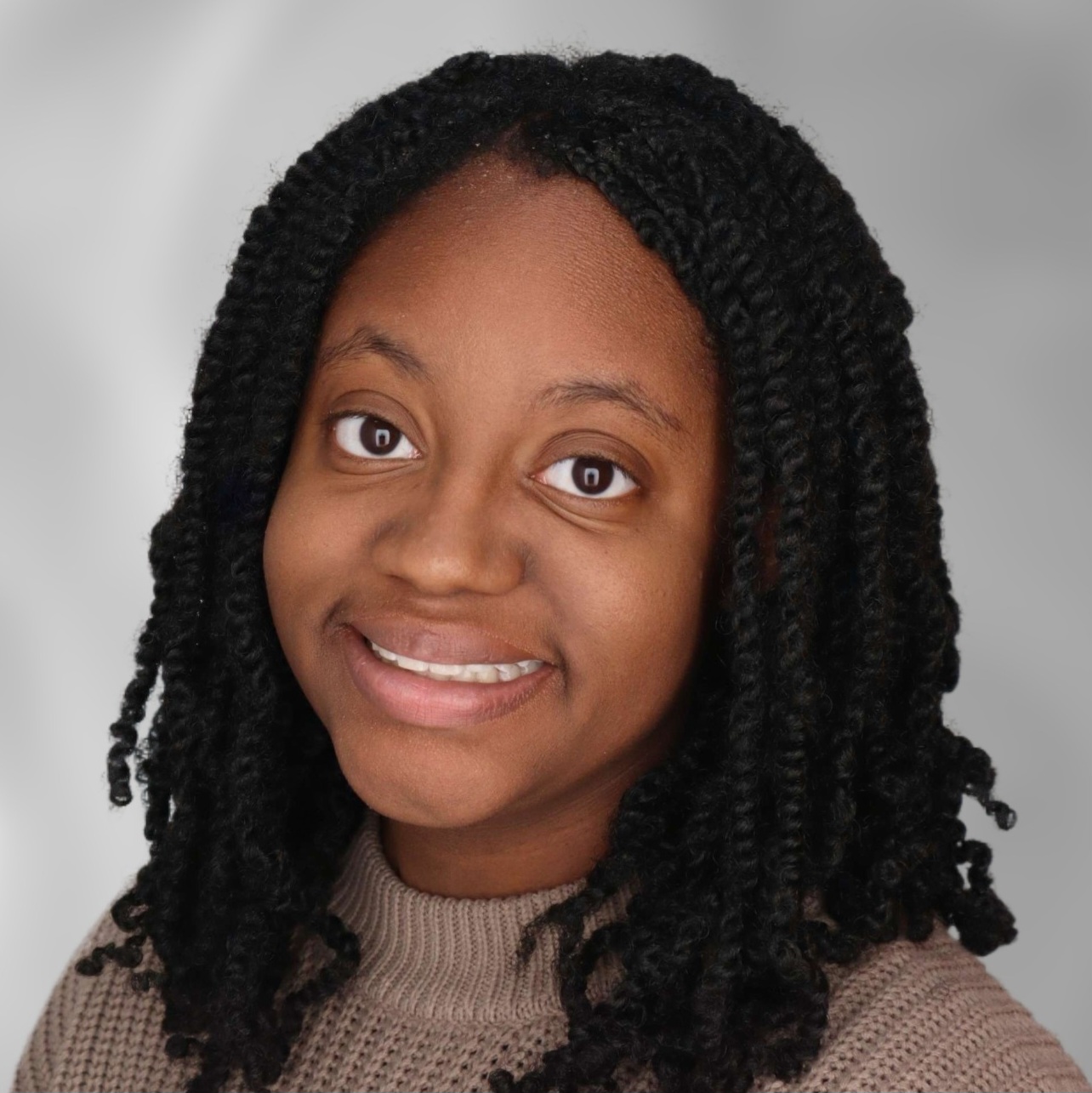
BIO
Jillian Derodel is a second-year junior hailing from Tampa, FL. She is pursuing a Bachelor of Science in Statistics and minors in Computer Science and Mathematics with aspirations to obtain a graduate degree in Statistics after completing her undergraduate career. Jillian is a recipient of Florida State University’s Vires Scholarship and a proud member of the CARE Illuminate Scholars program; she also serves as Membership Chair for Caribbean Student Association, Outreach Coordinator for Florida State University’s Student Data Collective, and is a member of Florida State University’s chapter of the Florida-Georgia Louis Stokes Alliance for Minority Participation (FGLSAMP) in STEM. Jillian works as a Student Success Analyst intern in the Florida State University Office of Institutional Research and conducted her research under Katherine Gipalo and Sarah Sikes, a full-time Student Success Analyst and Metrics Analyst in the office, respectively. She is grateful to her research mentors; her intern supervisor, Dr. Samantha Nix; her favorite Statistics faculty member, Dr. Justin Shows; and her FGLSAMP chapter coordinator and UROP Support Specialist, Dr. Asli Kaya, for shaping her research and overall undergraduate experiences.
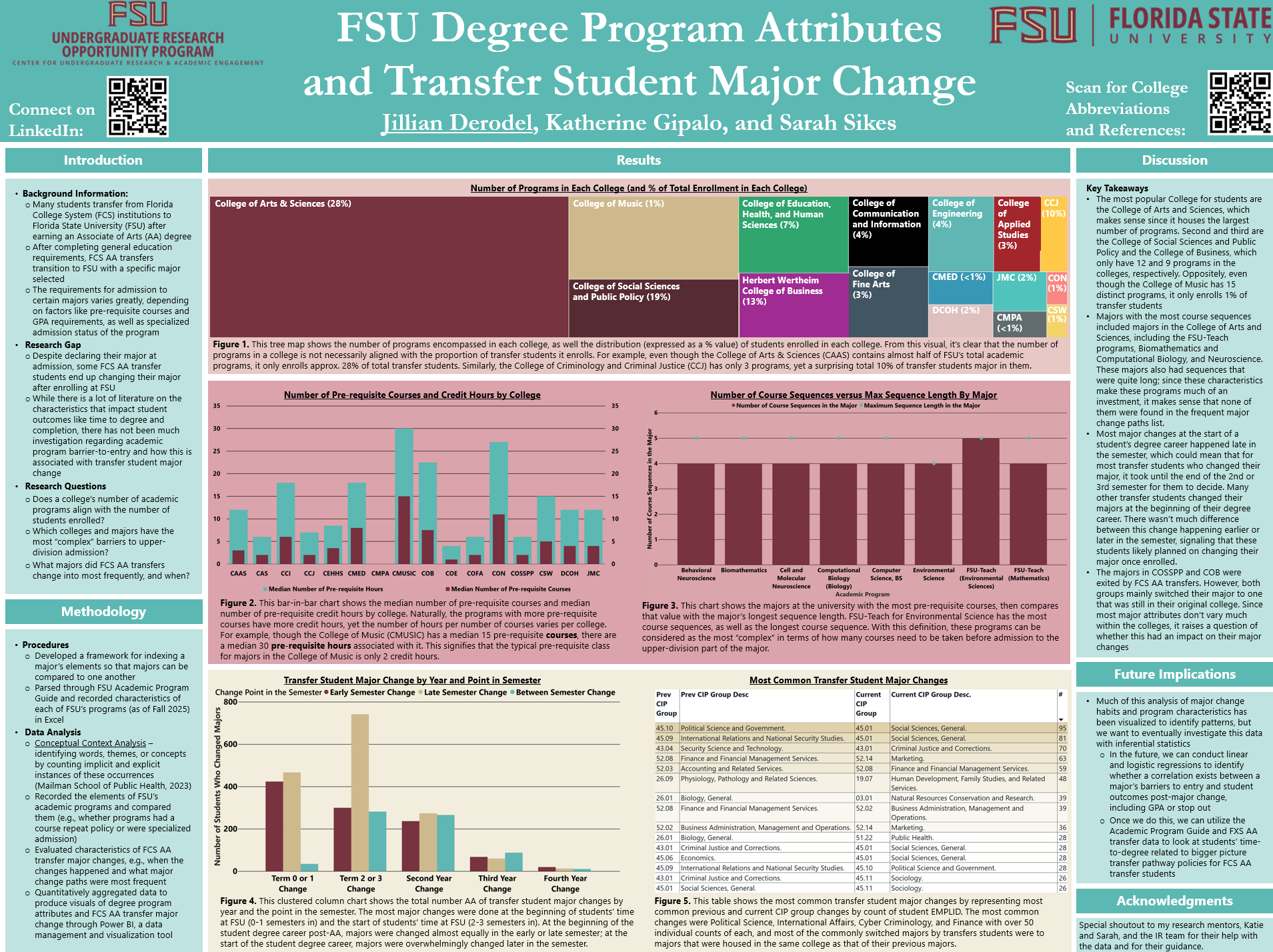
FSU Degree Program Attributes and Transfer Student Major Change
Authors: Jillian Derodel, Katherine GipaloStudent Major: Statistics
Mentor: Katherine Gipalo
Mentor's Department: Office of Institutional Research Mentor's College: N/A Co-Presenters:
Abstract
This research examines the attributes of Florida State University’s undergraduate academic programs, as well as the major change habits for students who transfer from Florida College System (FCS) schools to the university with an Associate of Arts (AA) degree. To record the different elements of undergraduate academic programs and compare them to one another, we listed those of each program according to the university’s academic program guide. Additionally, we used student-level data for FCS AA transfers that included pre-enrollment, enrollment, and post-enrollment characteristics from the university’s Student Information System to identify major change habits. For the academic program data, we generated descriptive statistics of key elements of curricular structure, and we employed conceptual context analysis to organize aspects of FCS AA transfer major change by commonalities. We find that the number of programs in an academic college is not indicative of the total undergraduate enrollment in that college and that the number of pre-requisite credit hours compared to the number of pre-requisites courses can determine a program’s curricular complexity. We also notice that most major changes for FCS AA transfers happen at the beginning or start of their degree plan, and the most frequently changed majors are in the College of Social Sciences and Public Policy and the College of Business. These findings lay the foundation for us to combine the academic program and FCS AA transfer enrollment information to further investigate the correlation between major complexity and FCS AA transfer student outcomes at FSU.
Keywords: major, transfer, courses