
Research Symposium
26th annual Undergraduate Research Symposium, April 1, 2026
Ariana Chu Poster Session 1: 9:30 am - 10:30 am / Poster #275
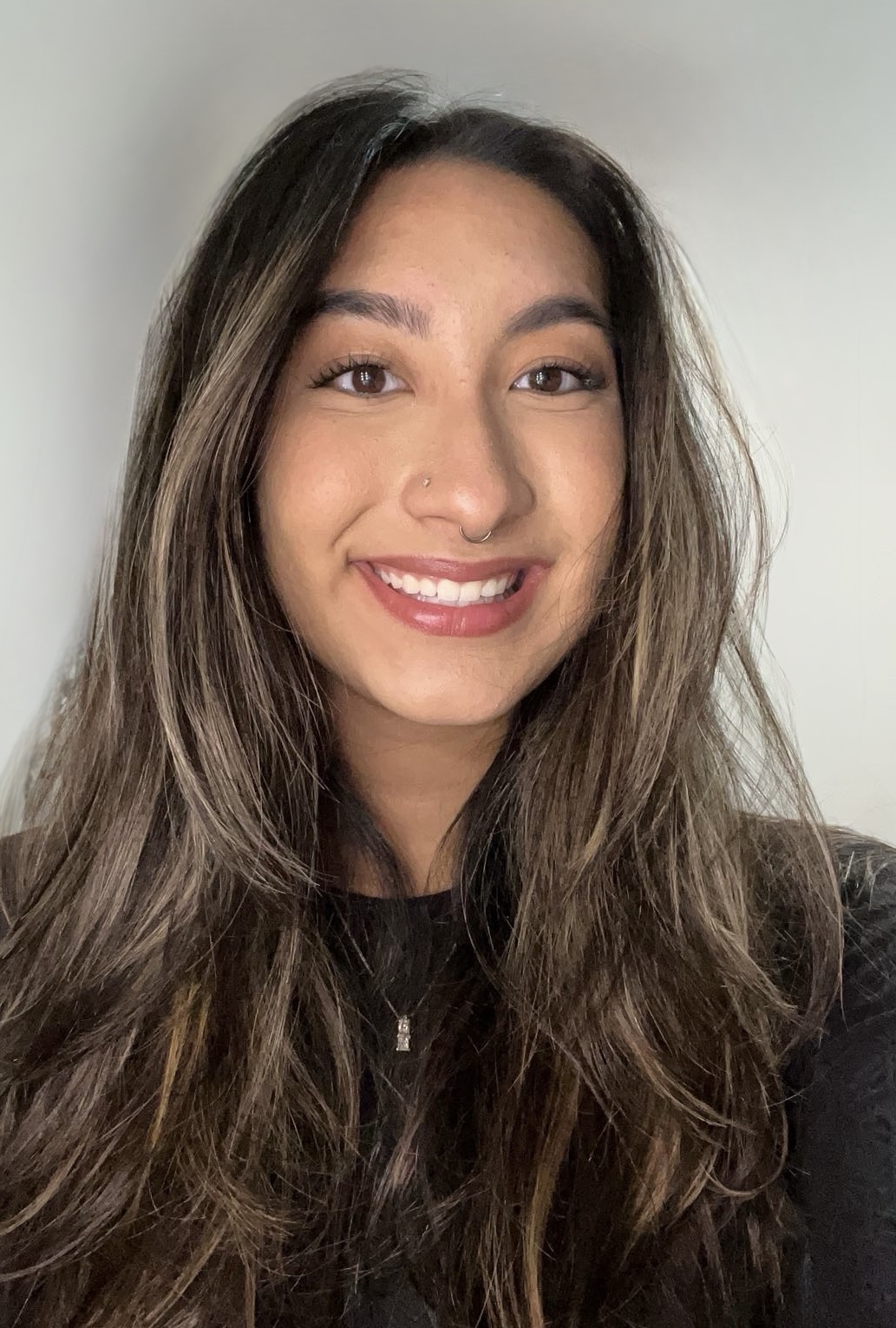
BIO
Ariana is a second-year Bachelor of Science student majoring in Psychology with a minor in Chemistry on a pre-medical track. She has earned a spot on the Dean's List for four consecutive semesters and is a QUEST scholar supporting first-generation students.
Currently, Ariana is conducting research under her mentor, Jacob Perez, about underrepresented populations and how mental health symptoms impact substance abuse, and the role of religiosity mediating that relationship.
Ariana is also involved in Alpha Chi Sigma, a Professional Chemistry Fraternity, and the Society of Asian Scientists and Engineers (SASE), further illustrating her devotion to chemical sciences.
Combining her two passions–psychology and chemical sciences–she intends to enter the medical field as a psychiatrist. Driven by mental health advocacy, she hopes to improve patients' overall quality of life.
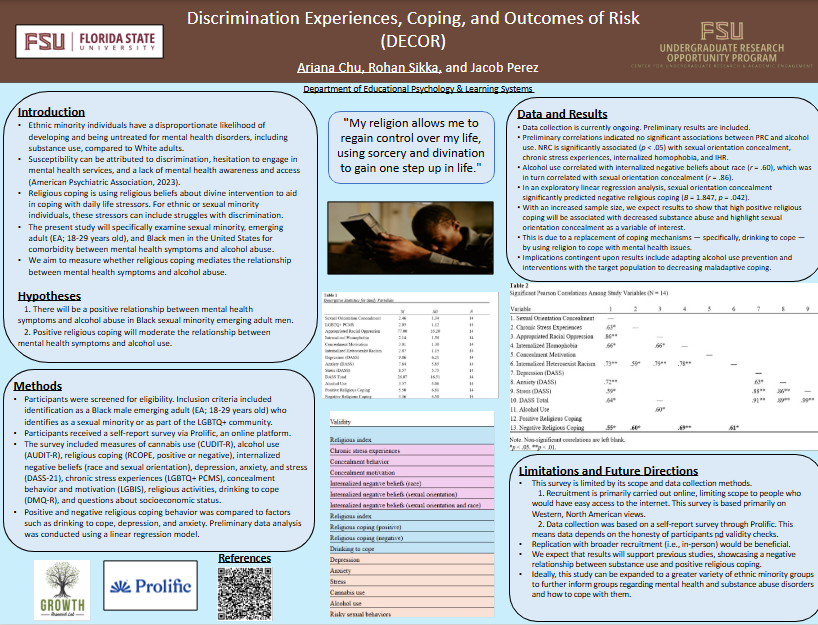
Discrimination Experiences, Coping, and Outcomes of Risk (DECOR)
Authors: Ariana Chu, Jacob PerezStudent Major: Psychology
Mentor: Jacob Perez
Mentor's Department: Counseling and School Psychology Mentor's College: Psychology Co-Presenters: Rohan Sikka
Abstract
Minority populations are prone to experiencing chronic stress that contributes to mental health symptoms and substance abuse. Positive religious coping (PRC), or the use of spiritual beliefs and practices to manage stress and foster hope, has shown to protect against chronic stress and merits further investigation among minority groups. Therefore, this cross-sectional research aims to determine the relationships between internalizing mental health symptoms — namely depression, anxiety, stress — and alcohol use and whether these relationships may be moderated by PRC. This is being investigated to inform future research on prevention and intervention development for these populations. Minority populations tend to have less research regarding their health disparities, highlighting the need for this research. Prolific, an online survey recruitment tool that draws from a national sample, was used to increase the study's generalizability. Eligible participants will receive a link to the survey, which includes measures of chronic stress experience, religious activities, religious coping, substance use, and mental health symptoms. Participants include Black emerging adult (18-29) men identifying as a sexual minority. Data collection is ongoing and expected to be completed in March 2026. It is expected that PRC will significantly moderate the effects of depression, anxiety, and stress on alcohol use, such that PRC weakens the associations between internalizing mental health symptoms and alcohol use. Results will inform targets for alcohol use prevention and intervention programs (e.g., mindfulness) among intersectional groups, like gay and bisexual Black men, who experience conflicting messages about the role of religious coping in their communities.
Keywords: Psychology, minority, substance abuse, coping