
Research Symposium
26th annual Undergraduate Research Symposium, April 1, 2026
Mia Navarro Poster Session 4: 3:00 pm - 4:00 pm / Poster #204

BIO
Mia Navarro is currently a Sophomore at Florida State University pursuing a Bachelor degree in Cell and Molecular Neuroscience with an immense interest in psychological well-being and overall mental health. More specifically, she is interested in how certain environmental and social variables can affect the mental health of those living in underserved communities. Currently, she is involved in researching the ways social isolation, stress, and consumption of alcohol can affect the quality of life of citizens that live within the United States Virgin Islands (USVI), which is a population that has been classified as suffering from significant health disparities by the NIH. By utilizing statistical analyses and survey data, this study investigates how the factors that were listed are related to mental health outcomes and life satisfaction. This project's overall goal is to improve mental health services and interventions in areas that are lacking, such as the USVI. Through these efforts, Mia aspires to gain a better understanding of the disparities that are present when it comes to mental healthcare. She further plans to pursue a graduate degree in psychiatric nursing with the aspirations of becoming a Psychiatric Mental Health Nurse Practitioner (PMHNP).
An Analysis of Stress, Quality of Life and Emotional Support among USVI Adults
Authors: Mia Navarro, Shermeeka Hogans-MathewsStudent Major: Pre-Cell/Mol Neuro Sci Upper
Mentor: Shermeeka Hogans-Mathews
Mentor's Department: Department of Family Medicine & Rural Health Mentor's College: Florida State University College of Medicine Co-Presenters: Alexus LaPlante and Josh Ryland de Kloet
Abstract
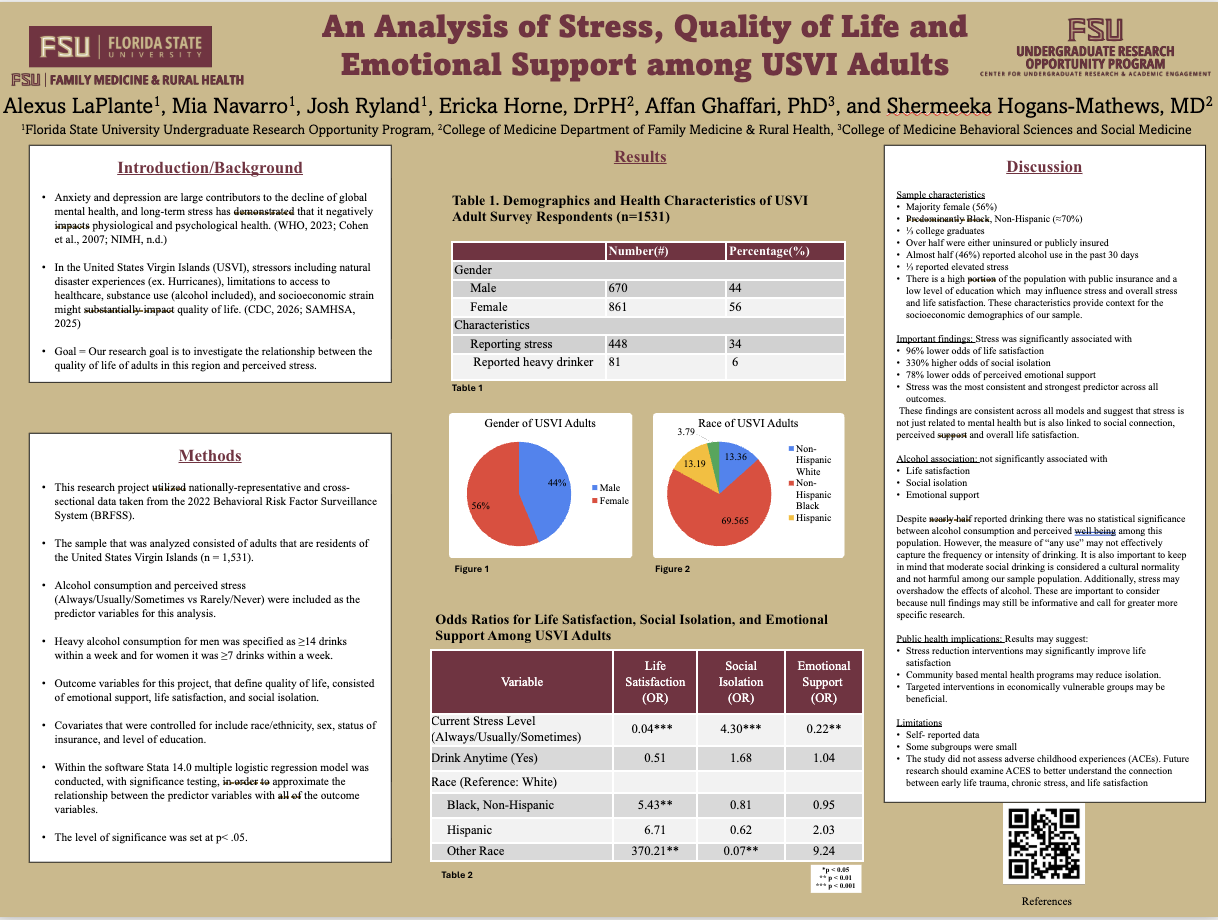
This study investigates how isolation, stress, and alcohol consumption influences quality of life in the United States Virgin Islands (USVI). Understanding the quantitative relationships between these factors and life satisfaction is crucial in identifying causes of poor mental health within underserved communities. The USVI was chosen as our data supply because of its designation as an NIH health disparity population, due to high poverty rates and inadequate access to medical and behavioral health services. By identifying key factors for a reduced quality of life, this research focuses on identifying potential mental health interventions needed to improve accessibility for these services in the USVI. A literature review was conducted to identify gaps in existing research, specifically culturally and geographically contributors to life satisfaction. Survey data collected from USVI residents were analyzed to determine the association between reported stress levels, alcohol consumption, social isolation, and overall mental health outcomes. A statistical analysis was performed to identify significant indicators of decreased life satisfaction. Initial findings suggest that significant stress will signify a negative association with mental health, however alcohol consumption may not have a statistically significant relationship. Future research will be needed to examine adverse childhood experiences (ACEs) as additional predictors of long-term mental health outcomes in the USVI.
Keywords: Disparities in Mental Health, Quality of Life, Social Isolation, Perceived Stress, Life Satisfaction