
Research Symposium
26th annual Undergraduate Research Symposium, April 1, 2026
Alexandra Martinez Poster Session 2: 10:45 am - 11:45 am / Poster #272

BIO
As a sophomore at FSU, I am pursuing an undergraduate degree in Cell and Molecular Neuroscience. I plan to attend graduate school and ascertain an MD or DO, specializing in maternal-fetal care. In preparation for the next steps in my career, I hope to expand my contributions to clinical, psychological, or biological-focused research through DIS or Honors in the Major programs at FSU. Outside of academics, I enjoy hiking, reading, spending time with friends, and working at the FSU Lakefront Park.
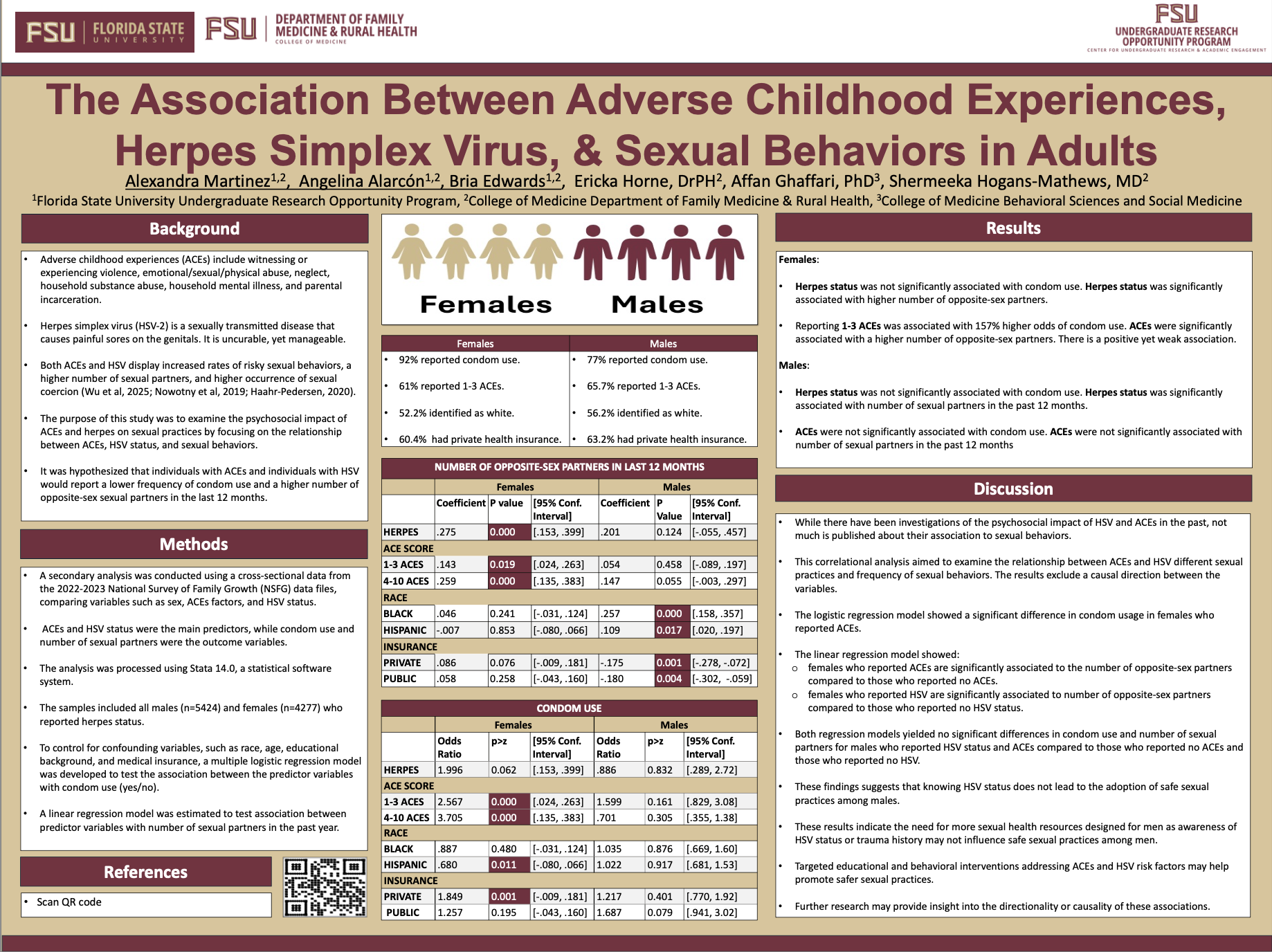
The Association Between Adverse Childhood Experiences, Herpes Simplex Virus, and Sexual Behaviors in Adults
Authors: Alexandra Martinez, Shermeeka Hogans-MathewsStudent Major: Cell and Molecular Neuroscience
Mentor: Shermeeka Hogans-Mathews
Mentor's Department: Department of Family Medicine and Rural Health Mentor's College: College of Medicine Co-Presenters: Angelina Alarcon, Bria Edwards
Abstract
Adverse childhood experiences (ACEs)—including, but not limited to, witnessing or receiving violence; exposure to emotional, sexual, and physical abuse; emotional and/or physical neglect; household substance abuse; household mental illness; parental incarceration—and Herpes Simplex Virus (HSV) status display increased rates of risky sexual behaviors, a higher number of sexual partners, and higher occurrence of sexual coercion (Wu et al, 2025; Nowotny et al, 2019; Haahr-Pedersen, 2020). This investigation focused on the relationship between ACEs and sexual behaviors compared to the relationship between HSV and sexual behaviors. The purpose of this study was to examine the psychosocial impact of ACEs and herpes on sexual practices. A secondary analysis was conducted using cross-sectional data from the 2022-2023 National Survey of Family Growth (NSFG), comparing variables such as sex, ACEs factors, and HSV status. The analysis showed a significant impact of traumatic childhood experiences and HSV—independent of each other—on sexual practices. Males who reported ACEs and males who reported HSV status demonstrated no significant association with condom usage and number of opposite-sex partners. Females who reported ACEs and females who reported HSV status also reported a higher number of opposite-sex partners. Females with ACEs were significantly associated with condom usage. Processes from this study incentivize further research that may answer questions relating to the lifestyle practices of persons with HSV and those who have experienced ACEs.
Keywords: HSV, ACEs, sexual behaviors