
Research Symposium
26th annual Undergraduate Research Symposium, April 1, 2026
Ethan Messier Poster Session 3: 1:45 pm - 2:45 pm / Poster #84
BIO
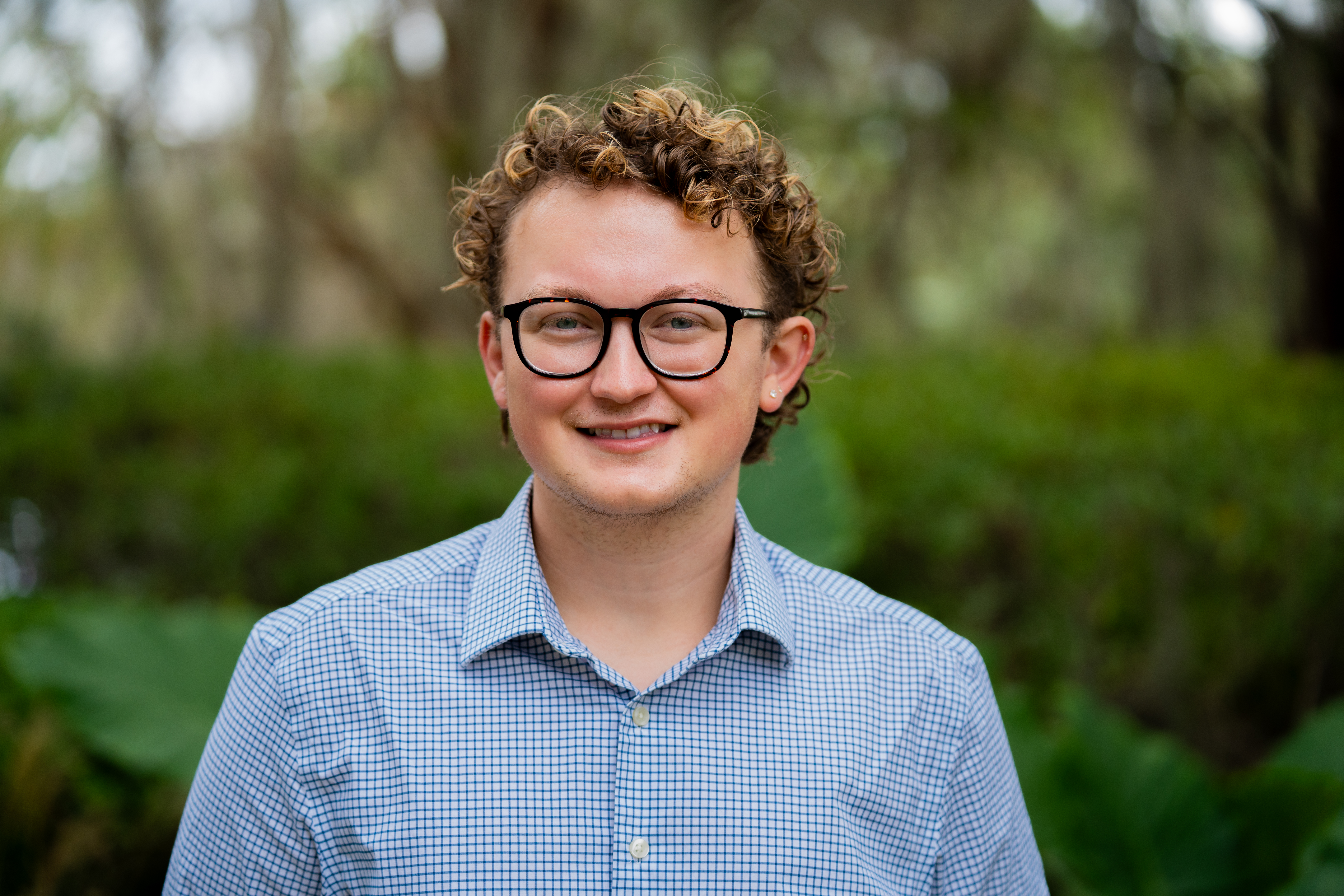
Ethan Messier is a junior from Sarasota, FL majoring in Chemistry on the pre-medical track. He is an Honors student and a Benacquisto Scholar, and hopes to attend medical school. His research interests lie in pediatrics, primary care accessibility, bilingual medical care, neurology and neuroscience, and health disparities. He is a research volunteer under Dr. Bonnie Spring and Dr. Keri Gladhill at the FSU College of Medicine, where he works on the SMARTer Study: an intervention designed to promote healthy weight loss.
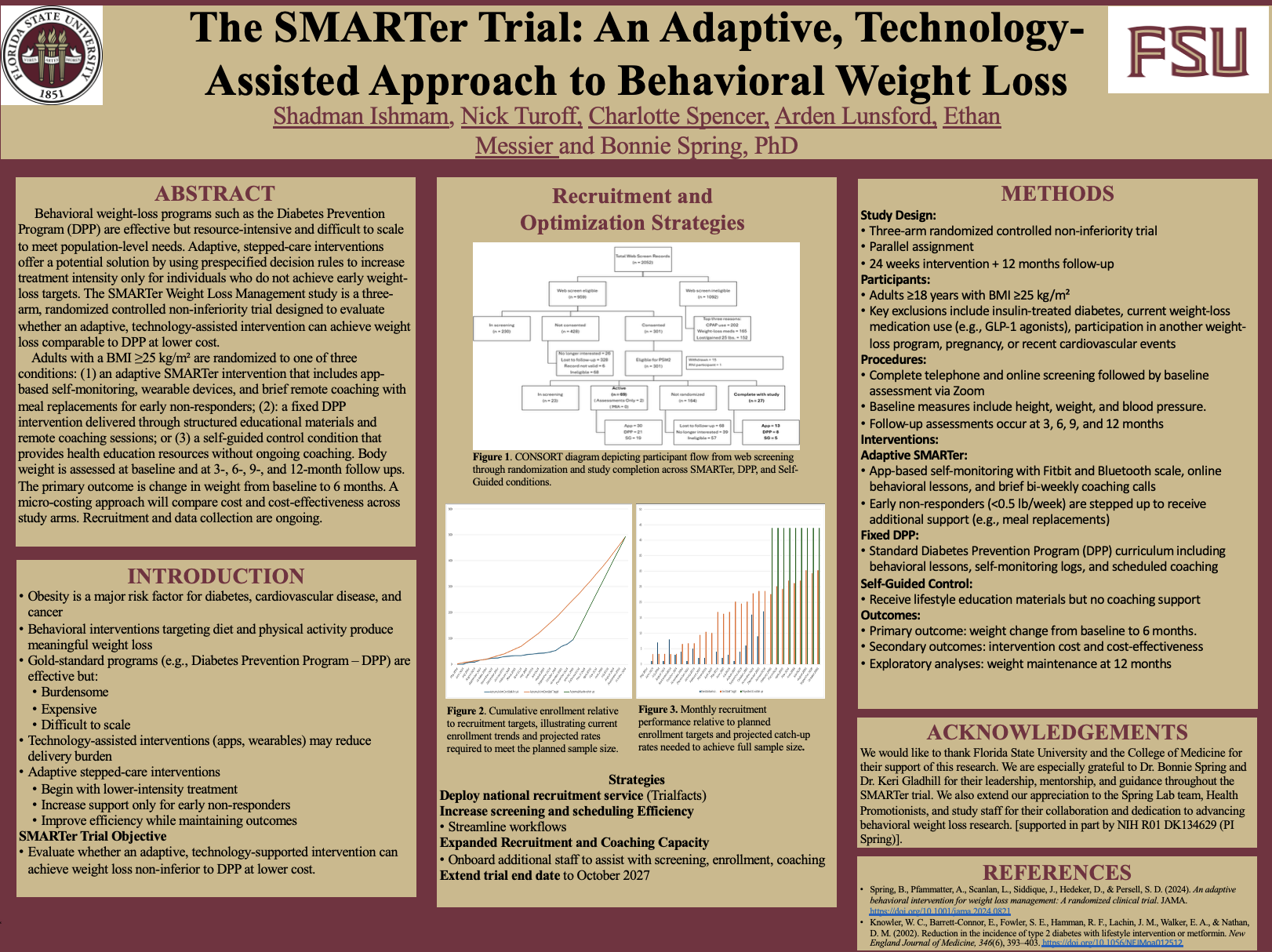
The SMARTer Trial: An Adaptive, Technology- Assisted Approach to Behavioral Weight Loss
Authors: Ethan Messier, Dr. Bonnie Spring, PhDStudent Major: Chemistry
Mentor: Dr. Bonnie Spring, PhD
Mentor's Department: Department of Behavioral Sciences and Social Medicine Mentor's College: FSU College of Medicine Co-Presenters: Shadman Ishmam, Arden Lunsford, Charlotte Sprecher, Nicholas Turoff
Abstract
Behavioral weight-loss programs such as the Diabetes Prevention Program (DPP) are effective but resource-intensive and difficult to scale to meet population-level needs. Adaptive, stepped-care interventions offer a potential solution by using pre-specified decision rules to increase treatment intensity only for individuals who do not achieve early weight-loss targets. The SMARTer Weight Loss Management study is a three-arm, randomized controlled non-inferiority trial designed to evaluate whether an adaptive, technology-assisted intervention can achieve weight loss comparable to DPP at lower cost. Adults with a BMI ≥ 25 kg/m² are randomized to one of three conditions: (1) an adaptive SMARTer intervention that includes app-based self-monitoring, wearable devices, and brief remote coaching with meal replacements for early non-responders; (2): a fixed DPP intervention delivered through structured educational materials and remote coaching sessions; or (3) a self-guided control condition that provides health education resources without ongoing coaching. Body weight is assessed at baseline and at 3-, 6-, 9-, and 12-month follow ups. The primary outcome is change in weight from baseline to 6 months. A micro-costing approach will compare cost and cost-effectiveness across
study arms. Recruitment and data collection are ongoing.
Keywords: weight-loss, medicine, obesity, clinical trial