
Research Symposium
26th annual Undergraduate Research Symposium, April 1, 2026
Ashlee Locker Poster Session 4: 3:00 pm - 4:00 pm / Poster #16

BIO
Ashlee Locker, a senior from Wellington, Florida, is pursuing a Bachelor of Science in Biological Sciences with a minor in Chemistry at Florida State University. She is passionate about animal health and conservation, with a particular interest in marine life. Ashlee has conducted research for two years under the mentorship of Annais Muschett-Bonilla at the FSU Coastal and Marine Laboratory, where she studies reproductive biology and maternal investment in the Atlantic stingray (Hypanus sabinus). In addition to her research, she works as a part time chemistry tutor for high school students and volunteers at veterinary clinics working with both equine and small animal patients. After graduating, Ashlee plans to attend veterinary school to pursue a career in veterinary medicine.
Maternal Investment and Gestational Indicators in the Atlantic Stingray
Authors: Ashlee Locker, Annais Belinda Muschett-BonillaStudent Major: Biological Sciences
Mentor: Annais Belinda Muschett-Bonilla
Mentor's Department: Biological Sciences Mentor's College: College of Arts and Sciences Co-Presenters:
Abstract
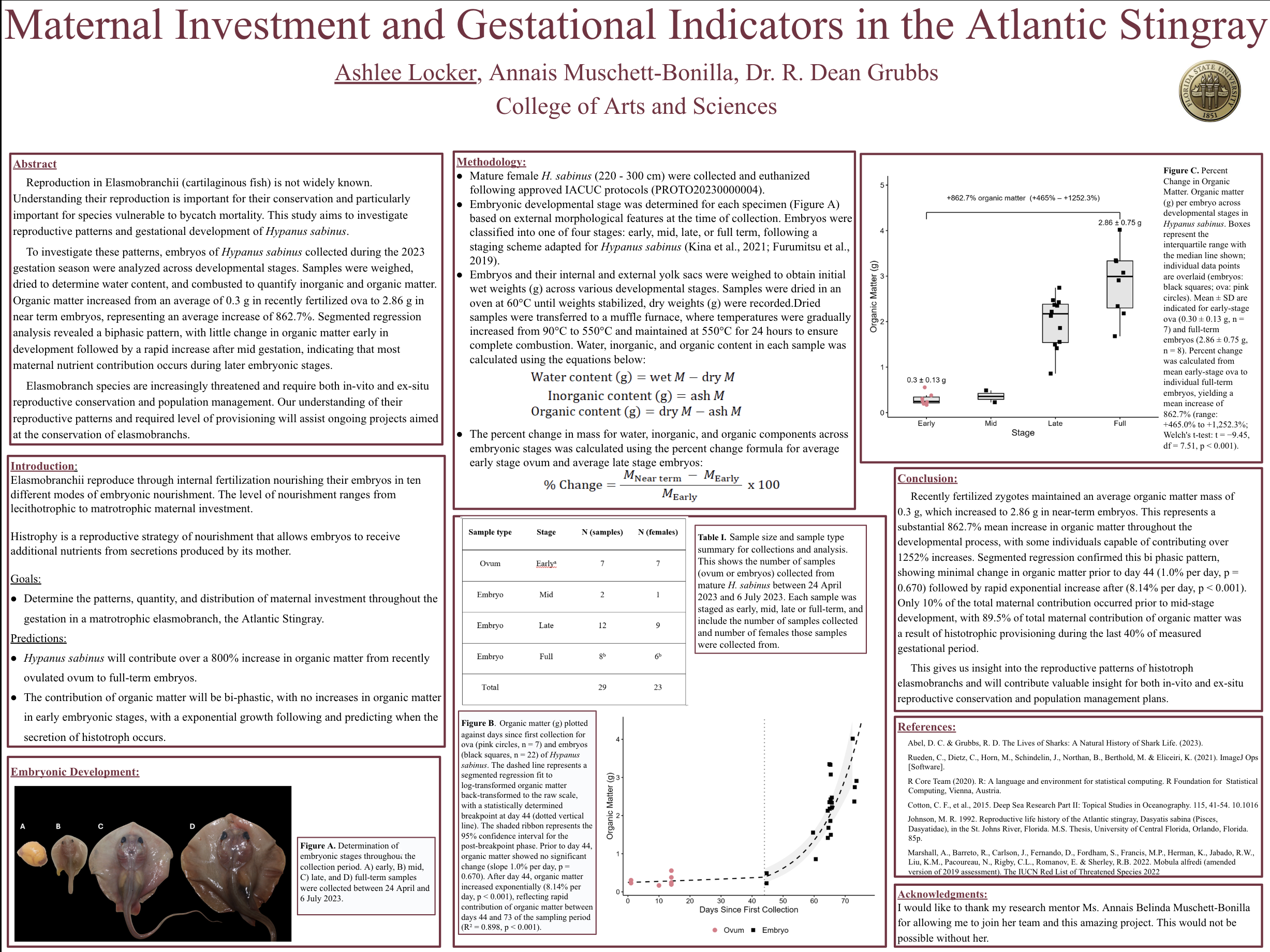
Reproduction in Elasmobranchii (cartilaginous fish) is not widely known. Understanding their reproduction is important for their conservation and particularly important for species vulnerable to bycatch mortality. This study aims to investigate reproductive patterns and gestational development of Hypanus sabinus.
To investigate these patterns, embryos of Hypanus sabinus collected during the 2023 gestation season were analyzed across developmental stages. Samples were weighed, dried to determine water content, and combusted to quantify inorganic and organic matter. Organic matter increased from an average of 0.3 g in recently fertilized ova to 2.86 g in near term embryos, representing an average increase of 862.7%. Segmented regression analysis revealed a biphasic pattern, with little change in organic matter early in development followed by a rapid increase after mid gestation, indicating that most maternal nutrient contribution occurs during later embryonic stages.
Elasmobranch species are increasingly threatened and require both in-vito and ex-situ reproductive conservation and population management. Our understanding of their reproductive patterns and required level of provisioning will assist ongoing projects aimed at the conservation of elasmobranchs.
Keywords: Marine, Biology, Reproduction