
Research Symposium
26th annual Undergraduate Research Symposium, April 1, 2026
Sarah Thapa Poster Session 1: 9:30 am - 10:30 am / Poster #181
BIO
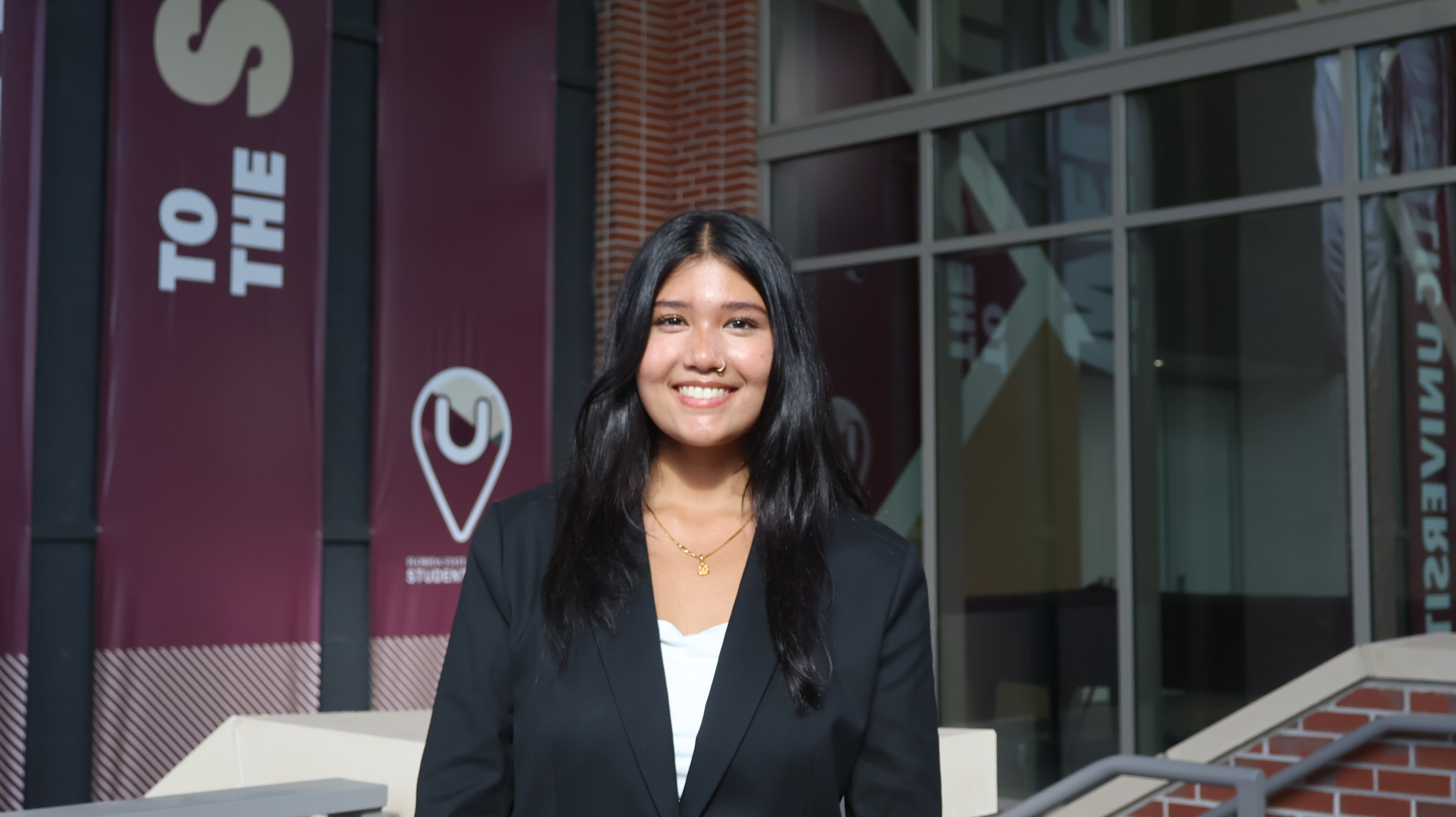
Sarah Thapa is a second-year student at Florida State University pursuing a Bachelor of Science in Information Technology with a minor in STEM Entrepreneurship. She is interested in data analysis, statistical modeling, and emerging cybersecurity trends. Through her coursework and academic interests, Sarah is developing a strong foundation in data-driven problem solving and technology systems. Sarah worked closely with Mr. Rafiq Islam to explore research that involves large data sets and machine learning models. Sarah plans to continue her academic journey through graduate study, where she hopes to deepen her knowledge of cybersecurity and data systems. Her long-term goal is to pursue a career in cybersecurity and data analysis, where she can contribute to analyzing and improving data security practices in an increasingly technology-driven world.
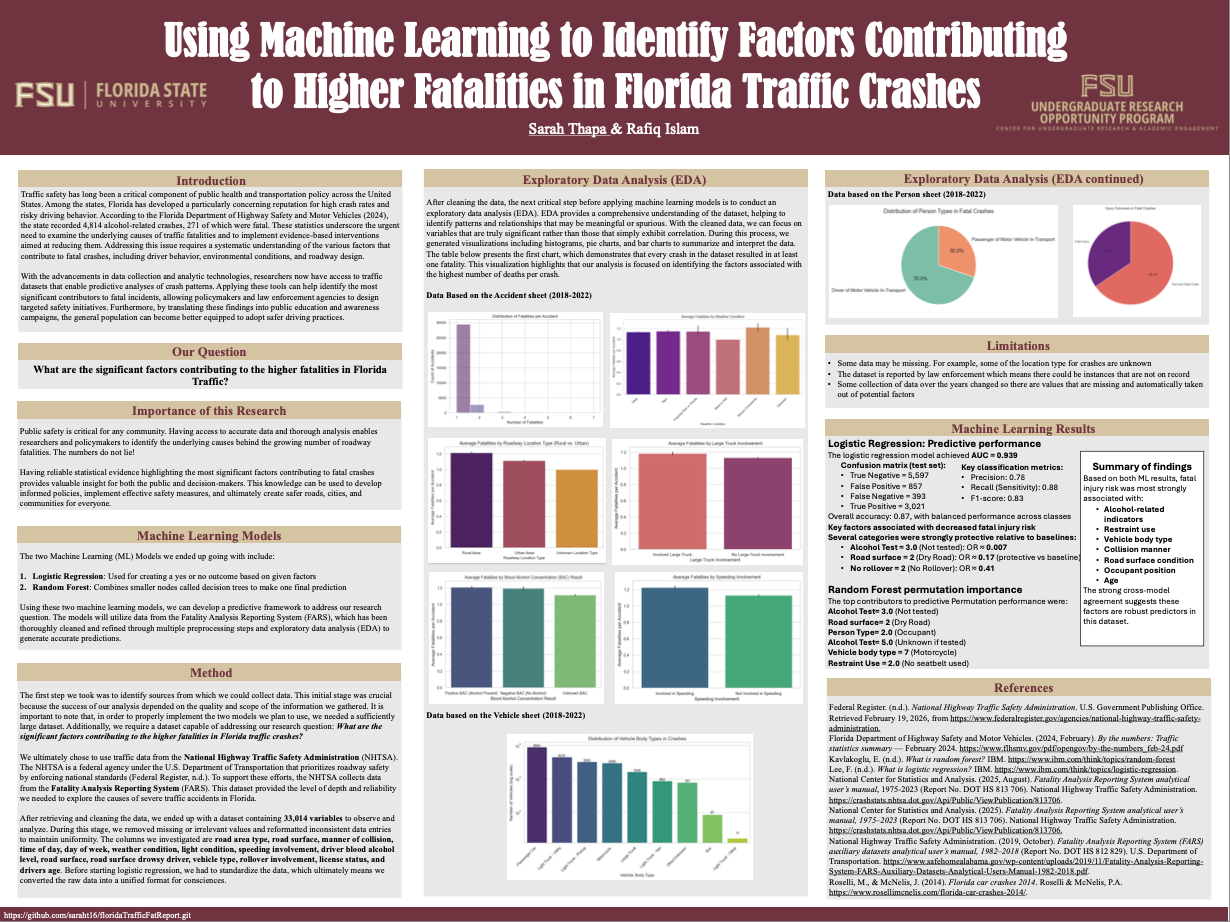
Using Machine Learning to Identify Factors Contributing to Higher Fatalities in Florida Traffic Crashes
Authors: Sarah Thapa, Rafiq IslamStudent Major: Information Technology
Mentor: Rafiq Islam
Mentor's Department: Department of Mathematics Mentor's College: College of Arts and Sciences Co-Presenters:
Abstract
In 2024, Florida had a grand total of 381,210 crashes, or about 1,000 per day, according to the Florida Department of Highway Safety and Motor Vehicles (Roselli & McNelis, 2014). Every year, we hear about fatal crashes in Florida, whether that be from driving under the influence, distractions, weather, or other factors. These fatal accidents can cause terrible damage to property and be costly to reverse. It is vital to note the various reasons for fatal crashes; however, there are some factors that are more prominent than others. The National Highway Traffic Safety Administration’s (NHTSA) primary goal is to reduce the damages created by motor vehicles through data collected from the Fatality Analysis Reporting System (FARS). In this study, we collected FARS data and used machine learning tools to further identify the most significant factors contributing to fatal road crashes in Florida from 2018 to 2022. Since there is a large amount of data provided, we constrained our data set from 2018 to 2022. We mainly compare the machine learning model Random Forest and the classical statistical model Logistic Regression to find out the most significant factor(s) that contribute to the fatal road crashes in Florida. Overall, further research is needed to identify the key causes of traffic fatalities and to better educate the public about the risks associated with these factors.
Keywords: Machine Learning, Traffic, Fatalities