
Research Symposium
26th annual Undergraduate Research Symposium, April 1, 2026
Max Rideout Poster Session 3: 1:45 pm - 2:45 pm / Poster #23
BIO
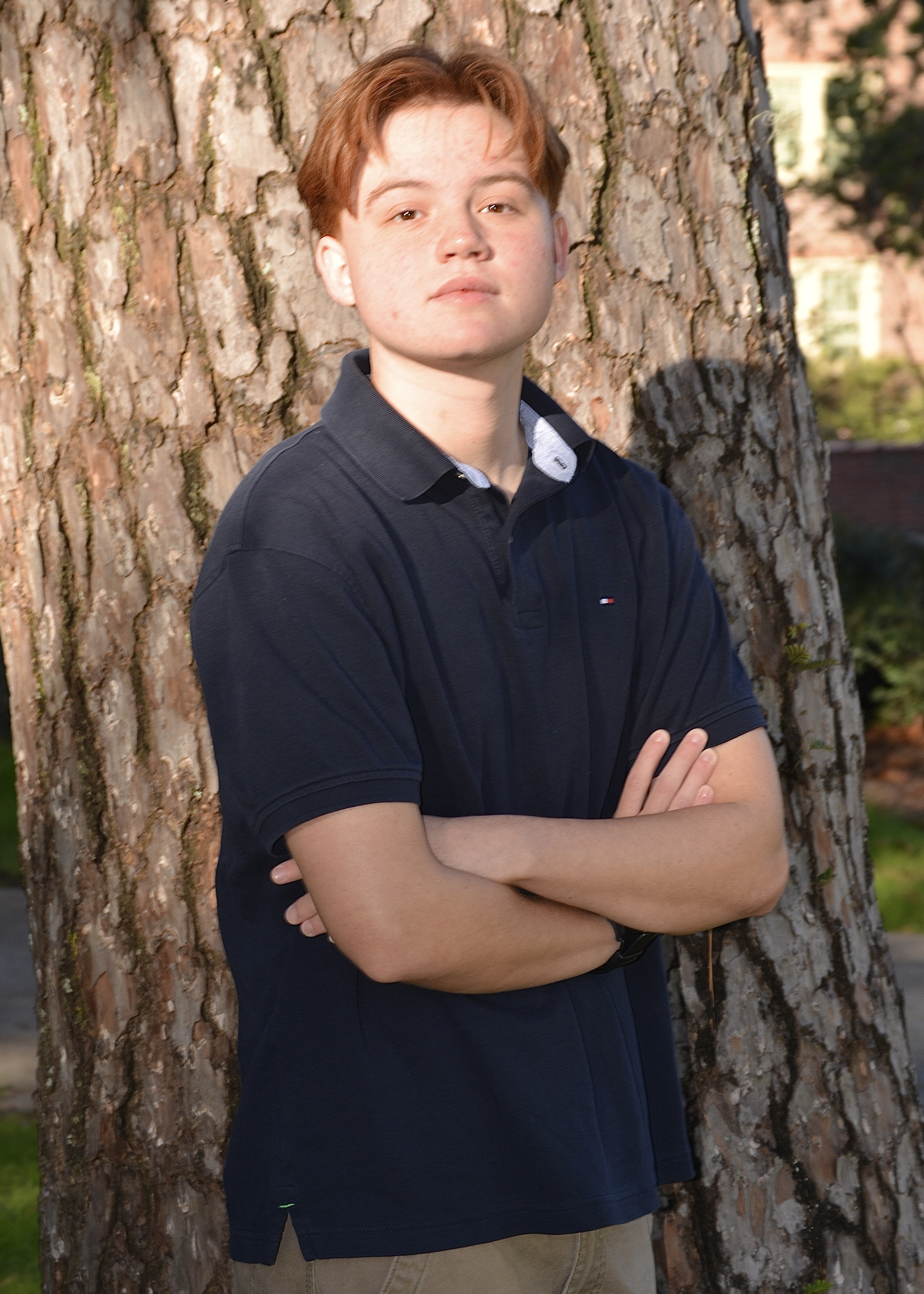
Max is a second year student from Helena, Montana pursuing a Bachelors of Science in Geography with a minor in Urban Planning. At the Undergraduate Research Symposium, he will be presenting his research on underutilized religious land and affordable housing. His other topics of interest include Garden Cities and New Urbanism. Max joined the Devoe L. Moore Institute team in Fall 2025 as a Public Policy Intern, where he has been working with his mentor, Dr. Crystal Taylor, to complete his research poster. After completing his Bachelors, he hopes to attend graduate school to acquire a Masters of Science in Urban Planning, which he will use to become an urban planner, private consultant, or GIS analyst. Outside of his research, Max is the treasurer for the Geographical Society at FSU and works as a Desk Assistant with University Housing.
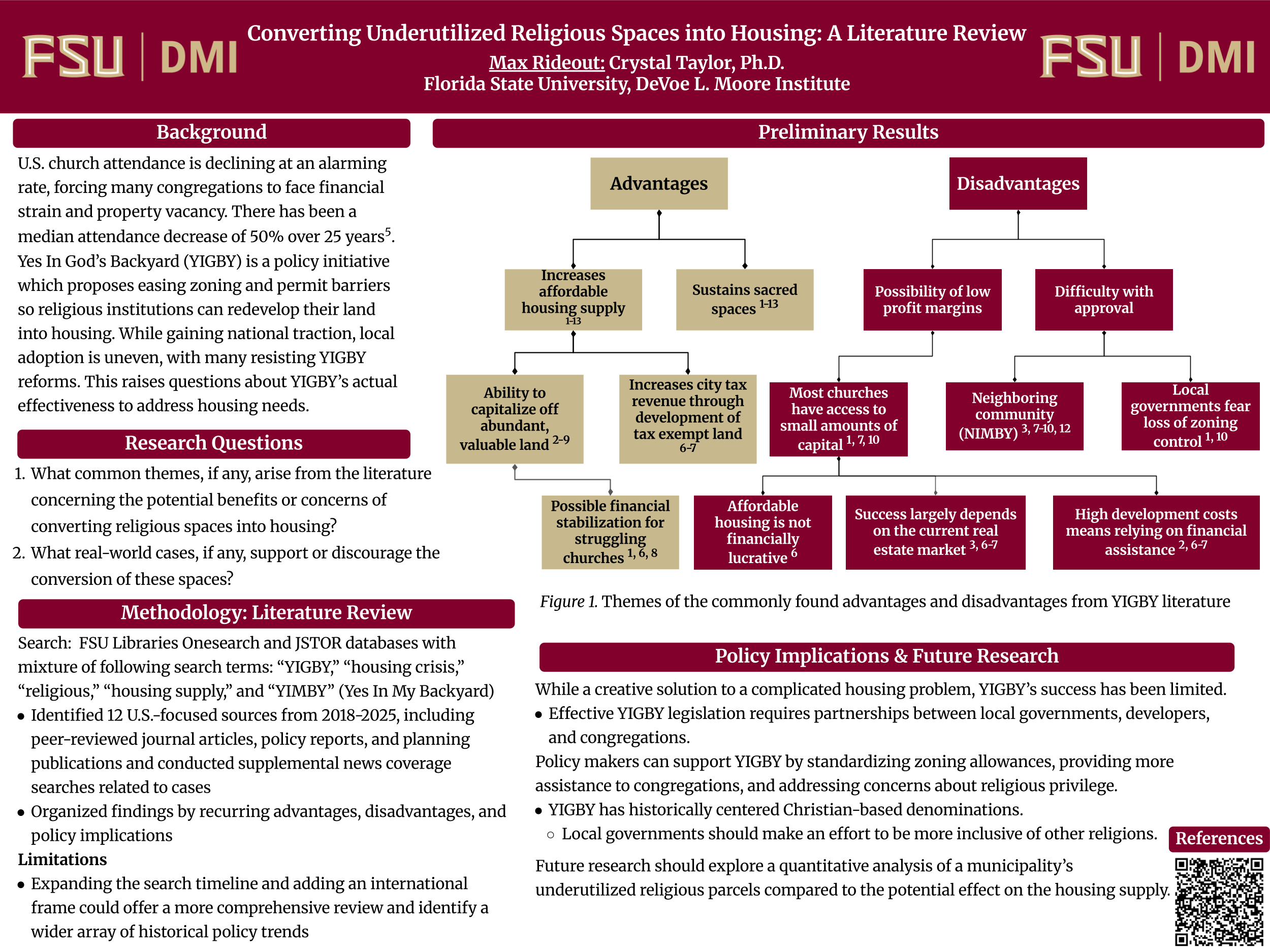
Converting Underutilized Religious Spaces into Housing: A Literature Review
Authors: Max Rideout, Dr. Crystal TaylorStudent Major: Geography
Mentor: Dr. Crystal Taylor
Mentor's Department: Devoe L. Moore Institute Mentor's College: College of Social Sciences and Public Policy Co-Presenters:
Abstract
Churches around the United States are reporting a significant decline in attendance. According to Hartford International University’s Institute of Religious Research, median church attendance has declined more than 50% in the past 25 years, while Gallup reports the majority of Americans, for the first time in history, do not belong to a religious institution. As membership shrinks, churches are becoming financially harder to maintain in terms of maintenance and utility costs, forcing many churches to close their doors. Simultaneously, the United States is facing a housing crisis with skyrocketing mortgages and rents far outpacing household incomes, especially in areas with housing supply shortages.
Communities have attempted to address some of these issues by redeveloping underutilized church land to affordable housing through an initiative called Yes in God’s Backyard (YIGBY). By reviewing academic literature, agency reports, and newspaper articles, this research seeks to uncover “What common themes, if any, arise from the literature concerning the potential benefits or concerns of converting religious spaces into housing?” and “What real-world cases, if any, support or discourage the conversion of these spaces?”
Preliminary results suggest that scholars generally view YIGBY as a useful policy due to the potential to expand housing supply while leveraging underutilized land. However, the literature highlights obstacles to implementation. Church leaders report encountering opposition, complex bureaucratic processes, and financial hurdles. Future research should explore a quantitative analysis of a municipality’s underutilized religious parcels and compare it to its potential effect on the housing market if redeveloped into residential properties.
Keywords: urban planning, YIGBY, religion