
Research Symposium
26th annual Undergraduate Research Symposium, April 1, 2026
Jordan Kane Poster Session 1: 9:30 am - 10:30 am / Poster #100

BIO
Jordan R. Kane is an undergraduate student at Florida State University pursuing a Bachelor of Science in Behavioral Neuroscience and Exercise Physiology, with a minor in Chemistry. Starting this fall, she began to work in Dr. Robert Hickner's lab under the mentorship of Alayne J. Thompson, contributing to research examining how exercise training influences physiological and psychological indicators of sleep quality in pre-diabetic postmenopausal women.
Through this project, Jordan has gained experience assisting with exercise-based research protocols, participant testing, and data collection using physiological and subjective sleep measures. Her academic interests lie in the intersection of neuroscience, physiology, and human performance.
Outside of research, Jordan is deeply involved in strength training and bodybuilding, which has shaped her interest in exercise science and the broader impact of physical activity on health and performance. She hopes to continue pursuing opportunities that integrate neuroscience, physiology, and exercise science to better understand how exercise can improve both physical and cognitive well-being.
Impact of Exercise on Physiological and Psychological Indicators of Sleep Quality in Pre-Diabetic Postmenopausal Women
Authors: Jordan Kane, Alayne ThompsonStudent Major: Behavioral Neuroscience, Exercise Physiology
Mentor: Alayne Thompson
Mentor's Department: Exercise Physiology Mentor's College: College of Education, Health, and Human Sciences Co-Presenters: Millicent Fox, Ava Knowles
Abstract
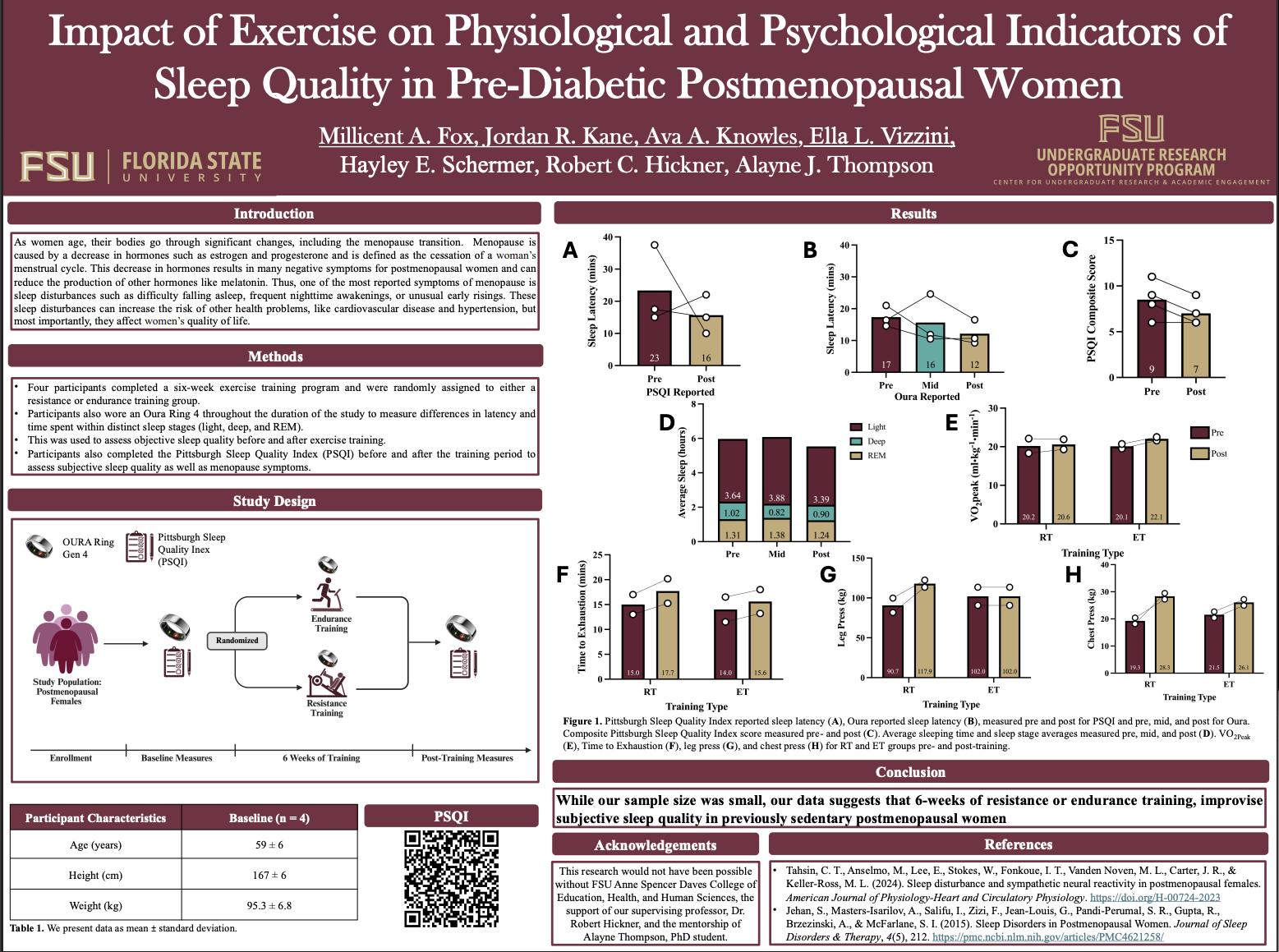
Menopause is an inevitable life stage impacting over half of the population, leading to significant mental and physiological changes. This study is ongoing and investigates the feasibility of exercise as a non-pharmacological intervention for the treatment of symptoms in post-menopausal women with obesity and prediabetes. In our research, four participants were randomly assigned to resistance or endurance training groups. To measure objective sleep parameters, such as heart rate and distinct sleep stages, participants also wore an Oura Ring 4 throughout the six weeks. Furthermore, participants’ subjective sleep quality and menopausal symptoms were evaluated via the Pittsburgh Sleep Quality Index (PSQI) and Menopause Rating Scale (MRS). We hypothesized that exercise would cause an increase in time spent in deep sleep and would improve perception of sleep quality. With a small sample size and the study still ongoing, we can only posit that our preliminary results indicate a trend towards improved strength, enhanced subjective sleep quality, and potential reductions in menopausal symptoms following the six-week exercise program. Further participant recruitment is necessary to enhance the statistical power to confirm these effects, yet our findings are promising in the potential application of exercise as a non-pharmacological strategy to improve sleep and menopausal health in this population.
Keywords: Exercise, Sleep, Women