
Research Symposium
26th annual Undergraduate Research Symposium, April 1, 2026
Thomas Hall Poster Session 4: 3:00 pm - 4:00 pm / Poster #278
BIO
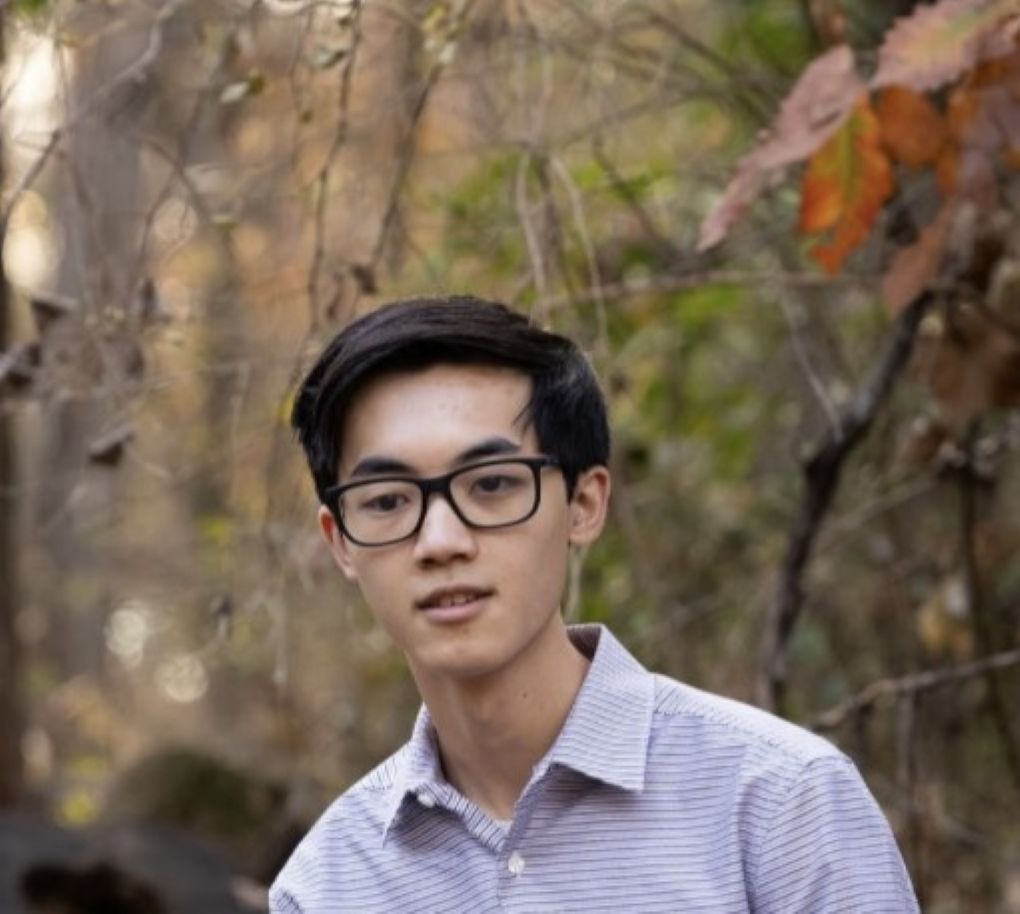
Thomas Hall is a second-year student, currently pursuing a Bachelor of Science in Computer Science with a minor in Mathematics. He is interested in machine learning and working with statistics in large databases. His enthusiasm for emerging technologies has led him to undertake many courses related to computer architecture and data analytics, reflecting a growing foundation in computer systems. Beyond the classroom, Thomas worked closely with Dr. Xinyao Zhang at the FAMU-FSU College of Engineering, where he contributed programs that trained a large set of numerical sequences. Thomas' ambitions extend beyond academics with a personal interest in international travel. He aspires to lead a career at the intersection of international affairs and technology by working with a global organization to bridge cultures worldwide.
AI Powered "Smart" Robotic Teammates
Authors: Thomas Hall, Xinyao ZhangStudent Major: Computer Science
Mentor: Xinyao Zhang
Mentor's Department: Industrial and Manufacturing Engineering Mentor's College: College of Engineering Co-Presenters:
Abstract
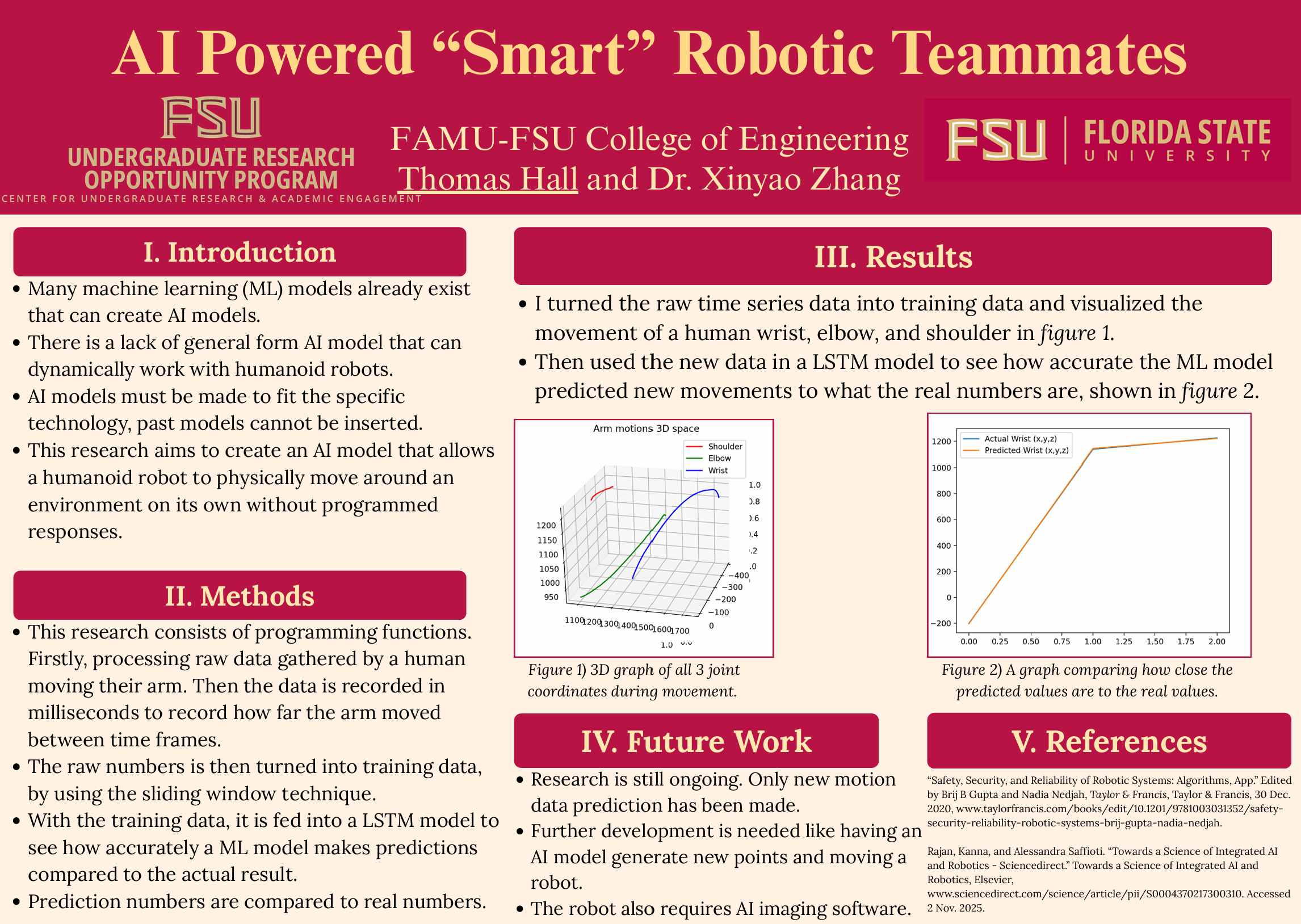
The world is revolutionizing at a rapid pace. As software and robotics have evolved over the years, we have begun to look for ways to integrate “smart” robotics with human workers to assist in labor, research, and menial tasks that are better suited for machines. The goal is to create a space where robots can take up heavy lifting and repetitive jobs so that humans can have more time to develop and conduct meaningful experiments that drive innovation forward. Firstly, raw data was recorded in milliseconds from an actual human arm movement and recorded each number as a time stamp in series data, then it will be processed into usable training data and fed into a ML model that can generate new prediction numbers from the trained data. Eventually, the ML knows how an arm should behave and can move appropriately in the real world. So far, this research is ongoing and requires more work to reach the end goal of a fully autonomous robot. So far, the data is being trained by a LSTM model and is in the learning stages. Something to note is that another team is working on this same project but with image processing software. Eventually, the time-series and image recognition systems will combine so robots can see and can know how and when to move to assist humans in repetitive and labor-intensive tasks.
Keywords: Robotics, ML, AI, Algorithms, Technology