
Research Symposium
26th annual Undergraduate Research Symposium, April 1, 2026
Arianna Rockefeller Poster Session 3: 1:45 pm - 2:45 pm / Poster #39
BIO
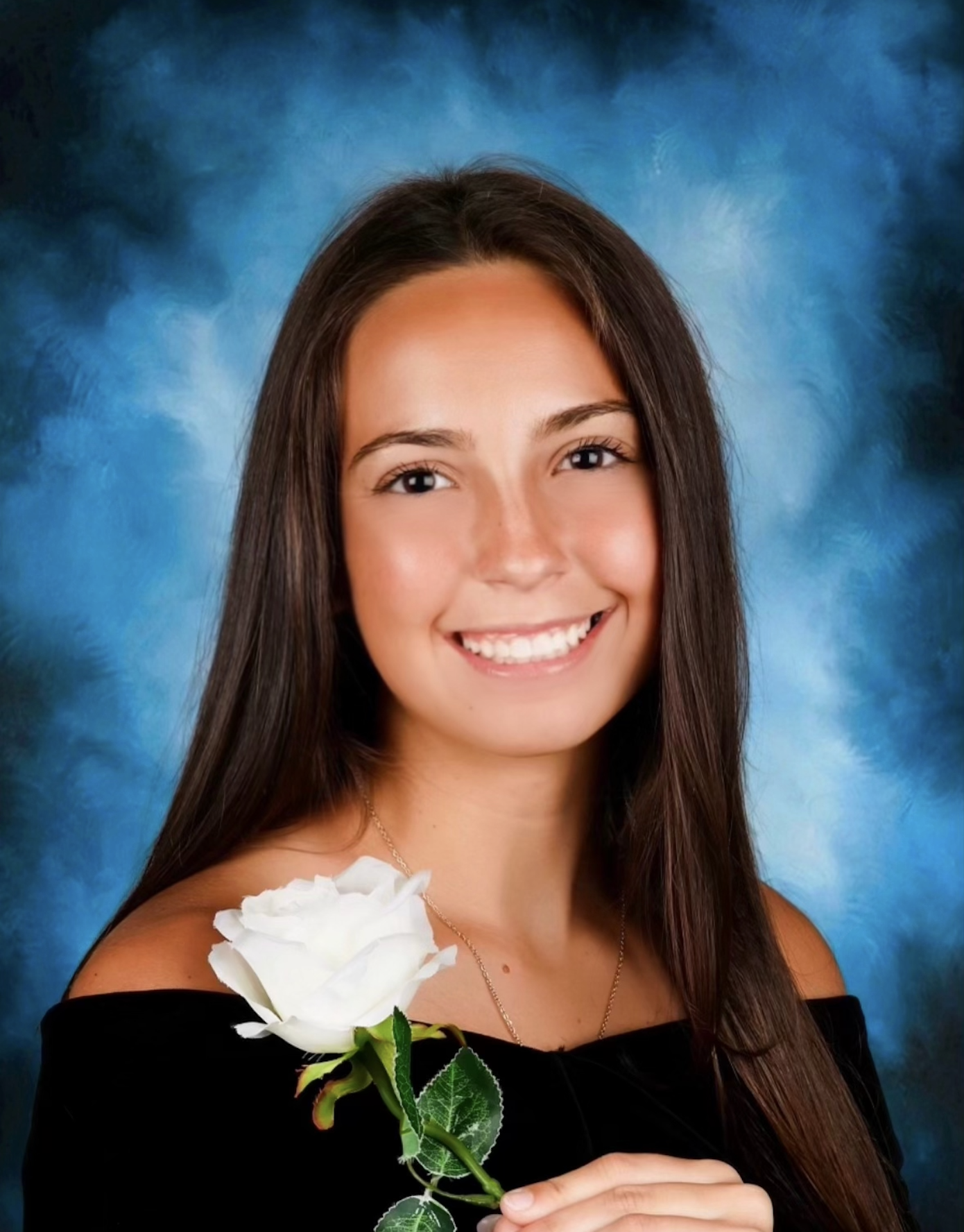
Arianna Rockefeller is a freshman from Kennett Square, Pennsylvania, majoring in Biological Sciences with a minor in Chemistry. She is pursuing a Bachelor of Science degree on the pre-medical track and plans to attend medical school after completing her undergraduate studies. In recognition of her academic achievement, she earned President’s List honors during the Fall semester.
Arianna has a strong interest in the life sciences and is particularly interested in the relationship between biology, chemistry, and human health. She plans to pursue a career in medicine with the goal of specializing in psychiatry or pediatrics, where she hopes to work with children and adolescents and focus on both physical and mental health.
During her undergraduate studies, Arianna hopes to gain research experience in the biological sciences and work with faculty mentors to further develop her knowledge and skills in preparation for medical school.
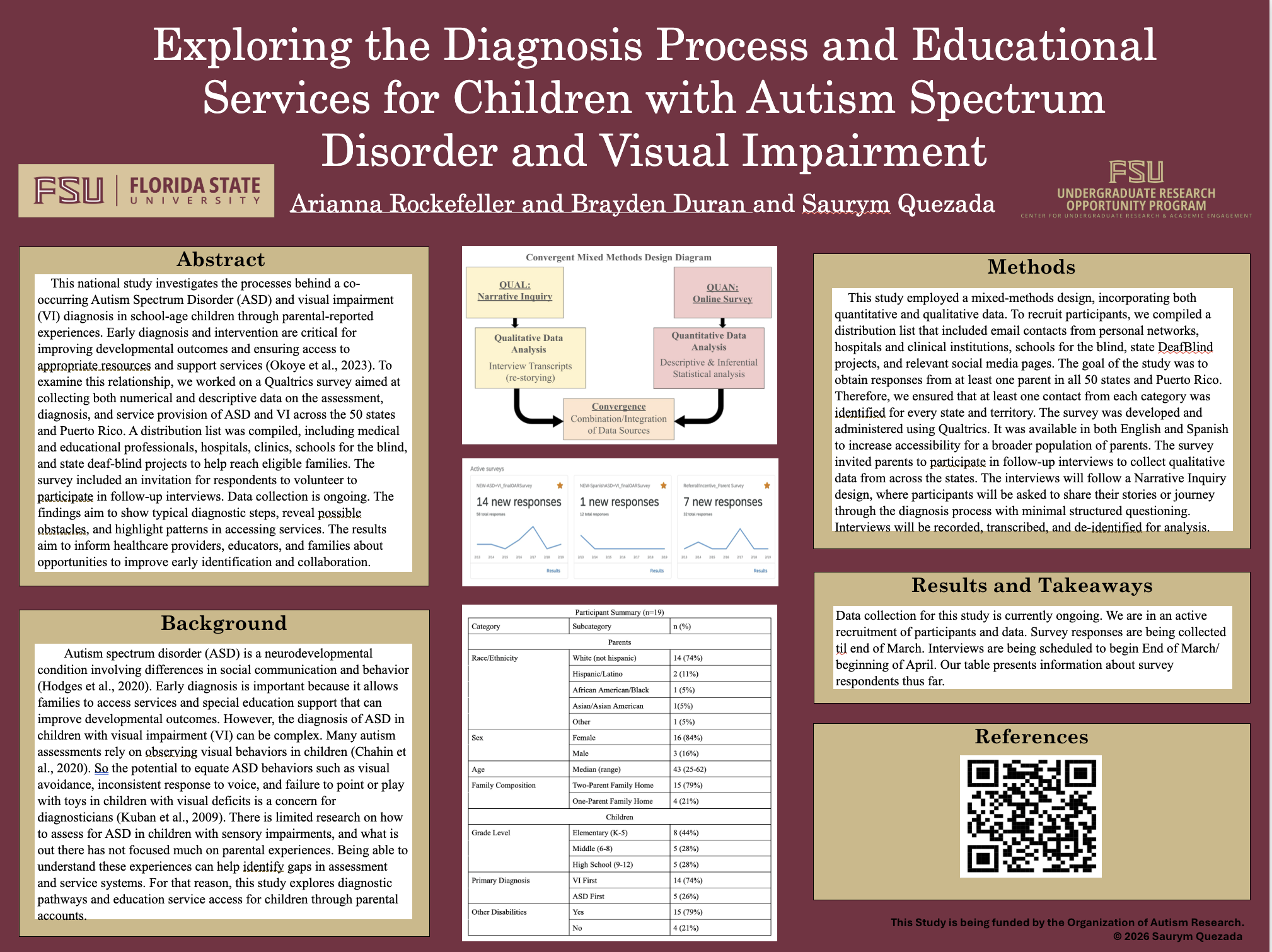
Exploring the Diagnosis Process and Educational Services for Children with Autism Spectrum Disorder and Visual Impairment
Authors: Arianna Rockefeller, Saurym QuezadaStudent Major: Biological Sciences
Mentor: Saurym Quezada
Mentor's Department: School of Teacher Education Mentor's College: College of Education, Health, and Human Sciences Co-Presenters: Brayden Duran
Abstract
This national study investigates the processes behind a co-occurring Autism Spectrum Disorder (ASD) and visual impairment (VI) diagnosis in school-age children through parental-reported experiences. Early diagnosis and intervention are critical for improving developmental outcomes and ensuring access to appropriate resources and support services (Okoye et al., 2023). To examine this relationship, we worked on a Qualtrics survey aimed at collecting both numerical and descriptive data on the assessment, diagnosis, and service provision of ASD and VI across the 50 states and Puerto Rico. A distribution list was compiled, including medical and educational professionals, hospitals, clinics, schools for the blind,
and state deaf-blind projects to help reach eligible families. The survey included an invitation for respondents to volunteer to participate in follow-up interviews. Data collection is ongoing. The findings aim to show typical diagnostic steps, reveal possible obstacles, and highlight patterns in accessing services. The results aim to inform healthcare providers, educators, and families about opportunities to improve early identification and collaboration.
Keywords: Autism, Visual Impairments, Children, Diagnosis