
Research Symposium
26th annual Undergraduate Research Symposium, April 1, 2026
Brandon Bonamarte Poster Session 2: 10:45 am - 11:45 am / Poster #200
BIO
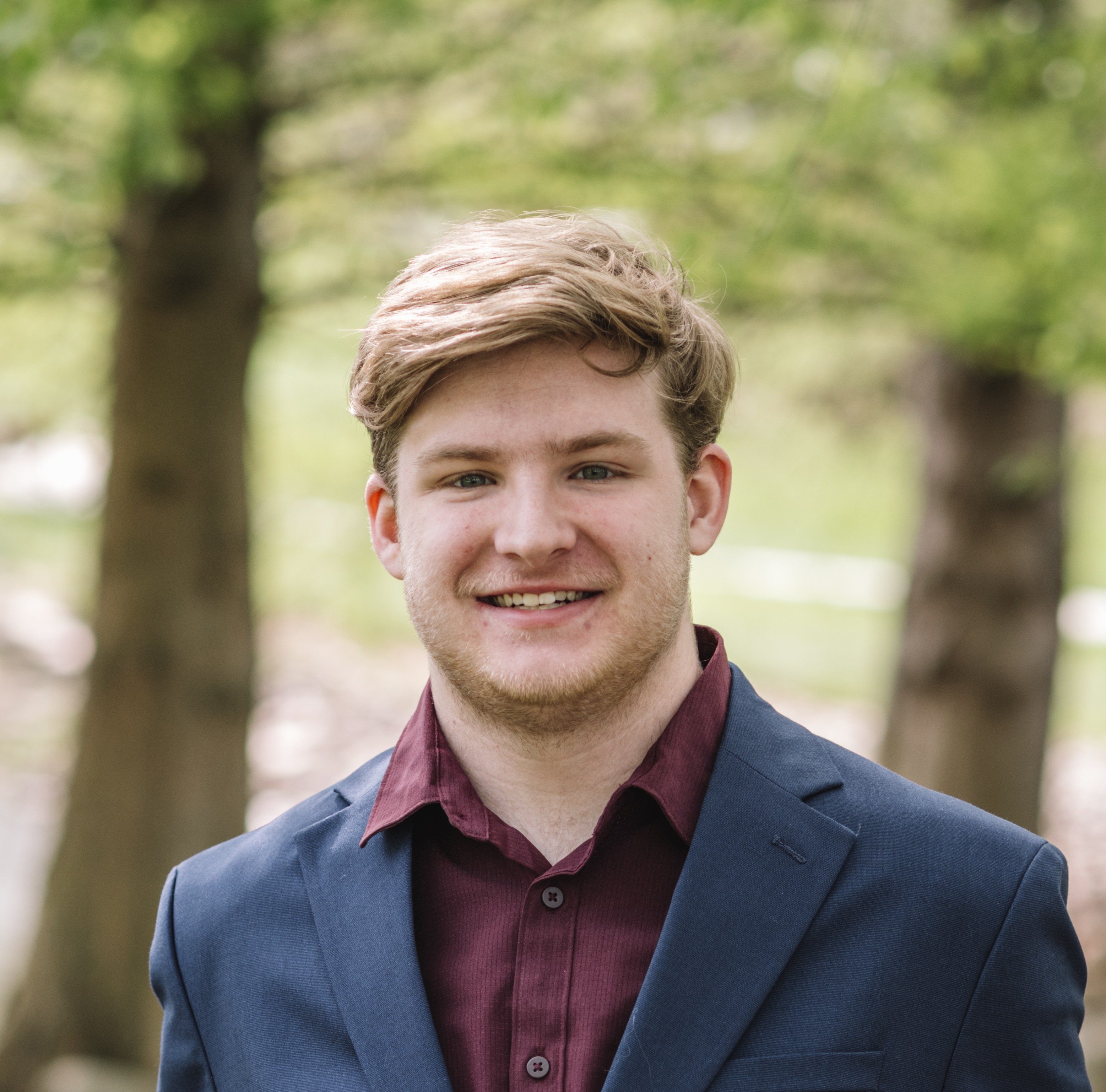
Brandon Bonamarte is a Mathematics and Music Performance dual-degree student at Florida State University. He specializes in the design and interpretation of machine learning models, with a focus on making "black-box" algorithms understandable. His award-winning work research from optimizing ASD diagnostic accuracy with Oak Ridge National Laboratory to quantifying complex biological movement in the DuVal Lab. Brandon is a frequent presenter at research symposia and is dedicated to the advancement of explainable AI and mechanistic interpretation.
Interpretable Machine Learning to Understand Variation in Manakin Display Types
Authors: Brandon Bonamarte, Emily H. DuValStudent Major: Bachelors of Science in Mathematics and Bachelors of Arts in Music
Mentor: Emily H. DuVal
Mentor's Department: Biological Science Mentor's College: Arts and Sciences Co-Presenters:
Abstract
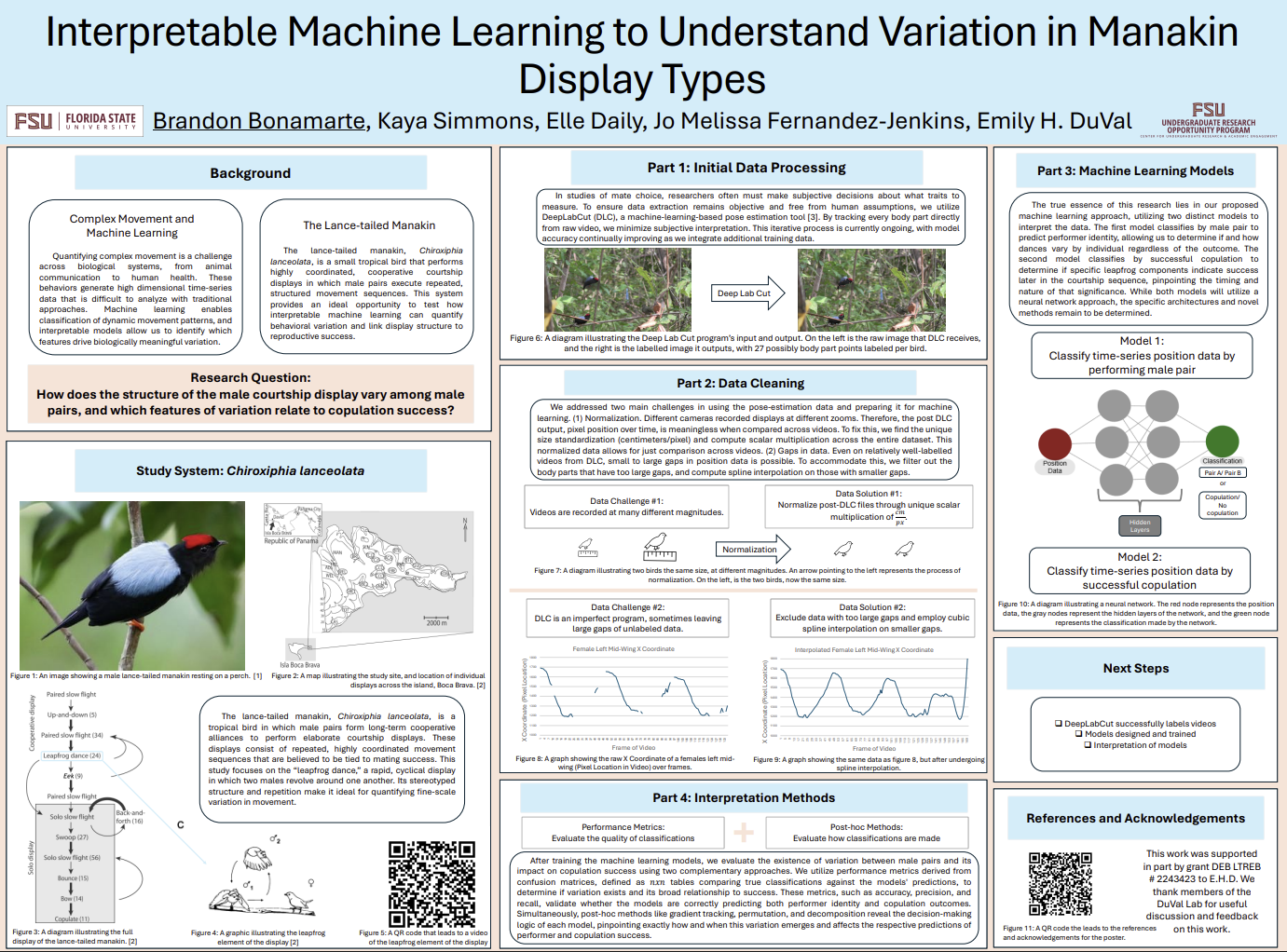
Mating displays are key interactions that directly determine individual reproductive success. The lance tailed manakin, Chiroxiphia lanceolata, is a small tropical bird that forms long-term cooperative alliances for elaborate courtship displays. While the general outline of such displays has been well defined, examination of variation across alliances and individuals, and how that might affect mating success, is ongoing. This research aims to leverage powerful machine learning tools, such as classifier neural networks, with videos of male behavior to address (1) whether there are display components that reliably distinguish performances by different male pairs, and (2) which components of display performance relate to success. First, videos are processed in DeepLabCut, which produces numerical pose estimation data from raw video. Then two models are created to make predictions using this pose estimation data. To determine the existence of unique distinguishing factors across dances performed by different mating pairs, the first model is trained to predict whether a specific mating pair is performing the dance or not. To identify key moments and traits in female mate choice, the second model is trained to classify dances as successful or unsuccessful. Following the training of these models, interpretive machine learning methods as well as several measurements of performance are used to evaluate and provide insight into the mathematical reasoning of the models. This research aims to illuminate the fine scale variation in complex behavioral interactions, and specifically how that interacts with mating success – something that currently lacks significant quantification.
Keywords: Machine Learning, Animal Behavior, Complex Movement, Explainable AI