
Research Symposium
26th annual Undergraduate Research Symposium, April 1, 2026
Shadman Ishmam Poster Session 2: 10:45 am - 11:45 am / Poster #84
BIO
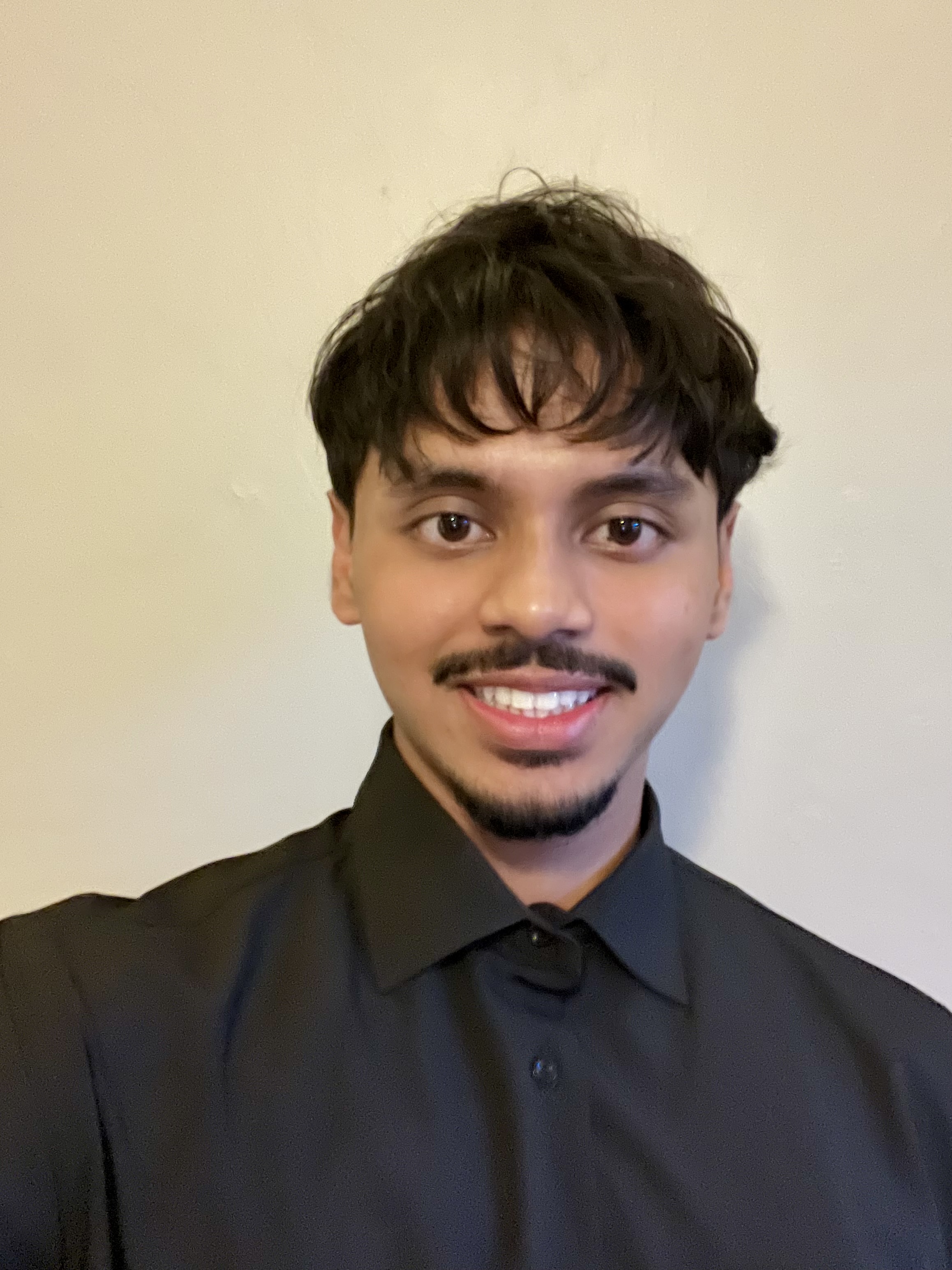
Shadman Ishmam is a junior at Florida State University pursuing a Bachelor of Science in Behavioral Neuroscience with a minor in Chemistry on the pre-medical track. He is actively involved in research, clinical care, and mentorship while preparing for a career in medicine.
Shadman currently conducts research through a Directed Independent Study with the SMARTer Weight Loss Study, where he contributes to projects examining behavioral and digital interventions designed to support healthy lifestyle changes. His research interests include behavioral medicine, preventive health, and the development of interventions that improve health outcomes for underserved populations.
In addition to his research work, Shadman works as a Certified Nursing Assistant at the Tallahassee Memorial Hospital Rehabilitation Center, where he supports patients and healthcare teams in providing daily care and recovery support. He is also involved in several leadership and service roles on campus. Shadman serves as an Advising Fellow with Matriculate, mentoring high-achieving, low-income high school students through the college application process. He also serves as Vice President of the Flavor Society and Recruitment Officer for Hearts for the Homeless at Florida State University.
Following graduation, Shadman plans to attend medical school and pursue a career as a physician focused on improving health equity through clinical care, research, and community engagement.
The SMARTer Trial: An Adaptive, Technology-Assisted Approach to Behavioral Weight Loss
Authors: Shadman Ishmam, Dr. Bonnie SpringStudent Major: Behavioral Neuroscience
Mentor: Dr. Bonnie Spring
Mentor's Department: Behavioral Sci and Social Med (BSSM) 208000 Mentor's College: College of Medicine Co-Presenters: Nicholas Turoff, Charlotte Sprecher, Arden Lunsford, Ethan Messier
Abstract
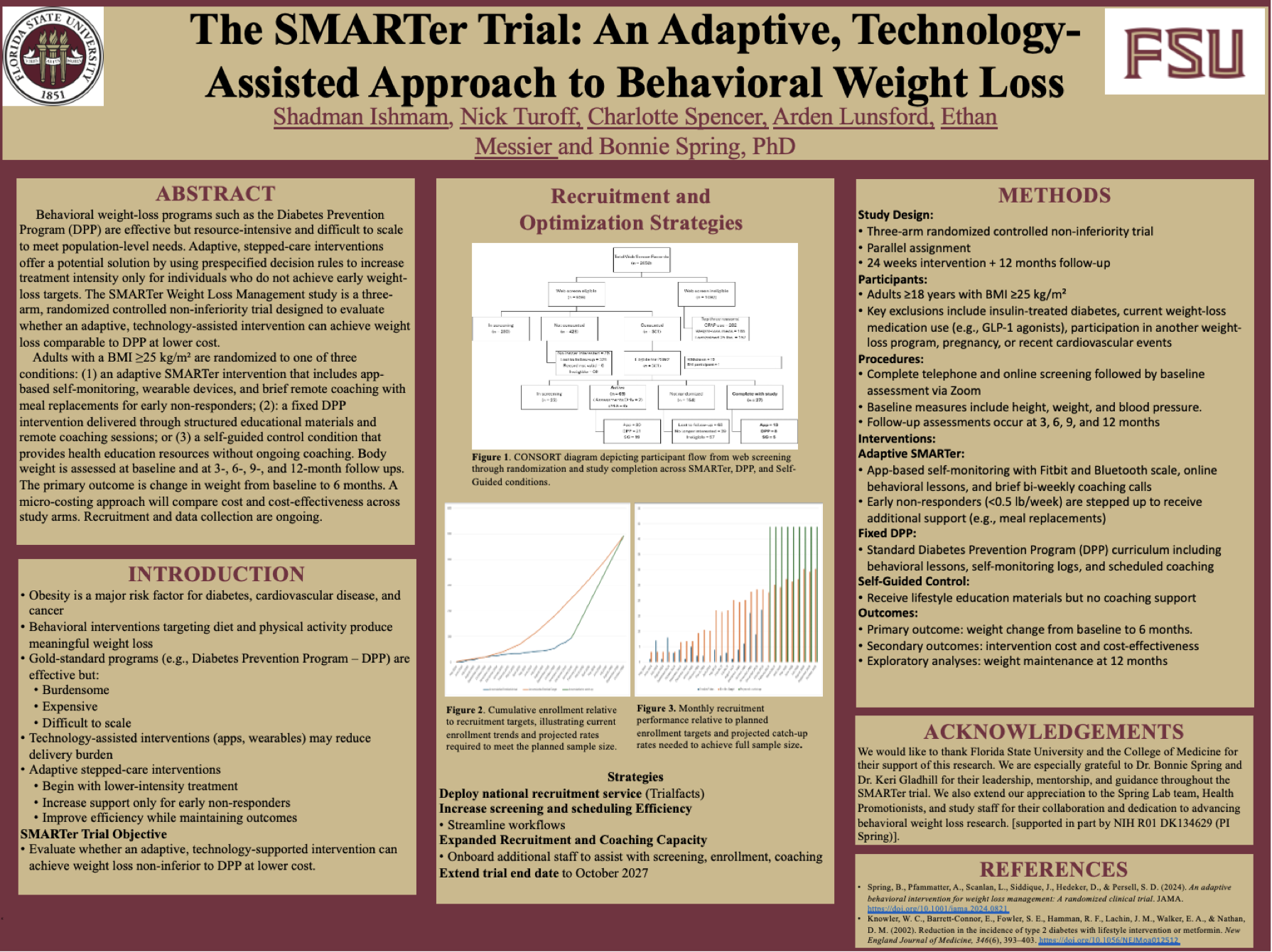
Behavioral weight-loss programs such as the Diabetes Prevention Program (DPP) are effective but resource-intensive and difficult to scale to meet population-level needs. Adaptive, stepped-care interventions offer a potential solution by using pre-specified decision rules to increase treatment intensity only for individuals who do not achieve early weight-loss targets. The SMARTer Weight Loss Management study is a three-arm, randomized controlled non-inferiority trial designed to evaluate whether an adaptive, technology-assisted intervention can achieve weight loss comparable to DPP at lower cost.
Adults with a BMI ≥25 kg/m² are randomized to one of three conditions: (1) an adaptive SMARTer intervention that includes app-based self-monitoring, wearable devices, and brief remote coaching with meal replacements for early non-responders; (2): a fixed DPP intervention delivered through structured educational materials and remote coaching sessions; or (3) a self-guided control condition that provides health education resources without ongoing coaching. Body weight is assessed at baseline and at 3-, 6-, 9-, and 12-month follow ups. The primary outcome is change in weight from baseline to 6 months. A micro-costing approach will compare cost and cost-effectiveness across study arms. Recruitment and data collection are ongoing.
Keywords: Technology, Weight-loss, Behavioral, Adaptive, Health