
Research Symposium
26th annual Undergraduate Research Symposium, April 1, 2026
Joseph Lindley Poster Session 1: 9:30 am - 10:30 am / Poster #209
BIO
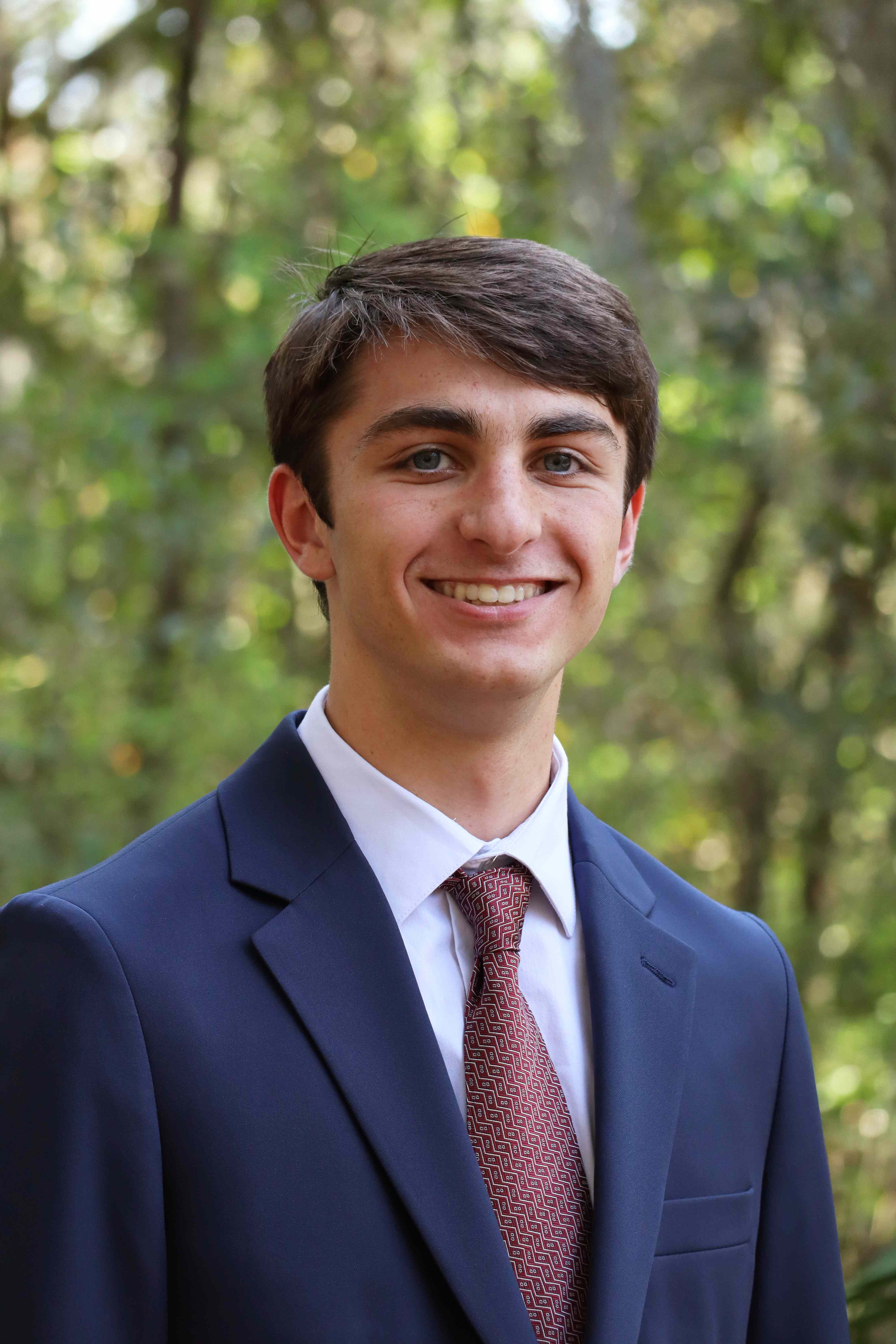
Joseph Lindley is a freshman at Florida State University, where he is a member of the Honors Medical Scholars program majoring in Biomedical Engineering. After undergraduate studies, Joseph intends to pursue a Medical Doctorate, with the goal of becoming an emergency medicine physician. His interest in medicine began in his hometown of Gulf Breeze, Florida, where he served as an Emergency Medical Responder for the local fire department. Currently, Joseph continues to use his abilities as an EMR for the Florida State University Medical Response Unit. Through his research and clinical involvement, he seeks to bridge the gap between engineering innovation and bedside emergency care. Under the mentorship of Dr. Tuy Nguyen and Quoc Bao Phan, Joseph has been developing a machine learning model to automate the analysis of electrocardiogram (ECG) signals, aiming to increase diagnostic efficiency in cardiac care.
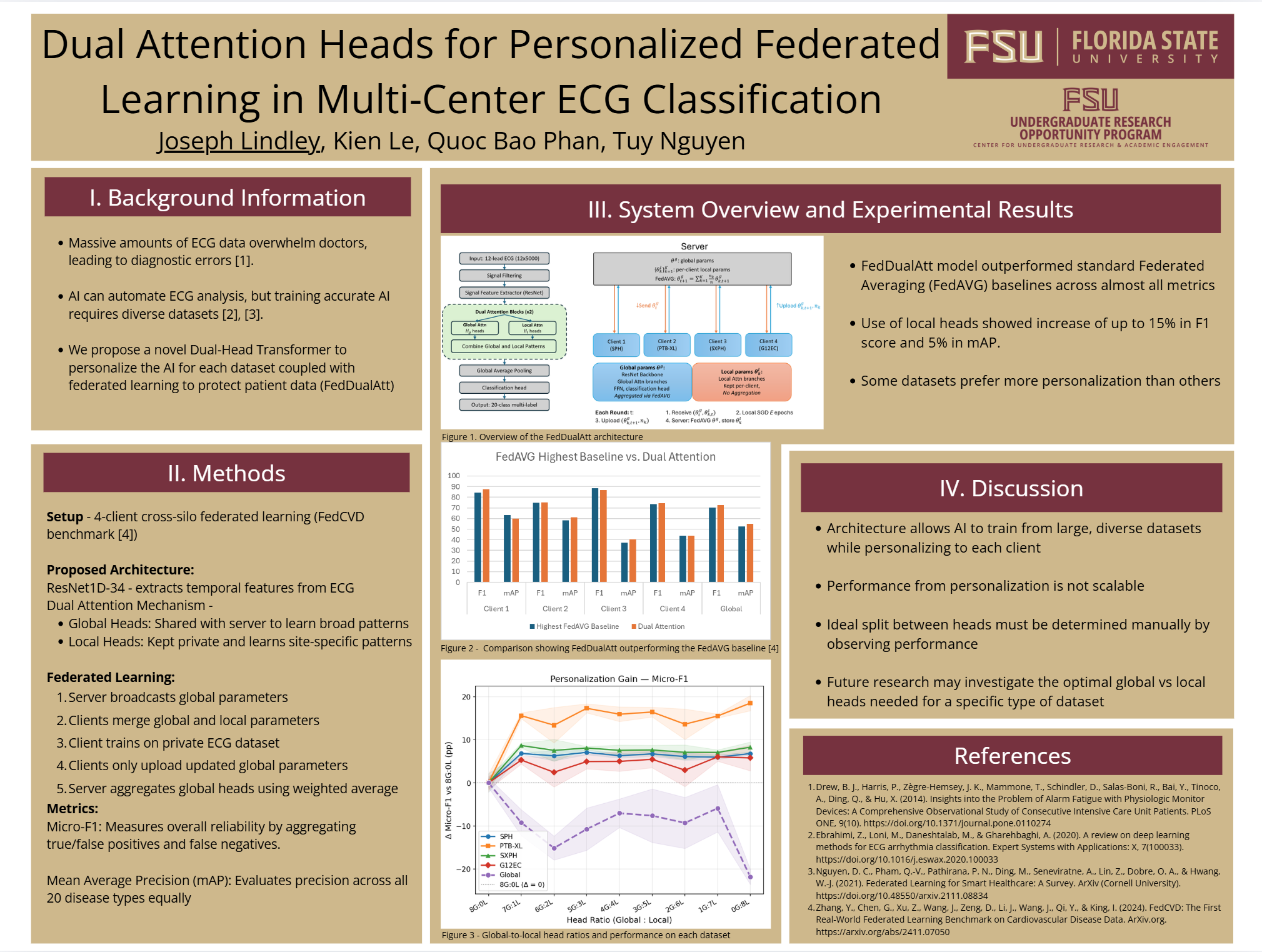
Dual Attention Heads for Personalized Federated Learning in Multi-Center ECG Classification
Authors: Joseph Lindley, Tuy NguyenStudent Major: Biomedical Engineering
Mentor: Tuy Nguyen
Mentor's Department: Center for Advanced Power Systems Mentor's College: FAMU-FSU College of Engineering Co-Presenters:
Abstract
Federated learning (FL) enables collaborative model training across medical institutions without sharing sensitive patient data. However, data heterogeneity across hospitals poses significant challenges for ECG classification. We propose FedDualAtt, a personalized federated learning approach that splits transformer attention heads into global (shared) and local (personalized) branches. Global heads are aggregated to capture shared patterns, while local heads remain client-specific to adapt to institution-specific characteristics. Experiments on the FedCVD Fed-ECG benchmark with four clients demonstrate that FedDualAtt outperforms existing FL and personalized FL methods. The addition of local heads yielded up to a 15% increase in F1 score and a 5% increase in mean average precision (mAP) compared to the fully global FedDualAtt model. Analysis of global-local head ratios reveals that different clients benefit from different personalization levels.
Keywords: ECG Classification, AI, Personalized Learning