
Research Symposium
26th annual Undergraduate Research Symposium, April 1, 2026
Sophie Shoemaker Poster Session 3: 1:45 pm - 2:45 pm / Poster #117

BIO
I'm a 2nd year student at Florida State University earning a dual degree in Environmental Science and Literature. I am passionate in ecological restoration and plan to earn a master's degree in ecology to support that goal. Currently, I’m focused on gaining hands-on research experience to better understand and contribute to the field of environmental restoration. To achieve this, I have researched saltwater intrusion and soil salinization in coastal critical zones with East Carolina University. I am also researching the effect of high streamflow on water quality in the Apalachicola-Chattahoochee-Flint river basin.
Understanding Riverine Water Quality in High Flow: A Case Study From Apalachicola-Chattahoochee-Flint Basin
Authors: Sophie Shoemaker, Sumon Hossian RabbyStudent Major: Environmental Science; English
Mentor: Sumon Hossian Rabby
Mentor's Department: Civil and Environmental Engineering Mentor's College: College of Engineering Co-Presenters:
Abstract
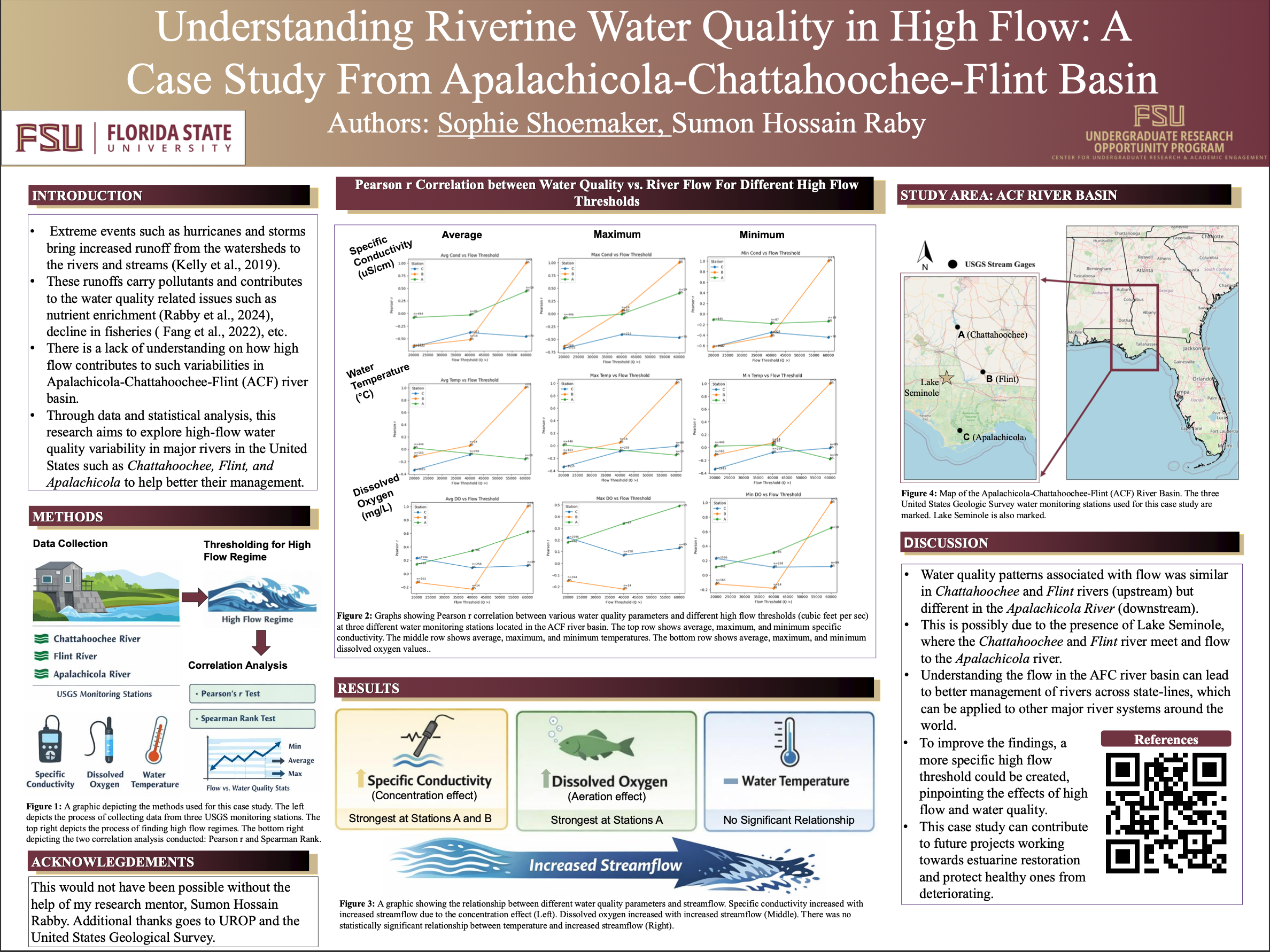
Considering current trends in climate change, extreme weather events have become increasingly common. Extreme events such as hurricanes and storms bring increased runoff from watersheds to rivers and streams. Increased runoff results in increased water pollutants such as nitrogen, phosphorus, and sediments, accumulating in downstream estuarine systems. These pollutants contribute to water quality related issues such as harmful algal blooms in coastal systems. The impact of high flow during extreme weather events on riverine and estuarine systems is understudied. Through data-driven and statistical analyses of three United States Geological Survey stream gauges located in the Chattahoochee, Flint, and Apalachicola river, this project explores high-flow-driven water quality variability. Currently, we are using Python and Excel software to conduct Pearson’s r and Spearman rank statistical analysis at the widely tested Apalachicola River system to map the relationships between extreme high streamflow and various water quality metrics. Although overarching results are not confirmed, preliminary results indicate a relationship between high flow and water quality metrics such as dissolved oxygen and specific conductivity. The expected results can be used for future projects that support effective restoration plans for estuarine water systems while simultaneously protecting healthy ones from water-ecological pitfalls.
Keywords: High Streamflow; Water Quality; Apalachicola