
Research Symposium
26th annual Undergraduate Research Symposium, April 1, 2026
Remus Pickard Poster Session 1: 9:30 am - 10:30 am / Poster #236
BIO
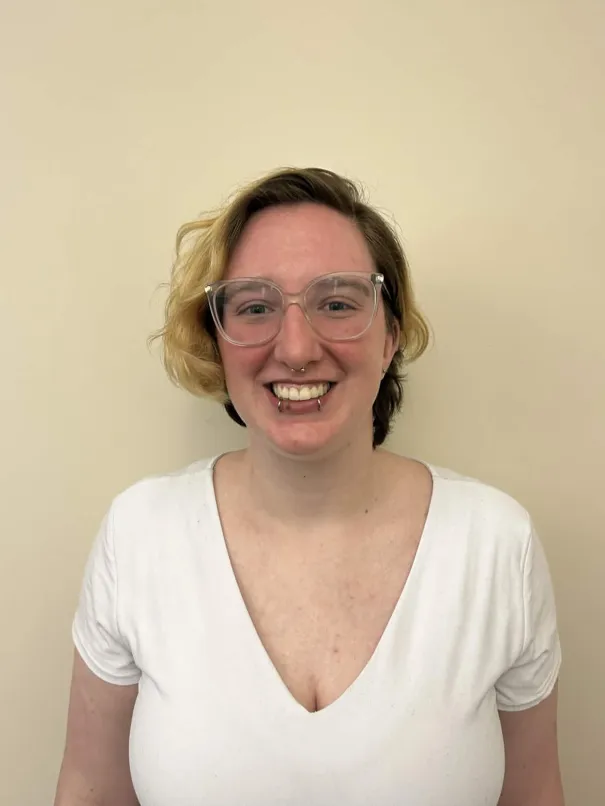
Remus is a second year sophomore earning his Bachelor's of Science in Biochemistry with a double minor in Biology and Mathematics. He is from the Gadsden and Leon county areas, and graduated with a 4.218 GPA from North Florida Christian School. They are currently researching under Drs. Richard Wagner and Dorota Kossowska-Kuhn in the Wagner Lab in the Department of Psychology. During their senior year, they are planning on conducting their own Honours in the Major research within the Chemistry department. After graduation, he plans to continue his undergraduate research and start working towards a Ph.D. in Biochemistry with a specialization in drug improvement.
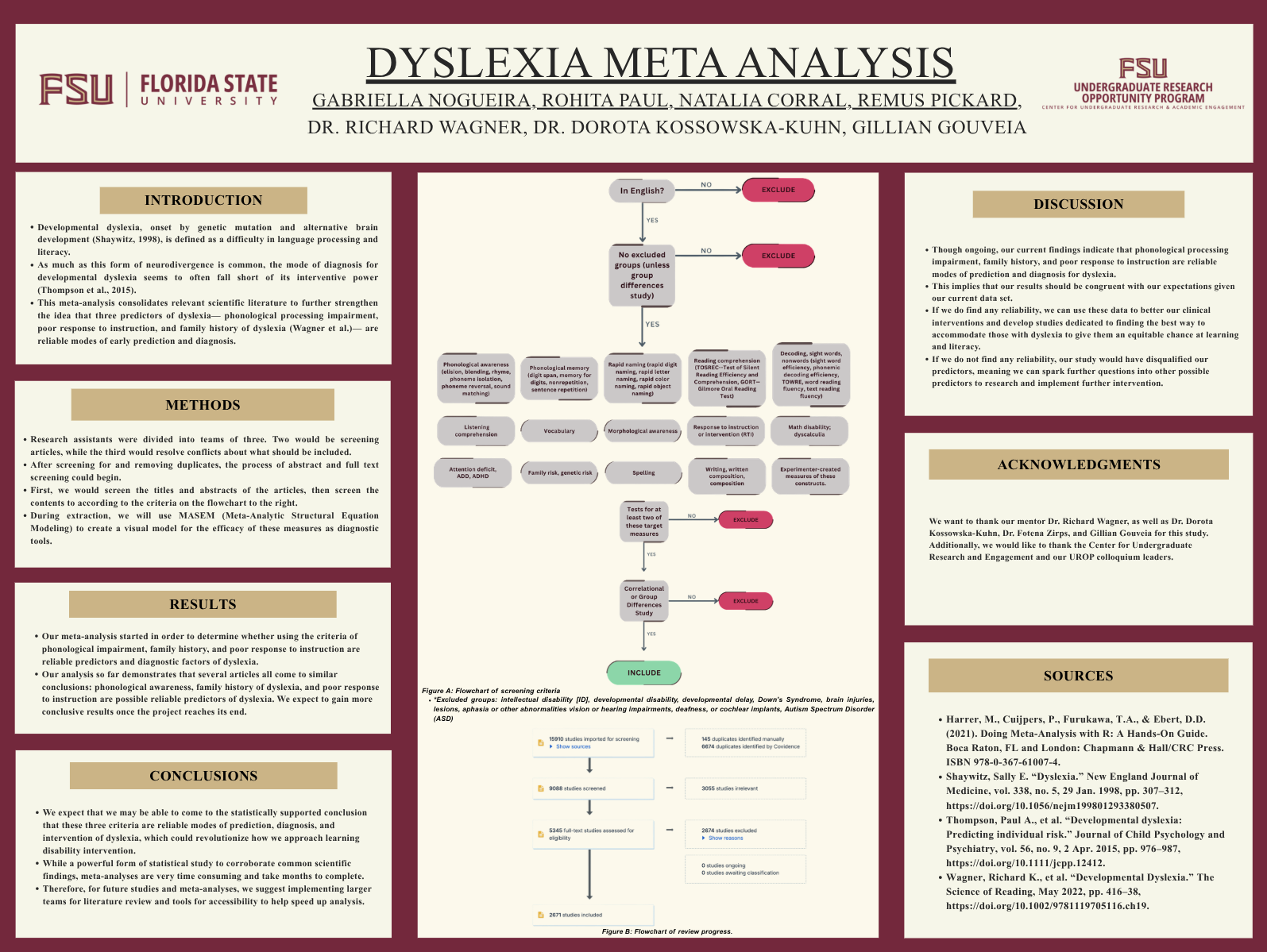
Dyslexia Meta Analysis
Authors: Remus Pickard, Dr. Richard WagnerStudent Major: Biochemistry
Mentor: Dr. Richard Wagner
Mentor's Department: Department of Psychology Mentor's College: College of Arts and Sciences Co-Presenters: Natalia Corral, Gabriella Nogueira, Rohita Paul
Abstract
Dyslexia is defined by the International Dyslexia Association as a neurobiological developmental learning disorder that is characterized by having trouble decoding, recognizing, and spelling words. As much as this form of neurodivergence is common, the mode of diagnosis for developmental dyslexia seems to often fall short of its interventive power. Because previous research suggests that no single predictor works well for complex phenomena such as dyslexia, this project aims to analyze common predictors of dyslexia using a model based meta-analysis (MASM) of the current literature in the field. This meta-analysis seeks to consolidate thousands of articles from scholarly sources and scientific journals to further strengthen the idea that three predictors of dyslexia— phonological processing impairment, poor response to intervention, and family history of dyslexia— are reliable modes of early prediction and diagnosis. Facilitated by a team of several reviewers, each article is title and abstract screened, full text reviewed, and extracted to create a proportional model to illustrate the statistical relevance each factor has in relation to the prediction and diagnosis of dyslexia. Though still in progress, the meta-analysis has now advanced to the extraction phase and is working towards a definitive result.
Keywords: dyslexia, meta analysis, psychology