
Research Symposium
26th annual Undergraduate Research Symposium, April 1, 2026
Jenshia Charles Poster Session 1: 9:30 am - 10:30 am / Poster #139
BIO
Jenshia Charles is a first year Honors student majoring in Statistics at Florida State University. Through the Undergraduate Research Opportunity Program, she is working on a research project exploring the impact of depth on coral reef species off the coast of Bonaire, with her research mentor Laurel Field, faculty mentor Dr. Sarah Lester, and co-presenter Kathleen Spencer-Armond. She has presented her research at the Florida Undergraduate Research Conference 2026 in Jacksonville, FL, and is passionate about Environmental Science.
How does coral reef depth affect the health of reef building versus weedy corals in Bonaire?
Authors: Jenshia Charles, Laurel FieldStudent Major: Statistics
Mentor: Laurel Field
Mentor's Department: Biology Mentor's College: Arts and Sciences Co-Presenters: Kathleen Spencer-Armond
Abstract
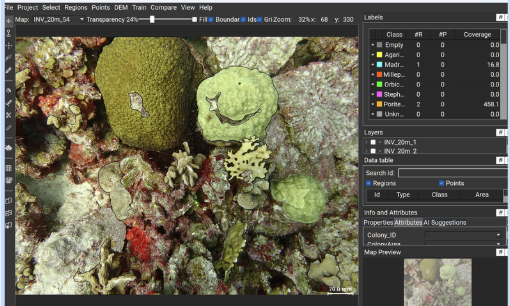
Coral bleaching events have become more frequent and extreme in recent years, resulting in increased mortality rates and less time for coral to recover from increased ocean temperatures. Bonaire, an island in the southern Caribbean known for its marine life and tourism, experienced an island-wide coral bleaching event in late 2023, negatively impacting many species. Weedy corals, such as Agaricia spp. and Porites asteroides, are fast growing and can quickly form colonies. These are important for quick recoveries of coral reefs after disturbances. Reef-building corals, such as Orbicella spp., create the structure of coral reefs, and often grow slower and larger. Both types of coral provide shelter for marine animals like fish and invertebrates. Reef-building and weedy corals respond differently to stressors. To analyze their differences we looked at three sites around Bonaire to see how varying species respond to different depths. We used the program TagLab to analyze three 50m transects for each site from varying depths (15m, 20m, 25m). Around 60 photos from June 2024 were analyzed per transect, noting size and attributes including bleaching, mortality, and disease, which all factor into overall health. We believe both reef-building and weedy corals would on average be healthier at higher depths, but weedy corals would remain more prevalent regardless of depth due to their fast-growing nature. Determining overall health patterns after large bleaching events can provide a better understanding of species-specific behaviors and how to preserve the reefs which are essential for the Bonaire’s tourism based economy, biodiversity, and food.
Keywords: Coral Reefs, Bonaire