
Research Symposium
26th annual Undergraduate Research Symposium, April 1, 2026
Angelina Szasz Poster Session 3: 1:45 pm - 2:45 pm / Poster #63
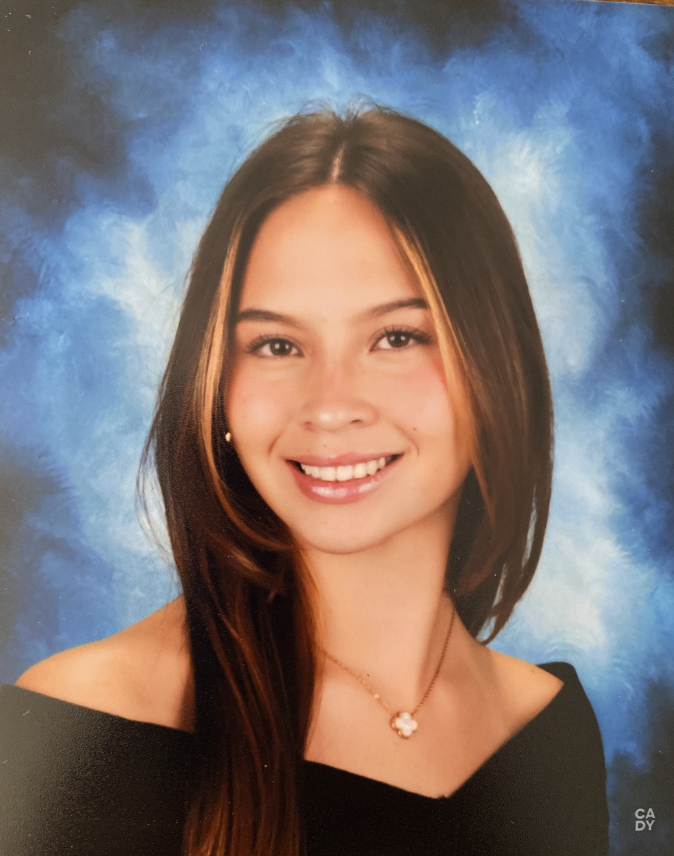
BIO
Angelina Szasz is a sophomore at Florida State University pursuing a Bachelor of Science in Biological Sciences with a minor in Chemistry. A high-achieving student, Angelina is enrolled in the "Degree in Three" program and has consistently earned a place on the President’s List for her academic excellence.
Currently, she serves as a research assistant for the Undergraduate Research Opportunity Program (UROP), where she works with Shannon LaPoint to conduct interviews and transcribe data to help develop a toolkit aimed at making public colleges more accessible for neurodivergent students. Beyond her research, Angelina is deeply involved in the FSU Pre-Dental Society and Remote Area Medical (RAM), where she participates in clinics providing free dental and medical care to underserved populations.
With extensive experience as a medical intern in dental and orthodontic practices, Angelina is dedicated to a career in dentistry. She aims to combine her research insights on accessibility with clinical practice to provide inclusive, high-quality oral healthcare.
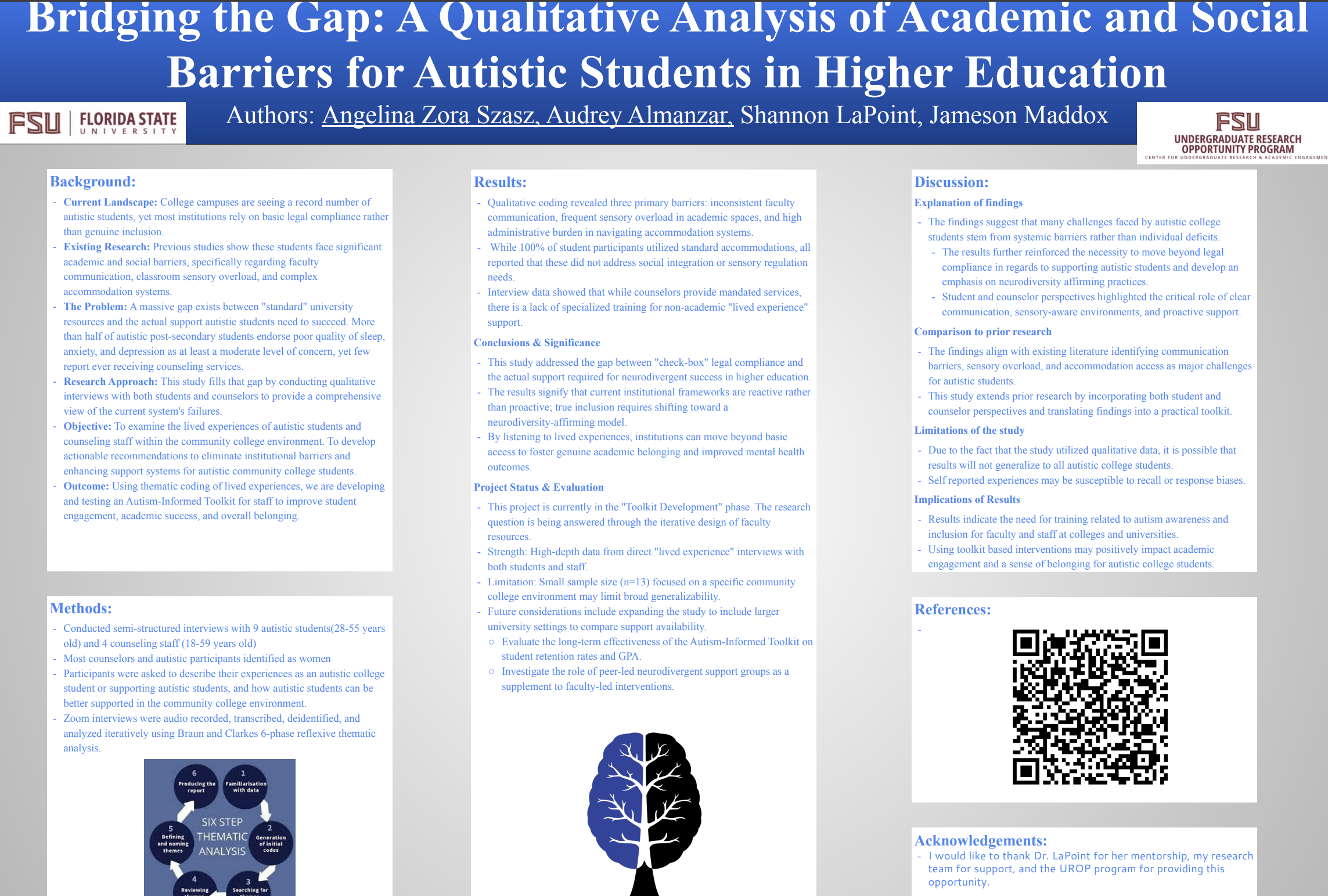
Bridging the Gap: A Qualitative Analysis of Academic and Social Barriers for Autistic Students in Higher Education
Authors: Angelina Szasz, Shannon LaPointStudent Major: Biology, Minor in Chemistry
Mentor: Shannon LaPoint
Mentor's Department: School of Teacher Education (EDU_STE) 130000 Mentor's College: Florida State University Co-Presenters: Audrey Almanzar
Abstract
This research investigates the specific academic and social barriers faced by autistic students in higher education and how institutional supports impact these barriers. We aimed to identify gaps in current institutional support by examining the experiences of these students through interviews. Understanding these nuances is relevant for administrators seeking to move beyond basic compliance and toward creating inclusive, neurodiversity-affirming campus environments. This study used qualitative interviews with autistic students and counselors, which were then individually analyzed to identify the gaps between standard institutional accommodations and the actual needs of the students. Data was then looked at through thematic coding to develop actionable solutions for more inclusive campus environments for neurodivergent students. The Qualitative analysis revealed consistent themes of participants describing academic and social challenges that students with autism face. In the interviews, students often reported barriers related to communication with faculty, sensory overload in classroom settings, and difficulty navigating accommodation systems. These results highlight the gap between campus support resources and the actual needs of autistic students. The interviews show the importance of listening to autistic students’ lived experiences when designing support services. Implementing these recommendations may increase student engagement, academic success, and an overall sense of belonging for autistic students. Using this information, we will refine and distribute a toolkit for college counselors and staff and evaluate its effectiveness across diverse campus settings. Overall, this research shows the need for autism-informed support systems in higher education.
Keywords: Neurodiversity, Accessibility, Higher Education, Qualitative Research, Toolkit